Ornamental Peppers In The Landscape..Spice Up Your Flower Beds and Your Taste Buds!

Poinsettia Ornamental Peppers

Poinsettia ornamental peppers Used as main hedge planting around our upper pergola last year.  Peppers are a big part of our edible landscape.

The Sangria Ornamental Pepper

The Sangria Ornamental Pepper- bright purple in early summer turning to a fiery red by late fall.

The red peppers and green foilage make for a great landscaping plant

The red peppers and green foliage make for a great landscaping plant

The early purple color of the sangria

The early purple color of the sangria

Peppers have become a big part of our garden and our landscape at the farm.  Yes, our garden plan still calls for a large planting of the old regulars – like  the green and red bell, jalapeno, banana and chili peppers we love to eat, cook and can with.  However, as each year passes, we find ourselves using more and more new varieties of pepper plants in our landscape as well – and not just for the great taste – but for some great looking flowerbeds!

Whether it’s a mass planting of ornamental Poinsettia peppers at the upper pergola, a few tri-colored mini belles planted among a stand of ornamental grasses, or a hanging planter loaded with poinsettia peppers – it doesn’t take long for visitors to the farm to notice the unique plants.  That is almost always followed by the question : “What kind of flowers are those?”   Most are astonished to find out they are pepper plants – and even more amazed to find out almost all of them are delicious to eat!

Ornamental and specialty peppers really are the ultimate dual-use plant.  They provide  beautiful color, texture and variety to your flower and landscape beds…and can do the same for your taste buds!  Most ornamental and specialty peppers are edible – but some definitely have more taste than others.  Some, like the Orange Tequila and Cajun Belle, are great to add color and taste to salads, salsas and soups – and can be used to make some incredible appetizers!

As ornamental and specialty peppers continue to grow in demand each year – the varieties seem to expand along with them.  You can find them in almost any size and color – from purple, red, green, yellow and orange to all shades in between.

A couple of notes of caution though. they can be really hard to find in greenhouses in the spring – and if you are lucky enough to find them – they can be costly.

Mini Bell peppers tucked into the landscape bed

Mini Bell peppers tucked into the landscape bed

For that reason alone – we grow the majority of our ornamental peppers from our own seeds that we save from year to year.  We will usually order a few seed packs each year to try something new.  If we do happen to be out and see a new variety at a greenhouse – we’ll plant it once and save the seeds in the fall to grow ourselves next year.

So, as we get the soil pots ready to start growing our peppers here in a few weeks, think about adding some great new varieties of peppers to your plan. And better yer – instead of thinking they belong only in the garden – place them in small groupings in your flowerbeds or in a mass planting to add  a splash of vibrant color to your landscape!

Here is a quick run-down on 5 great ornamental and specialty peppers we used last year and will be putting out again this coming year:

Sangria

Sangria Turning From Purple To Red

Sangria Turning From Purple To Red

Sangria is my all time favorite! It’s incredibly versatile plant in the landscape.  We use them in mass plantings, pots and hanging baskets, all with great success.  They are strong growing and tolerant plant – and can get by with much less watering than other annuals. The best part- it’s really three plants in one.  You get beautiful dark green foliage in the early spring…followed by hundreds of slim dark purple peppers by early to mid – summer.  As the fall come on strong – they turn to a brilliant red and orange for incredible new color to the landscape.  The seeds are easy to save for the next years planting as well.

Poinsettia

Poinsettia Peppers Turning Bright Red In August

Poinsettia Peppers Turning Bright Red In August

Poinsettia peppers are another favorite of ours.  These are a little taller and bushier plant than the sangria – growing to about 16 to 24″ tall – with the pepper pods coming on in late June.  Each plant is covered in hundreds of the pepper pods.  They start out as an ordinary slim green pepper – and then turn to an incredible fiery deep red from early August until well after the first frost.  They are a tasty little pepper that can be added to stir fry to give off some deep heat – or you can put them in olive oil to have hot pepper oil.  Poinsettia peppers are another easy seed to save and require little maintenance.

Mini Bell

Mini Belle Peppers, along with some of our Tequila Orange.

Mini Belle Peppers, along with some of our Tequila Orange.

These plants will grow to be about 18″ to 24″ high and are covered in 30 to 40 1″ to 2″ mini bell peppers at a time.  They have a super small seed core that is easy to remove, and are perfect for salads and salsas.  This is also one of our favorite peppers to use for making  great appetizers.  We use a good spicy sausage and cream cheese stuffing that makes for an incredible paring with the sweet taste of the peppers.   They look great in the landscape too as an accent plant – adding a splash of color wherever you put them.

Cajun Belle

Cajun Belle Pepper.  An abundant producing pepper that can best be described as sweet heat.

Cajun Belle Pepper. An abundant producing pepper that can best be described as sweet heat.

The Cajun Belle is the ultimate pepper to have if you love the combination of sweet with heat.  They average about 2″  in size, and have a seed core that is easy to remove.  They make an incredible stuffed appetizer, are great to chop up in salads and salsa or chili, or to use on a sandwich.  An added benefit of the Cajun Belle – they  freeze really well and are great to pull out for use during those cold winter months.   The plants are absolutely beautiful in the garden or landscape – filling up with 50 or more brightly colored peppers ranging from green to orange to bright red when fully ripe.

Black Pearl

The dark peppers and foialge of the black pearl pepper plant

The dark peppers and foliage of the black pearl pepper plant

These peppers are not only dark purple and black in color – but the dark foliage really can give accent to your flowerbeds.  They grow to be about 14 to 20 inches high and about 15″ wide.  The plant produces tons of  3/4-inch fruit that is round with a sharp point near the bottom. The peppers start our black in mid summer, and then turn to a beautiful shade of dark, deep red in the fall.  It is very tolerant as well, like almost all peppers, and most insects do not want any part of the hot and spicy peppers.  They are certainly edible – but very, very hot!

If you would like to receive our weekly DIY and Gardening Posts – be sure to sign up to follow our blog via email, Twitter or Facebook in the right hand column of the blog.

- Jim and Mary

The Launching Of Old World Garden Vintage – How Pergolas, Farm Tables and Canning Cabinets Will Help To Build A Dream!

Our Old World Garden Vintage Logo we designed..what do you think?

You can visit our new store by clicking on the store icon to the right. We hope to add more plans and special items throughout the year

Today’s Sunday Farm Update marks a big milestone for Mary and I and the Farm.  With the click of a button late yesterday, (and a lot of work over the last few weeks) we opened the Old World Garden Vintage On Line Store to offer detailed building plans of our pergolas, farm tables and canning cabinets for DIY’ers to build themselves.  With its opening, we complete one of our top 5 goals for 2013.  In the process, OWG Vintage will now help us get closer to completing another one of our top 5 goals – Mary’s dream of a sensory garden for autistic and special needs children.

Ever since building our first pergola for the farm a few years back – we have been asked many times if we would sell our plans for those wanting to build their own. The same goes for the canning pantry cabinet and the big farm trestle table and benches. Many of you who have followed along know that much of the farm has been built from the proceeds of selling our pergolas and farm tables.  With creating OWG Vintage, we can now make those plans available to everyone, and in the process of doing so,  have perhaps found a way to help build another dream.

sensory garden project1And that is where the sensory garden project fits in.  It has been Mary’s dream to create an area on the farm that will become a complete sensory garden for autistic and special needs children to come free of charge and experience and learn from all that can be found in nature. Over the last few months, we looked into several ways to apply and work with various grants and programs.  When it came right down to it – we decided by the time we applied and waited – we might be able to complete it sometime before the year 2050!  So, much like the pergola’s and farm tables we make to help build our farm – we’ll use the proceeds from the OW Garden Vintage shop to power the sensory garden project.  With each sale from the Etsy shop – we will continue to add more to the sensory garden and farm.  This will allow us to go ahead and start the garden layout in early spring, and as we can – build areas along the walkway for all types of therapy and sensory stimulation opportunities.

The OWG Vintage Shop will also carry detailed building plans for our pergolas

The OWG Vintage Shop will also carry detailed building plans for our pergolas

So last night, very quietly at about 9 pm, we opened up our Old World Garden Vintage Etsy shop – complete with detailed plans for our Pergolas, Farm Tables, and the ever popular Canning Cabinet.  (Isn’t it funny, that simply out of a need to store our canned goods, something made from scrap materials on a whim becomes what everybody loves!)  The OWG Vintage Store is a great way to reach people that either want to build their own items or are too far away for us to reach locally.  At the same time – it  becomes a great way to  fund the Sensory Garden Project.

Hope everyone has a great Sunday!

- Jim and Mary

If you would like to receive our weekly DIY, Gardening and Sunday Farm updates – you can sign up to follow our blog via email, Twitter or Facebook in the right hand column.

One of our trestle tables we built last summer

One of our trestle tables we built last summer

Our Canning Cabinet that can be made from pallets or traditional lumber.

Our Canning Cabinet that can be made from pallets or traditional lumber.

100% Whole Grain Wheat Bread Recipe – Do You Know What’s In Your Bread?

100% Whole Wheat Bread

100% Whole Wheat Bread

When you buy whole wheat, whole grain, or even 9 grain bread, you believe that is what you are eating, right?  Well guess what…..the majority of breads sold in grocery stores and served in restaurants are actually white bread with less than 2% whole wheat flour.  It is astonishing to find out that they allowed to market it as whole wheat bread, when the main ingredient is white flour?  Even Subway’s 9 grain wheat bread is primarily made of white flour, with less than 2% making up the other 8 grains.  I don’t know about you, but I have found that reading the labels on my food is becoming more and more important.

Home made wheat bread, sliced and ready to eat!

Home made wheat bread, sliced and ready to eat!

So, in our quest to know what ingredients we are consuming, we knew we had to come up with a homemade bread recipe that included 100% whole wheat flour and of course, no preservatives.

For those of you that have tried to bake with wheat flour, you will know that you definitely get a denser consistency as compared to white flour.  To put it simply, this is because wheat flour is made from the entire wheat seed rather than just the center, like white flour.  Using the entire seed allows for extra nutrients and fiber to be included in wheat flour. This recipe is the best light and fluffy homemade wheat bread that I have found. It is absolutely delicious, contains no preservatives,and best of all, you know what you are eating.

100% Whole Grain, Whole Wheat Bread

Ingredients:
2 3/4 cups hot water
4 tablespoon of oil (I use Canola oil)
2 1/2 tablespoons of Agave Nectar
2 tablespoons honey
1 tablespoon salt (I use Kosher salt)
7 cups (max) 100% whole grain wheat flour, divided
2 tablespoons dry active yeast

Instructions:

Add flour until the mixture no longer sticks to the inside of the bowl.

Add flour until the mixture no longer sticks to the inside of the bowl.

1. Place the first five ingredients in a large mixing bowl and stir to combine. Add 2 cups of whole grain wheat flour. Mix, then add dry active yeast.  Add 4 cups flour, and mix until the consistency is somewhat even.

2. Continue to slowly add flour 1/2 cup at a time until the dough quits sticking to the sides of the bowl. It should be tacky to the touch. The trick is to have enough consistency to stand up with the least amount of flour, so the bread will be fluffy. Do not exceed 7 cups of wheat flour. I use 6 cups.

The dough has been split into two, and ready to be formed for the loaf pans.

The dough has been split into two, and ready to be formed for the loaf pans.

3. When your dough is finished, cover the bowl and let it rise for about 40 minutes. The dough will be larger, but it doesn’t need to double when using a heavy mixer. Grease two bread pans with nonstick spray. You can also flour the pans to reduce sticking. Mix the dough again just enough to knock it down at least close to the original size. Drop the dough on a floured surface so you can work and shape it.

Loaves doubled and ready to go in the oven.

Loaves doubled and ready to go in the oven.

4. Roll the dough in the flour and shape it in your hands to make a nice ball, getting enough flour on it so it isn’t sticky. Divide the ball in 1/2 and do it again. Shape the loaves by turning the dough under itself over and over. When the dough is shaped right, the sides and ends will be sealed and all you will see is a nice oblong shaped loaf with smooth sides and top.

5. Place the loaves in your bread pans and let them rise until almost doubled (approximately 40 minutes). Preheat oven to 350 degrees while your dough rises.

6. Bake both loaves for 36 minutes.  Remove from loaf pans and place on cooling racks. Completely cool before storing by wrapping it in  aluminum foil.  ****Do not store in refrigerator, unless you need another brick somewhere****

Enjoy!

Mary and Jim

**If you would like to receive our Recipe Of The Week each Friday – be sure to sign up to follow the blog, hit the “like” button on the Facebook sidebar, or follow us on Twitter.

5 Simple Tips To Grow A Healthy, Vibrant And Organic Garden!

Green onions fresh from the garden...it's hard to beat the taste!

Green onions fresh from the garden…it’s hard to beat the taste!

The color and vibrance of fresh radishes pulled from the soil

The color and vibrance of fresh radishes pulled from the soil

Between all of the frenzied arguments on both sides of the organic vs. non-organic fence – there are some simple, basic processes that we can all follow to improve the fertility and viability of our backyard gardens and raised beds…naturally.

Mary and I do not practice as chemists, scientists or biologists in our spare time –  nor is our garden officially certified as “green” or “organic”.   But we do have senses - and the sense to know that the food we grow organically tastes and looks great, doesn’t contain any pesticides or sprays  - and grows abundantly.

How? by following one simple rule.  Take care of the soil that takes care of you.  Oh, and by the way – it also make good “cents”…because it’s much cheaper to grow our food organically than buying and applying expensive fertilizers and pesticides.

So through it all…we simply choose to grow organically.  And no…we’re not weird!  Well, our kids might not agree with that last statement – but in all honesty, we’re a regular couple who just wants to grow and know where our food comes from – and more importantly – know what’s in it, and what’s not.

So with that in mind, here are 5 simple and practical tips we use in our gardens and landscape to grow all of the fruits and vegetables we need – without chemicals or pesticides.

1.  Composting:

Compost is the key to organic gardening.  The single best way to great soil

Compost is the key to organic gardening.  It adds valuable nutrients and structure to your soil.

Composting is the backbone of any organic garden. In fact, compost comes straight from the word decomposition..the very heart of organic matter breaking down into fertile soil.  Plant matter, leaves, food, etc. all eventually break down into the soil to add nutrients.  However, once you turn that soil and plant your first garden – you begin to take nutrients back out of the soil.  So adding compost is a must to keeping your soil strong and vibrant. By adding compost – you are in essence recharging your soil.

Here is how we use it:  Every year – we will work a 2 to 3” top-dressing of compost into each of our raised bed rows.  Then, at planting time – we will put another cup or so in the average vegetable planting hole, mixing it in with the existing soil. We use it one more time to top dress and mulch our garden plants – doing this once the plants have grown for a few weeks in the soil.  We put a good shovel full or two around each plant’s base.  This not only provides great weed control and moisture retention – but the compost slowly releases additional nutrients when it rains or when we water – providing a natural fertilizer for the plants.

There are a million ways to go about making compost – in a bin, a tub, a barrel or a plain old pile in the middle of the garden.  But whatever you do – get that pile started!  Add all of those kitchen remnants – potato peels, coffee grounds, egg shells and more.  You can find out more about composting at our link here : Composting 101.  Remember that finished compost should be fine and sweet-smelling and cool to the touch. If you are turning the pile and still feeling heat – it’s still cooking and not ready to use on or near plants just yet.

2.  Cover Crops:

Our beds planted with their fall blanket of cover crops - which well help protect the topsoil through winter, keep weeds from germinating, and add tons of organic matter when we turn it under in the spring

Our raised bed rows planted with their fall blanket of cover crops.  These help protect the topsoil through winter, keep weeds from germinating, and add tons of organic matter when we turn it under in the spring

Cover crops are really the key to a long-term garden’s success – and are easy to plant!  Just like the big time farmers on big time farms – our gardens and raised beds get all the same benefits of a well-grown cover crop.  They add back tons of nutrients including Nitrogen to the soil, keep other weeds from getting established in your beds, and build organic matter back into the earth. They also play a key role in keeping soil erosion to a minimum.

So what are they and when can they be planted? Cover crops are a planting of an annual crop like annual rye or clover to your empty garden beds. Early fall is a great time to plant a cover crop in your garden or raised beds.  A crop like annual rye will emerge in just a week or two and create a thick, grassy bed that will fix nitrogen levels in the soil and keep the beds from being exposed to the winter elements that can erode precious topsoil.  In the spring, you simply dig them under to add organic matter back into your soil.  You can even plant a quick spring or mid summer crop and turn it over into the soil before planting your summer garden.  This is called a “green manure or cover crop” and can be a great boost to the plants going into the space.

It’s easy to plant one. No need to till your soil – next, rake out your rows, existing garden, or raised beds  – and scatter the seeds as if you were throwing grass seed on your lawn.  Rake it over and you’re done!  It’s okay if you still see seeds on top – they will sprout soon enough and you will have a great cover crop growing!  We don’t use a tiller at all in our raised row beds – just a pitchfork to turn it over, and we are ready to plant.  We actually have a complete tutorial dedicated to cover crop benefits that you can check out here :  Planting Cover Crops

3.  Crop Rotation:

The 2013 Garden Plan.  There is a full size picture at the bottom of the post

The 2013 Garden Plan – with plant spaces rotated from last year’s plan

If you keep planting the same pepper, tomato or cucumber plants in the same spot, year after year – you won’t keep getting the same results.  Why? Because plants use certain specific nutrients from the soil - and the soil becomes depleted of those nutrients if the same crops keep going into the same place.

In addition – soil borne diseases that are prone to affect a certain type of plant have a better chance to become established with repeat plantings. So, in addition to providing compost and cover crops to recharge your soil – it’s important to rotate your crops each year so that they give the soil time to recover from that specific crop.

For us – we have 34 raised beds in our garden – and we flip and rotate what we grow so that the same crop will not go in the same space until every fourth year.  With just a little planning – it’s easy to do.

4.  Mulching: 

We use mulch around our plants and in our walking rows to keep the garden clean and weeds to a minimum

We use mulch around our plants and in our walking rows to keep the garden clean and weeds to a minimum

Remember that statement about plants using nutrients from the soil?  Well guess what – weeds are plants too – and they compete for the same nutrients and water your vegetable plants do.  So the less weeds they compete with – the more nutrients in the soil for the vegetable plants.  And you can suppress those weeds naturally, without spraying, and keep your garden looking great.

How? By mulching.  Mulching is a great way to keep out unwanted weeds.  We like to mulch around our plants with a healthy dose of finished compost.  It not only hold conserves moisture in the soil, but it blocks out weeds, and adds valuable nutrients back to the soil while it decomposes.  If you don’t have compost on hand yet – then mulch with straw, shredded leaves or grass clippings. They all accomplish the same thing – keeping moisture in while suppressing weeds.  We also mulch all of our walking rows with straw and shredded leaves to keep weeds out from there as well.   When after a few weeks we get a few weeds popping up here and there…we simply use a weed-eater and cut them down, add a little more straw, and the garden looks great.

5.  Proper Watering:

One of our green peppers after a gentle summer rain.  Proper water is the key to a good garden

One of our green peppers after a gentle summer rain. Proper watering is the key to a good garden

No matter how good your soil is – without water – plants struggle. Too little water and plants shrivel up.  Too much water and they won’t develop the good and deep root structure needed for healthy, mature plants.  A good rule of thumb is that a garden plant typically needs to receive about 1 inch of water a week.  If mother nature isn’t supplying that  - then you need to supplement.  But that doesn’t mean the 1″ of water should come all at once.  If you are experiencing a prolonged dry spell – water every two to three days with a slow, soaking 1/2″ of water.  This allows enough water to go deep into the soil and build deeper roots – and gives the plants more consistent watering.  Why not every day?  The plants never send their roots deeper to look for water – and you end up with underdeveloped roots, and a weaker plant.  Call it tough love watering  to develop stronger plants – but it works.

Water early in the day or in the evening to keep evaporation to a minimum. Try to water the ground around the root area and not the foliage – wet leaves can become burned from the sun’s rays. When our plants are young – we use a 2 gallon sprayer (see, there is room for a sprayer in an organic garden :) )  – and water directly to the plant’s base to conserve water and get right to where it’s needed most.

There you have it.  Our 5 simple, organic tips to a healthy, vibrant and chemical free garden!

If you would like to  receive our weekly DIY and Gardening Posts every Tuesday – be sure to sign up to follow our blog via email, Twitter or Facebook in the right hand column of the blog.

- Jim and Mary

Shared on Savvy Southern, Gnowfglins Simple Lives

Chicken Coops and Honey Bees…The Sunday Farm Update

The garage is filled again with projects.  We had a bunch of left over wood from some recent projects, so we made this 11' trestle table to use them up

The garage is once again filled with projects.  We made this table from left over lumber from our pub table project in December.  No plans for this one yet, but at least we have a back up when someone orders one now!

I can’t believe it’s Sunday Farm Update time already!  I really have no idea where the days of this past week went…that is, until I look in the garage.  Yes, that’s right – the same garage that had just been “cleaned out” for Mary’s vehicle to comfortably park inside after the last round of projects in November and December.  Well, it is once again filled with projects of the last week, including sections of our new chicken coop and another table made from some leftover wood.  Just in time, of course, for her vehicle to sit outside during the upcoming week’s forecast of near zero temps. I might actually be needing to build a doghouse for myself somewhere in there too! :) . Actually, we are both more than happy to give up some garage space as we start to work on some of this year’s goals for the farm.

The New Coop

We started work this past week on the new coop that will be erected in the early spring.  Our original coop was perfect for the 9 hens we have kept to this point – but we want to create a large enough space to comfortably house about 15 to 20 hens.  It seems we can never have enough eggs now that our friends and family have become customers.

We managed to get the front and back sections of the coop built this past week.  Having them pre-built will help speed up building day at the farm.

We managed to get the front and back sections of the coop built this past week. Having them pre-built will help speed up building day at the farm.

We spent a lot of time the last few months designing a coop that can not only stand the test of time, but blend in with the surroundings of the farm.  After sketching out a lot of designs and ideas, we settled on building a replica version of the vintage coops that dotted farms around the mid-west in the early 1900′s – with some updates and modifications of course.   The main coop will be 12′ x 10′ – with an attached 12′ x 16′ outdoor run for them to have plenty of protected space to roam and scratch.  In addition, they will also have large free range areas that are rotated around the farm.

To keep with the “recycled” theme in the building process and to keep the building cost down, we’re using a ton of salvaged materials we have saved from our past projects.  Reclaimed cement blocks from the old barn foundation will make up the new foundation.  We are also using reclaimed wood for most of the framing and interior walls.  Left over panels from our barn roof will be used to roof the coop, along with a couple of solar panels attached to provide power for a few interior lights.

Once again the garage is filled with projects.  This time, sections of the new chicken coop and an 11' trestle table made from some left over scrap

Once again the garage is filled with projects. This time, sections of the new chicken coop and an 11′ trestle table made from some left over scrap wood.

So with a break in the temps the last week, we set about putting the plans into action.  With the winter and cold, it’s much easier to build the majority of it here at the house in sections.   We were able to frame up the front and back two sections this past week, and hopefully can get the two sides finished up before the end of January.  The plan is to have all of the sections finished and ready to go, so that once the foundation goes in, we can assemble it all in a day or two.   With the new baby chicks arriving in late February – we will only have around 8 weeks until they are ready to move into the new “coop”.

The Bees..

One of our goals this year is to set up a hive.  Not only will it help our vegetables, flowers, fruit trees and grapes – but we would love to have some fresh honey!  This past Saturday morning was spent at our first “bee”class, with a longtime area beekeeper named Mike.  We have both spent the last 6 months reading up in every way possible about everything to do with bees – but nothing substitutes hands on knowledge from an experienced beekeeper.   You can tell after just a few minutes talking to Mike how much passion he has for the art of keeping bees – and that he truly enjoys passing that knowledge and passion on to others.

Hopefully the bees will find the garden and landscape plants like these petunias to their liking

Hopefully the bees will find the garden and landscape plants like our petunias to their liking

We talk about it a lot, but the generosity and helpfulness of people never seems to amaze me.  As we spoke to him at the end of class, he even offered to help us release our first bees into the hive this spring.  Over the course of the next week we will be ordering our hive box and beginners tool kit – and hopefully this spring, we can add bees to diversity of the farm!    Here is to Spring getting here sooner rather than later!

- Jim and Mary

If you would like to receive our weekly DIY, Gardening and Sunday Farm updates – you can sign up to follow our blog via email, Twitter or Facebook in the right hand column.

Baked Kale Chips – A Delicious, Highly Nutritious, Low Calorie, Easy to Make Snack!

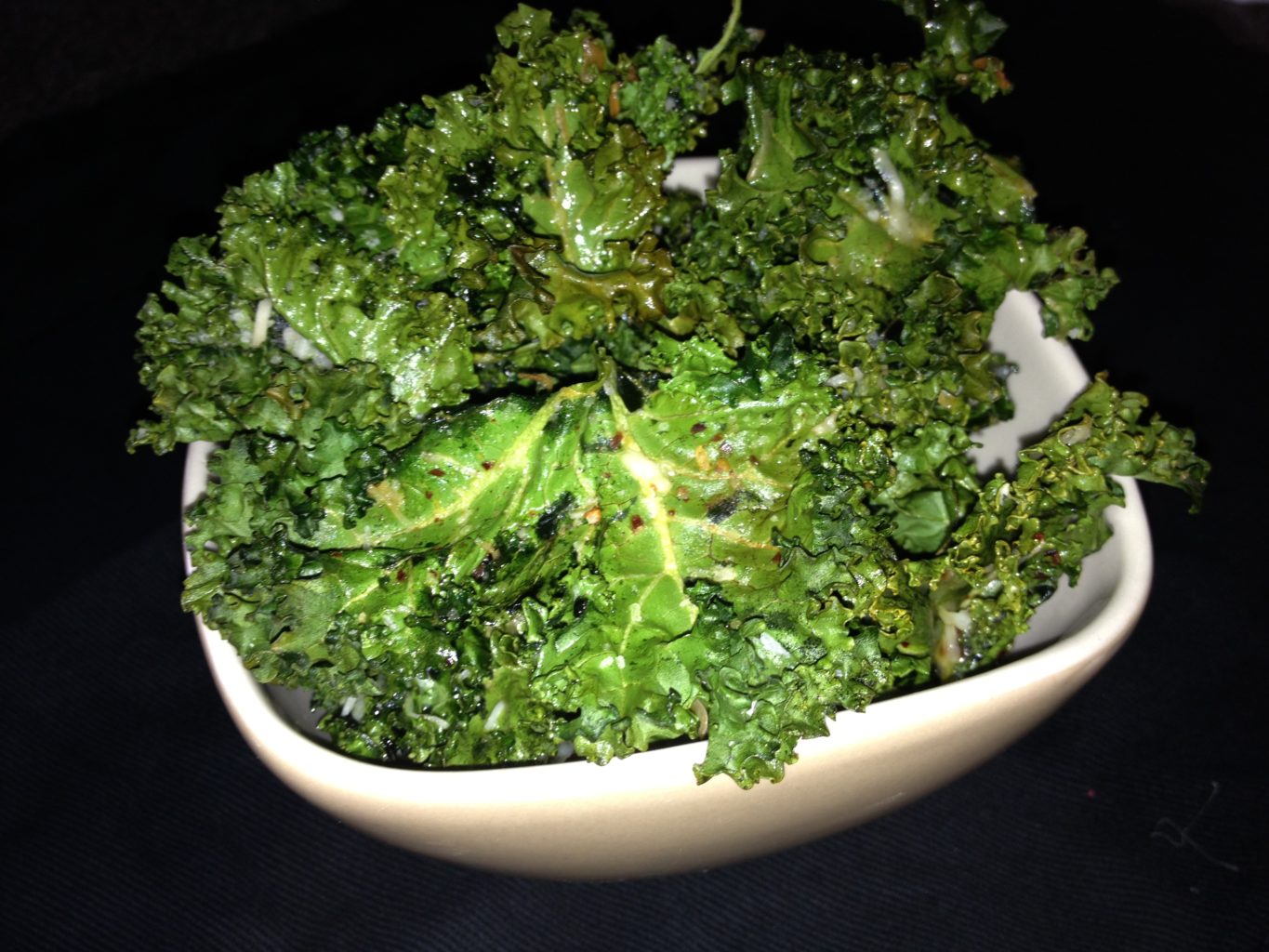
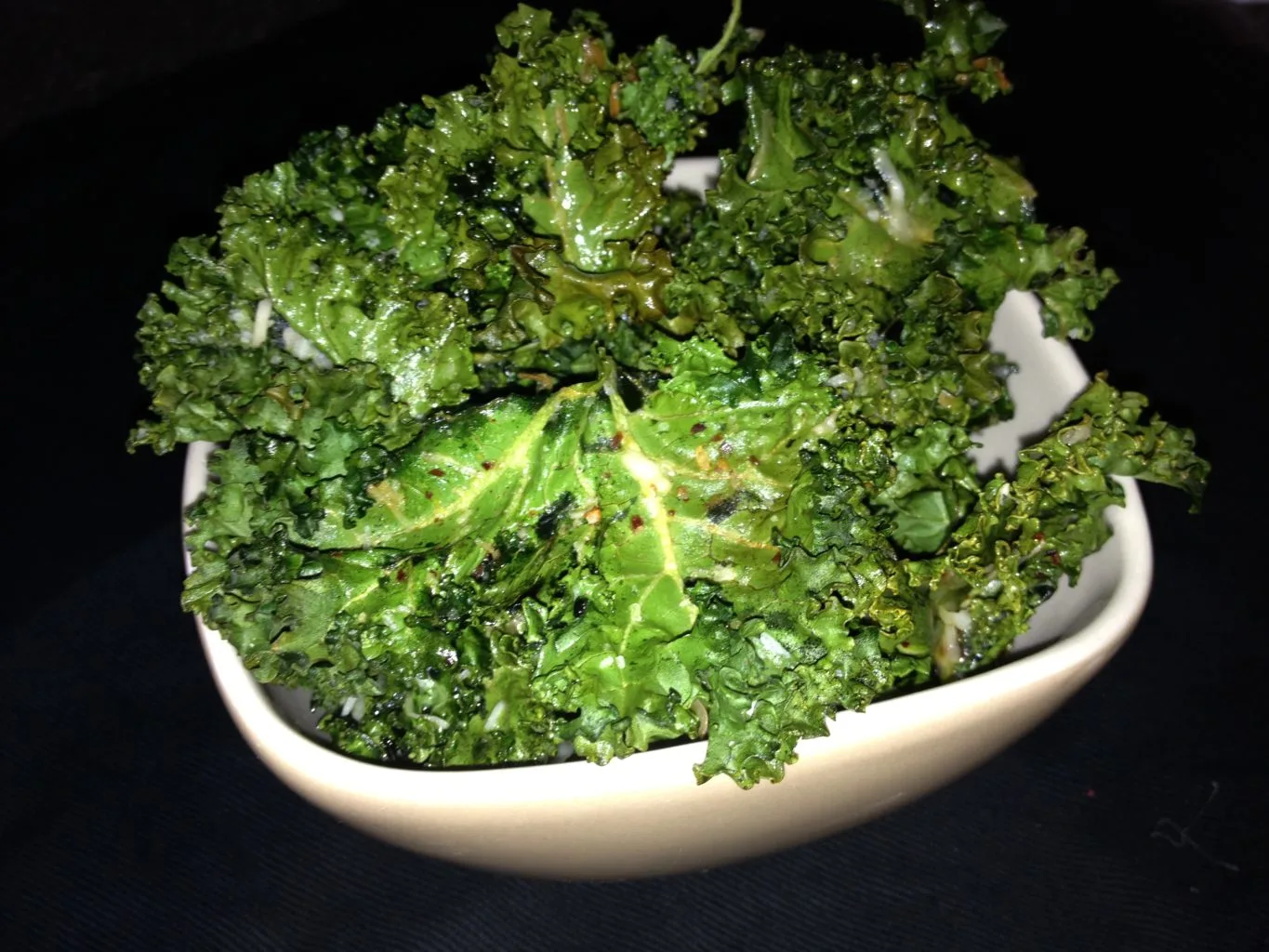
Baked Kale Chips - Nutritious and Easy to Make

Baked Kale Chips – Nutritious and Easy to Make

Are you missing that crunchy and slightly salty taste of potato chips, but don’t want the amount of fat and calories that goes in to making them?  Well, have no fear, Kale chips are here! And just like potato chips, you can’t just eat one.

You can find kale chips in a grocery store, but there is nothing like the taste of the home-made version that you can prepare in minutes.  To be honest, I was skeptical on finding a solution for a crunchy, good for you snack.  I’m not big on snacking, but there are times when I just need that crisp crunch to satisfy my hunger until the next meal.  So instead of pulling out that bag of potato chips, I reached for the kale.

I have  to admit, my first attempt was an epic fail.  I only had some smaller-sized, curly kale left in my refrigerator.  And within 20 minutes, our kitchen smelled like, well, burnt greens.  I obviously became preoccupied and forgot they were in the oven.  Lesson learned!  But don’t worry, with the use of a basic kitchen timer, anyone can make this recipe in under 15 minutes! (Definitely not 20 minutes!)

Fresh Kale, washed and ready to go into the oven

Fresh Kale, rubbed with oil and ready to head to the oven

What type of kale should you use? The answer is simple – whatever you can find.  Curly kale, Tuscan kale, Red Russian kale, even beet greens and chard can all make gloriously crispy chips.  And don’t let your first attempt be your final recipe – experiment with various seasonings.  We have tried cayenne, cumin, bar-b-que, and garlic salt.  The sky’s the limit!

For those interested in the nutritional value, you will hard pressed to find a healthier snack:

Kale contains no cholesterol and no unhealthy saturated or trans fats making it a good choice for cardiovascular health. In fact, it actually helps lower your LDL — or “bad” — cholesterol and raise your HDL — or “good” — cholesterol.  It is packed with Vitamin A, and other nutrients that help with protecting your eye-sight.  Not to mention it is high in antioxidants.  In 1 cup of kale chips, you’ll consume 134 percent of your daily vitamin C needs to support immune function and more than 600 percent of your daily vitamin K requirements for proper blood clotting. The olive oil used to make the chips also contains 10 percent of the daily value for vitamin E, a fat-soluble vitamin with antioxidant properties. It’s a win-win snack!

Baked Kale Chips

Very important step - make sure your kale is dry before adding the olive oil.

Very important step – make sure your kale is dry before adding the olive oil.

Ingredients:

  • 1 bunch fresh kale leaves, well-washed and dried (you can use a salad spinner, or pat dry with towels, or just let air dry!)
  • 2 Tbsp. olive oil
  • coarse sea salt (or whatever salt you prefer
Kale ready to go in the oven - Make a single layer with no overlapping leaves.

Kale ready to go in the oven – Make a single layer with no overlapping leaves.

Directions:

Preheat oven to 325 degrees.

On a cutting board, use a kitchen knife to chop the kale into bite-sized (about 1 1/2″) pieces or simply tear it with your hands. Be sure to remove the large center stem and discard (for your compost pile)  Place pieces in a large bowl, and drizzle with olive oil. Then using your hands, toss the kale until the leaves are evenly coated with the oil.

Lay the kale pieces out evenly on the parchment-lined baking sheet, and then sprinkle with sea salt. Bake for about 12-15 minutes, or until kale is dark green and crunchy. Remove from oven, (you can also add additional seasons here), let cool, and then serve.

Enjoy!

Mary and Jim

**If you would like to receive our Recipe Of The Week each Friday – be sure to sign up to follow the blog, hit the “like” button on the Facebook sidebar, or follow us on Twitter.   Share On Savvy Southern,Gnowfglins Simple Lives

How To Build The Ultimate Tomato Cage For Under $2….The Stake-A-Cage

Our Roma tomatoes tied up neatly with the Stake A Cage

Our Roma tomatoes tied up neatly with the Stake A Cage

You may chuckle at the name – but “Stake-A-Cage” really is the best way to describe the trellis system we came up with a few years ago to effectively and  inexpensively tie up our tomatoes and peppers.  We get a lot of questions about it on the blog – so we thought today we would explain it in detail, along with details at the end of the post on how to make your own.

A few years back, with the garden planted, and about 45 tomato plants growing quicker than we imagined – we knew we needed to give them support and fast! After suffering sticker shock at the prices of tomato cages and stakes in the store, we decided to see what we could come up with ourselves.

We had some left-over welded wire fencing from building the outdoor run for the chicken coop, along with wooden stakes we had used to stake out the area where the coop and barn would go.  So – in desperate need to tie up some tomato plants that were falling over – we used wire cutters to quickly cut the fencing into small grid panels.  Next, we attached them to the wooden stakes with fencing nails we had on hand – and the Stake-A-Cage was born.

The Stake-A-Cages in use in our garden.  Strong support and easy to tie as they grow

The Stake-A-Cages in use in our garden early in the season. They provide strong support and are easy to tie as they grow

The tomatoes and peppers that filled the upper garden area will now get rotated to the bottom half

The tomatoes and peppers mid-season.  The open cage and strong support of the stake keep the tomatoes growing up and keep the rows neat and clean

We made smaller stake a cages for our peppers as well - here, our banana peppers are neatly tied to the cage

We made smaller stake a cages for our peppers as well – here, our banana peppers are neatly tied to the cage

The cages full in late summer.  As you can see - they support the massive growth with ease

The cages full in late summer. As you can see – they support the massive growth with ease

After we put a few up – we started realizing that we had something!  Not only did they go together easily – they looked great and had a lot of advantages over the commercial cages or old wooden stakes we had used in the past.

For starters, it combines the best of the two old ways used to tie up tomatoes;  the strength of strong wooden stake with the ease of a wire trellis cage.

Although stakes are strong in the soil – it’s always been hard to tie the vines to them as the plants grow larger throughout the season.  And although cages provide a better support for the tomato plants – they become hard to pick through as the plants grow.  Not to mention our cages always seemed grow right out of the ground and topple over as the season progressed.

Hence, the use of the Stake A Cage.  The support of a 4′ long wooden stake – attached to an open-faced wire mesh grid. Strong and durable and cheap! It combines the durability of staking tomatoes with the ease of a cage.  Better yet, by keeping the wire grid flat and not making a true cage – you can tie your tomatoes easily to the grid – and when it comes time to pick – you won’t have to reach through the cages to get to the goods. The fruit and vegetables are right in front of you – and easy to harvest.

We have used ours now for three seasons and they are still going strong – and you can make them yourself with little effort for about $2 a piece!  That’s a far cry from the $5 to $25 you can pay for cages, stakes and trellises found in the stores!

How To Make Them:

Materials Needed:

Wire Cutters, Hammer, A Chop Saw or Jig Saw

2×2 Lumber For Stakes

Fencing Nails (Sometimes referred to as U – Nails)

30″ High Welded Wire Galvanized Fence with 2″ x 4″ Mesh Grid  (You can buy a 25′ roll which makes enough for about 16 cages for tomatoes, or 25 for peppers)

A simple weld wire screen on a stake, and you have the ultimate tomato trellis

A simple weld wire screen on a stake, and you have the ultimate tomato trellis

The Stakes:
There are a couple of options to make or buy your stakes.   If you are starting from scratch, the easiest option is to buy inexpensive 2x2x8 framing lumber at your local home improvement / lumber store (usually for around$1.25. each)  If you buy them in the standard 8′ pieces, you can simply cut in half to make 2 from each board.

After using up the grade stakes we had on hand, we made the remainder of our stakes from scrap 2×4′s and 2×6′s.  Running them through the table saw lengthwise to make 2×2′s and then cutting them into 4 foot pieces.

To make a sharp point on the stakes – we then used a chop saw (jig saw works great too) to cut angled points into the end of one side. If you angle all four sides – it makes for a sharper point to drive into the ground.

***One extra note here:  Since we use these in the garden and around our plants – we have always  used regular, untreated lumber.  Yes, it’s true that it will not last as long as treated lumber – but if you store them each winter – you should be able to use them for a good 5 years.  When they do start to go bad – you can simply remove the metal grid, and put on a new stake for the next 5 years!  The wire mesh is galvanized, so it will not rust and can be re-used over and over.

Standard Fence Nails work great to secure the mesh to the stake

Standard Fence Nails work great to secure the mesh to the stake

Once you have your stakes ready – the rest is a piece of cake!  Roll out the galvanized welded wire roll, and using wire cutters  - just snip off 18″ wide sections for tomatoes, or 12″ sections if you will be using them for peppers.

Center the wire grid on the stake with the bottom of the wire about 16″ from the bottom of the stake.  (This is to allow the stake to be driven in to that depth)  Then nail in 3 fencing nails, securing the wire to the stake.   You have your very own Stake-A-Cage!

- Jim and Mary

If you would like to receive our weekly DIY and Gardening Posts – be sure to sign up to follow our blog via email, Twitter or Facebook in the right column.

Shared On Gnowfglins, The Chicken Chick Blog Hop

The Garden Plan For 2013

The 2013 Garden Plan.  There is a full size picture at the bottom of the post

The 2013 Garden Plan. There is a full size picture at the bottom of the post

There is nothing quite like planning the garden to make you ready for spring to hurry up and get here!  So this past week, as we watched December’s snow melt and some warmer than average temperatures tease us – Mary and I put the finishing touches on our 2013 garden plan.

Many old standby’s remain in this year’s plan. A healthy planting of Roma (24 ea.) and Celebrity (8 ea.) tomato plants that are the staples for our pasta and pizza sauce, salsa and ketchup that we make and can.   Also back:  hot banana, jalapeno, cayenne and Cajun Belle peppers that we use in our hot pepper grinds, powders, and of course Mary’s famous hot pepper mustard.

New editions to the garden this year will be rows of head lettuce and cabbage, the multi-colored sweet mini peppers that are becoming popular, and a small row of popcorn.

The Italian Roaster. These peppers turn to a beautiful red late in the season and are amazing on the grill!

The Italian Roaster. These peppers turn to a beautiful red late in the season and are amazing on the grill!

The tomatoes and peppers that filled the upper garden area will now get rotated to the bottom half

The tomatoes and peppers that filled the upper garden area will now get rotated to the bottom half

The Roma Tomato will continue to be a big staple in our garden.  It is the perfect tomato for sauces and salsa

The Roma Tomato will continue to be a big staple in our garden. It is the perfect tomato for sauces and salsa

The deer have found the winter rye we planted in the fall as as cover crop to their liking.   Hence the fence you see in the background will now go all around the garden this year! :)

The deer have found the winter rye we planted in the fall as as cover crop to their liking. Hence the fence you see in the background will now go all around the garden this year! :)

We always leave  a row empty for trying new plants we might find at a nursery or greenhouse. It seems like we are always coming home with at least one unplanned plant at every stop! It is, after all, how we stumbled upon the Cajun Belle a few years back, an amazing appetizer and salsa pepper. And last year it led to finding the Italian Roaster, a great tasting and grilling pepper. They both have become two of our recent favorites. If we can get our hands on a ghost pepper this year (one of the hottest peppers in the world) – we will definitely plant one – but then that just makes for some tense moments this fall when we have to try it!

As we do each year, we rotate the garden rows to use new areas for last year’s plantings. Our peppers and  tomatoes will move from the top rows down to the bottom section of raised beds, and our greens, potatoes and beans to the top.  In addition to rotating the sections – we also flip the rows from where we planted them the last time they were in these beds – so it becomes 4 years before the same plant goes into the same space.

We will also be changing how we plant our cucumbers and zucchini this year – using the straw bale method. We will fill the two rows used to grow them with a line of straw bales. Then, we will dig out (3), 12″ deep and 12″ diameter circles in each bale and fill them with a rich topsoil/compost soil mix to plant the zucchini and cucumbers in. The plants can then grow above and off the ground, with the straw helping to hold their moisture in.  The bales also provide a cascading support for the vines and hopefully, lots and lots of cucumbers and zucchini.

One new edition will be the installation of the 5′ post and board fence all around the garden.  Up until this year, we only had the fence along the front – more as a decoration than anything. But the deer have found our garden to their liking over the winter. Moreover, I think it might be the lush green cover crop of winter rye that they found under the snow that they love! Deer have never really bothered the garden too much in the past, but we figure fencing it will keep it that way!

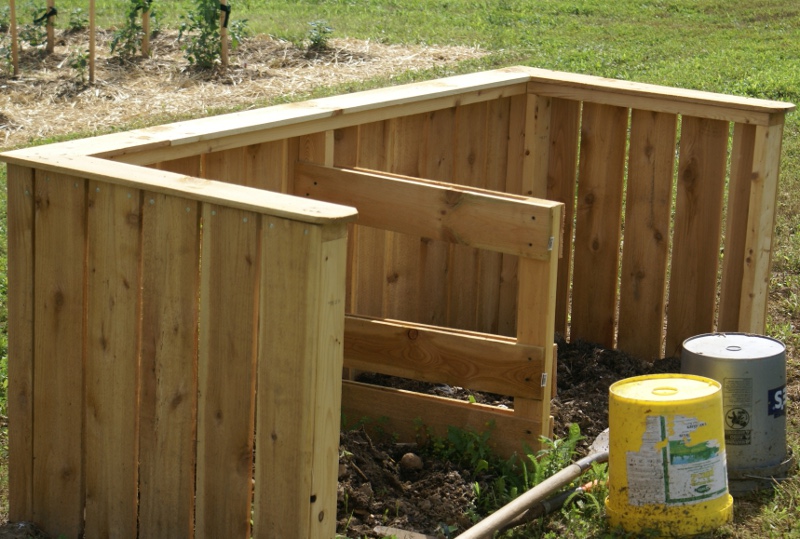
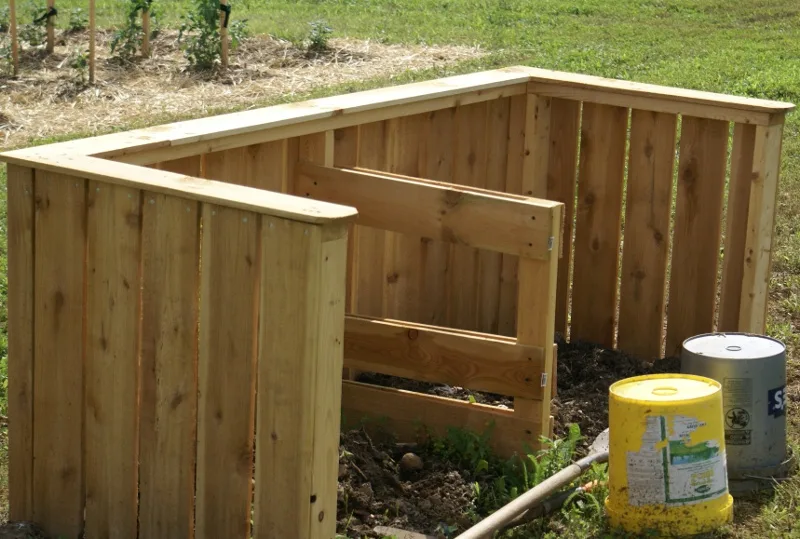
Although we didn't quite get it finished before winter hit - we will hopefully have the silo up and installed by the compost bins in the garden.  The silo will hold tons of shredded leaves to use throughout the year in the garden and compost bins

Although we didn’t quite get it finished before winter hit – we will hopefully have the silo up and installed by the compost bins in the garden. The silo will hold tons of shredded leaves to use throughout the year in the garden and compost bins

When completed, we will also have the garden silo.  It will hold tons of shredded leaves collected from last fall to use as mulch on garden plants and rows – and to add organic material to compost batches throughout the season.  Along side of the silo will be the double compost bin and one of our 275 rain water collection tanks.  The tank holds enough rainwater to water the garden for 20 days, and is filled from our rain collection tanks from the barn roof.

No matter what happens, one thing is for sure – we will have fun with the whole gardening process!

Happy gardening!   – Jim and Mary

If you would like to receive our weekly DIY, Gardening and Sunday Farm updates – you can sign up to follow our blog via email, Twitter or Facebook in the right column.   Shared on Gnowfglins

The 2013 Garden Plan.  There is a full size picture at the bottom of the post

The 2013 Garden Plan

Homemade Chicken Stock Recipe

Have you kept up with your New Year’s Resolution of eating healthy or preparing a Sunday night family meal?

After roasting a chicken, make sure to save those bones to make your own stock.

After roasting a chicken, make sure to save those bones to make your own stock.

If you want to continue with your promise to use less preservatives, and make more ‘home made’ food, this recipe is for you – Home Made Chicken Stock!

Roasting a chicken is a great way to make that heart healthy family comfort meal in the middle of winter.  However, you can take it one step further by not throwing away those chicken bones and make your own chicken stock to freeze and use whenever you need it.  Best of all, you will know exactly what ingredients are in it.  No more excessive sodium, flavor enhancers, or preservatives – just great natural flavor!

Although there are several ways to make your own chicken stock,  I prefer this method simply because its a great chance to clean out left behind celery stalks, carrots, and onions in the kitchen.  It also of course, makes great use of the chicken carcass left over from a roasted chicken.

Don’t worry if you don’t have enough time or left over veggies to make the chicken stock right away – you can simply place the chicken bones in a resealable bag, freeze it, and its ready whenever you are.  This chicken stock recipe takes several hours to slow cook for great flavor, so it’s is a perfect recipe to complete on a cold winter day when you don’t want to go outside anyway!

Chicken Stock Recipe

Ingredients

  • Ingredients simmering in a large stock pot

    Ingredients simmering in a large stock pot

    Left-over bones and skin from a cooked or raw chicken carcass

  • Celery – use the center of the celery stalk instead of throwing it in the compost pile
  • Onions
  • Carrots – yes, even those dry-looking baby carrots in the back of your refrigerator drawer
  • Parsley
  • Salt
  • Pepper

Directions:

Strain the pot to leave only the liquid - the Perfect Chicken Stock!

Strain the pot to leave only the liquid – the Perfect Chicken Stock!

Put the leftover bones and skin from a chicken carcass into a large stock pot and cover with cold water. Add veggies like celery, onion, carrots, parsley. Add 1/2 teaspoon of salt and 1/4 teaspoon of pepper.

2 Bring to a boil and immediately reduce heat to bring the stock to barely a simmer. Simmer uncovered for at least 4 hours, occasionally  skimming off the foam that comes to the surface.

We freeze our stock in blocks to be later stored in Food Saver bags for long term storage.

We freeze our stock in blocks to be later stored in Food Saver bags for long-term storage.

3 Remove the bones and strain the stock.

4 You can store in the refrigerator for up to a week, or store in the freezer for months.

For a terrific cold & flu buster – you can use that homemade chicken stock soup recipe for our Chicken Jalapeno Soup, you can find the recipe here:
Chicken Jalapeno Soup Recipe

Enjoy!

Mary and Jim

**If you would like to receive our Recipe Of The Week each Friday – be sure to sign up to follow the blog, hit the “like” button on the Facebook sidebar, or follow us on Twitter.

How To Build An Indoor Seed-Starting Rack – Cheap!

Our seed-starting rack stand - room for over 500 seedlings!

Our seed-starting rack stand – with room for almost 600 seedlings!

The dining room table / mini  garden area last spring

Our dining room table / mini garden area last spring.

For the last few years, in the late winter months, our dining room table transforms into our seed starting area – or as we like to call it – our mini garden. We actually had it down to a science, using a few inexpensive shop lights to grow our plants healthy and strong. The mini garden set-up unfortunately also rendered the dining area useless for the 6 to 8 weeks it took to germinate and grow all of the ornamental pepper and garden plants we use.  Not to mention, some strange looks from company wondering what we were “growing” in there under the dim glow of flourescent lights :) .

So, for this week’s DIY segment –  we thought we would design and build our very own lighted seed-starting rack. The rack will allow us to move the entire seed starting operation out of the dining room – and into an unused portion of our basement.  It also allows us to double the seeds and plants we can start indoors in less space – from the 4 flats we could start on the table, to a full 8 flats.

We wanted it to be simple, strong, and of course, as always – cheap!

Using just nine simple  2 x 4 x 8 pieces of lumber, a single sheet of particle board and 4 inexpensive double-bulb shop lights – this can be made from scratch for around $50 to $70. Even less if you happen to have some old shop lights or scrap lumber laying around!   It will accommodate up to 8 full size seed trays on the two growing shelves – and can grow up to 576 plants if using the 72 pack cell inserts.  There is even shelf space at the bottom to store gardening supplies – or if you are really ambitious – another layer of plants!  The best part of the project – it can be assembled with simple tools in less than an hour or two. In our case –  we cut, built and assembled it in the time it took to watch the Houston Texans take our Cincinnati Bengals out of the playoffs! It’s also strong and can double as a great storage shelf when not in use the rest of the year.

Here is how we built it:

Once you have your 3 rectangles assembled - screw in the four 6' vertical boards to the bottom shelf first

Once you have your 3 rectangles assembled – screw in the four 6′ vertical boards to the bottom shelf first

Materials List:

(9)  ea. 2  x4  x8′s
(4) ea. Hanging Shop Lights
(1) 4′ x 8′ sheet of 1/2 strand board or plywood
(50) 3″ screws
(8 to 12) 2″ screw hooks

Tools Needed:

Circular or Chop Saw
Screw Gun
Tape Meassure

How We Built It:  

(We have included extra photos at the bottom to help show the building process)

Start by cutting all of your pieces:

You will need to cut the 2×4′s into the following sizes:
4) ea. 6′ long
8) ea. 4′ long
8) ea. 2′ long

Taking the 4′ x 8′ sheet of plywood or strand board, cut three pieces, each 27″ x 4′ wide – these will become the shelves of the stand.

Next - attach the sceond rectangle wood square to the top of the 4 6'support legs

Next – attach the second rectangle wood square to the top of the 4 6′ support legs

The actual building process is a snap – especially if you have two people for an extra set of hands. We normally use construction adhesive when we build anything for extra durability – but we forewent that on this project in case we ever want to disassemble and relocate the shelves.

Start by building your 4 rectangular shelf supports from the 4′ and 2′ pieces.  Create a rectangle by placing two 2′ boards flush at the ends of two 4′ boards.  Drive a single screw in the middle of each connection to create a solid rectangle.  Repeat until you have all four rectangles assembled.

Next, we will assemble the bottom shelf first. Take one of your 6 foot boards and place it flush on the end of the outside edge of where the 2′ and 4′ pieces meet. (see pictures)  Then – making sure your 6′ board is straight in the air at a 90 degree angle – we screw it in place with a total of 4 screws.  We put 2 screws that sink into the 2′ board and 2 more than sink into the 4′ board. Repeat for the other 3 “legs” and you are on your way to your plant stand.

Next – we screw in one more of the rectangles the same way – this one at the top – flush with the top of the 6′ boards. Once you have this screwed in – your stand will start to become very stable.

Attach the final two shelf rectangles for your two shelves.

Attach the final two shelf rectangles for your two shelves.

Now, we just simply repeat with the final two rectangles, screwing them in to form the bases for the growing shelves. For our set-up, we set our two shelves at 23″ apart – this allows us plenty of room to adjust the lights up and down with chains as the plants grow, and lets our plants have plenty of room to grow big.  As another option you could also evenly space the two middle shelves and actually grow on the bottom shelf as well for 3 growing areas.  For us, two is more than plenty – and we will just use the bottom shelf as for storage items.

Next, slide in the 3 27″ x 4′ shelf boards you have cut from the plywood or strand board to make your shelves.  Simply drive a few screws into the support frame to secure.

Once you have all of your shelves in, its time to hang your lights. Simple screw hooks work great here.  A small pre-drilled hole will help you screw them in.  We install 2 hooks on each side – spaced evenly on the 2 foot end bars.  Most of the inexpensive shoplights at the big box stores will come with a small chain and S hook for the light – just install and your set.  To make ours even easier to operate – we are going to install a small power strip on the side, allowing the lights to be turned on with a single flip of the switch.

There you have it – an inexpensive seed-starting stand!  If you want more information of starting seeds – you can see our article from a few weeks back – How To Easily Start Seeds Indoors

If you would like to receive our weekly DIY and Gardening Posts – be sure to sign up to follow our blog via email, Twitter or Facebook in the right column.

-  Jim and Mary

Shared on Savvy Southern Style, Gnowfglins

Close up of the rectangle shelf supports attached to the post.  We attach 4 screw on the outside of each shelf  angle support to add extra strength to each

Close up of the rectangle shelf supports attached to the post. We attach 4 screw on the outside of each shelf angle support to add extra strength to each

Four screws are driven in to the outside of each post at every shelf corner

Four screws are driven in to the outside of each post at every shelf corner

Side View of the shelf supports

Side View of the shelf supports

Measuring Down For The Shelves

Measuring Down For The Shelves

Use a level to make sure your shelf supports are level when attaching

Use a level to make sure your shelf supports are level when attaching