Happy First Birthday Girls – The Chickens Turn 1

Foghorn posing for an up close shot - Foghorn just enjoyed his first birthday on the farm

As Jim and I  took a small break last week between tasks at the ‘Farm’, we began to think of where we were last year at this time with our dream.  We sat up under the garden pergola and scanned the property and laughed about the day we spent hours researching how to raise day old chicks.  We had read about diseases, brooders, breeds, feed, etc….   until we felt comfortable that we could become suitable ‘parents’ to day old chickens.

Jazzy checking out the new chicks...

In fact, I am pretty sure we could have written the book ‘What To Expect When You Are Expecting…..Chicks”.

Just like new parents do, we brought them home to their well-prepared brooder and sat and watched them.  Yes,  sat and watched them sleep, wake up for a few minutes to eat and drink, and sleep some more.   We then introduced the girls to our black lab dog, Jazzy.  Now Jazzy is a ‘single child’ and hasn’t had to share love, affection, or snacks with anyone else.   She was very interested in the new arrival and wanted to be a part of the ‘watching’.  Of course, as nature progressed – and the girls got bigger – Jazzy also wanted to see what it would be like to try to put one in her mouth – so at that point – the dog and chicken show ceased!

The coop - now painted brown and black to match the barn.

So the day finally came.  We had finished building their coop and hauled it out the farm as the first “building” on the property.  We secured it with a wire mesh bottom – a brick floor, and a coop run that included burying a portion of the fence in concrete to make sure the raccoons and other predators couldn’t get to them.  And we watched them grow – and grow – and grow.  And every day we would check those boxes  waiting and waiting for that first egg.  And then it came – week 16 – a single tiny egg in the box!  I’d be lying if i didn’t say we jumped up and down.

Ready to lay eggs in one of their favorite nesting boxes.

We had done it – We had raised our girls to be egg layers.  Within another week – they started coming daily – and the chickens were established as our first succesful farm project.

The chickens have been one of the most rewarding and fun projects so far in the short time since we began the “farm”.

Chickens in the brooder - all lined up at age 4 weeks learning to perch

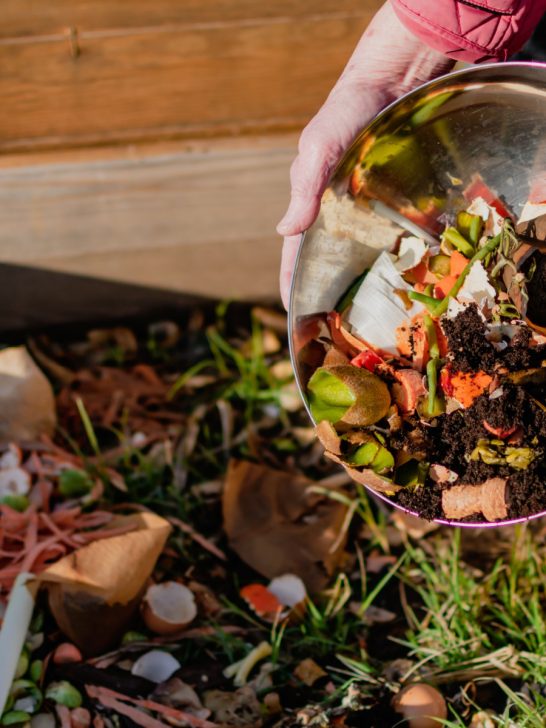
They not only provide us with an incredible bounty of eggs – but do an incredible job of keeping ticks, mosquitos and bugs of all sorts and kinds at bay.  They help control our weeds and give us great “material” to use in our compost pile.

We love sharing what we have learned with others, and how easy it can be to have and care for chickens in your back yard.  It’s somewhat funny – but it always seems that two questions come up more than any others when asked about our chickens.

1) Where is your rooster? and, 2) How did you train them to lay their eggs in those boxes?

Well, as many of you know – you don’t need a rooster to have eggs – in fact – in many cases – such as ours – the hens are much more tame and comfortable not having “Big Daddy” around :)    It also makes it a lot easier when not having to worry about the fertility of your eggs.  It’s pretty simple – no rooster – no checking for chicks!

As for that training part about laying in their boxes…I must confess we have a little fun now and then making up a tale about the intensive training process to get them to lay in the boxes – i.e. – placing music in the box, or special treats – or my favorite – the special “chicken” shock collars we use to train them …. only to break into laughter and let the perplexed faces know that it’s simply nature taking place – and chickens prefer to lay their eggs in those little boxes nests all on their own.    And please, no worries – we treat the chickens like family.  So even if there is such a thing for chickens as shock collars – we don’t use them!

A bountiful harvest of eggs from the ladies

So far – the chicken experiment has gone better than we could have ever expected.  We have yet to lose a single chicken in spite of many raccoon and coyote visitors to the outside of the coop.  Then, of course, the hawk  who came awfully close to snatching one late last fall put a little scare into us all as well.   In the last 365 days – our nine little hens  have given us an average of 56  eggs a week since about the 17th week of their lives – that’s about 2000 eggs – or 175 dozen eggs!  Not bad production for the ladies at all!  We have had plenty of eggs for family, friends and our own hungry kids.  We now sell a few dozen eggs each week to friends who want those great tasting farm fresh eggs – which has turned out to be more than enough to cover our feed and fresh straw costs for the coop (which run about $20 per month on average).

So Happy First Birthday Girls!   Thank you for a great first year on the farm – and here’s to another great one this year!

9′ long and made from recycled barn flooring – our egg sign for the barn.

Meet Celi and John from the prairies of Illinois (via New Zealand) This week’s “Tell Us Your Story”

We want to thank Karen and Eric Thompson and the Lil Suburban Homestead blog ( http://lilsuburbanhomestead.wordpress.com/ ) for their outstanding feature story last week!  We had so many wonderful comments and emails from the readers impressed with what they are accomplishing on their North Carolina homestead!  Keep up the great work!!!

This week’s “Tell Us Your Story” comes from the prairies of the Midwest – via New Zealand. Celi’s blog, The Kitchens Garden ( http://thekitchensgarden.wordpress.com/ ), chronicles the stories of Celi and John and their farm in brilliant words and vivid pictures.  We are so excited to have them on board for this week’s feature farm!  To follow along each week with our Sunday feature “Tell Us Your Story”, you can simply enter your email address on the right of our blog and click “follow”.  Better yet – if you know of a farm that would make a great feature story, drop us a line and bend our ear – we love to hear of stories from all over.

And now, here in their own words, are Celi and John’s story:

MEET CELI AND JOHN:

Good morning. Jim and Mary kindly asked me to tell you a little about the wee old fashioned farmy my husband and I run out here in the middle of the prairies in Illinois.  What a wonderful idea to have this as a regular page for small farmers.

Daisy on the farmy...

I first came to The United States as a young girl on a Foreign Exchange Program, straight from a New Zealand convent.  Twenty five years later, five years ago, I returned to stay, marrying the man I had met when we were both 17.   A lot had changed on this wee farm over the years so we decided to start changing it back. Living simply with less has been so liberating.

guineas about the farm

So we put new chickens in the old chicken coop.  Heaved all the rubbish out of the barn and started to rebuild it.  We put up fences and dug gardens. Then we brought  Daisy  as a five day old calf. And so began the slow journey  into the world of sustainable farming.  I say slow because each step needs to be consolidated before we go to the next one. We do not want more animals than the land can sustain.  Land needs to rest between crops.  And John works full time so I work alone, and I need a rest between crops too!!

Daisy is the dairy cow.  An Ayrshire.  A big cow now. She is taller than me.  In fact she has grown so tall that I have to stand on a box to brush her back and I am 5’7”.  Daisy is due to calve in May.  Then I will start to milk.    From some of the milk I will make cheese.  I make quite a good parmesan cheese. And am still practicing the cheddars.  (read chook food!)

Mia, one of two ewes under the care of Celi and John

We have two ewes,   Mia and Mama and the sweetest ram in the history of rams called Hairy MacLairy. He is good natured,  unless you make the mistake of closing a door on him in the barn, he does NOT like to be enclosed.  He will smash through the gate using his head as a Battering Ram.

(S’cuse the pun) Otherwise he tiptoes about the place and smiles his sheepish smile. I need to add that for your own safety you should never turn your back on a ram – sweet or not.

We have a Hereford calf -Queenie Wineti, who is being raised to be the Mother of my beef herd of two, can I call two cows a herd?  The Hereford looks like a midget next to Daisy and spends most of her day being teased by the barn cats.

Queenie posing as cow art

This spring I am going to introduce two heritage pigs. One to keep  and breed and one for the freezer. The one we are keeping will be called Sheila the Babe.  Sometimes I sound quite bonkers.   But I only name the animals I keep.

Hopefully my lambs and pigs are all due to arrive, one way or the other, in the same month as Daisy’s calf so Daisy’s milk will go to feeding them too.

TonTon in action...

Don’t sheep feed their own lambs, I hear you ask.? Well usually they do!  Unless they are Mama who has the unfortunate habit of throwing more than the usual twins.  Last spring she had four lambs, quads.  So Miss C had to do some bottle feeding.  Fresh raw cow’s milk works fine.  The idea of sustainable farming is that the farm feeds the farm. It is a cycle.  Nothing is wasted and nothing is perfect!

All our animals are on either green pasture or in the winter – dry pasture (hay).  The cows are corn free.  We don’t have a lot of land so we focus on growing very good high quality forage.   For grass fed beef and good creamy milk, the cows need to be eating lots of variety in their grasses and a high percentage of their fodder needs to be from legumes , like clovers and alfalfa, chicory and mustard greens.

The bees doing their part....

Plus some weeds, many weeds are good feed.  Every year one of the small meadows will be turned over on a five year rotation  and planted in a high nitrogen  Buckwheat cover crop to rest, then re-sown in fresh grasses and legumes the following spring.   And the bees have buckwheat flowers for the summer!

I call Daisy the Mother Ship because not only does she supply enough manure to make a small mountain of compost for the gardens , but she will also supply the milk to feed all  the babies,  and the household,  plus the milk fed pigs.  The chickens supply the eggs for both the cows and the pigs and the humans.  Their manure also goes into the compost pile. Do you see how the cycle is beginning? The sheep supply the wool that I clean and stuff into burlap bags for the dog’s winter beds.  Hairy’s fleece is for spinning.  One day.  The barn cats keep the mice down and sleep cuddled up to the cows at night.

Flower garden providing a haven for the eyes and the bees

And I can anticipate your next question. Why?  Why did I decide that my poor husband should use his weekends cutting and planting old power poles for fence posts. Why did I talk a grain farmer into buying the old grain bin and taking it AWAY!. Why on earth do I want to milk a cow?  Why did I give up my job in London, with all that lovely champagne, to move out to the middle of absolutely nowhere and set up a wee farm right slap bang in the middle of a corn field. A nasty intensive industrially managed cornfield! Then proceed to grow and make all my own food.

Celi's bread

And live without central heating or air conditioning in deep prairie land in Illinois.  Because this is a lot of work.  When my gas cooker finally gives up the ghost I am going to replace it with a wood fired Aga and an outside solar, rainwater summer kitchen. (Don’t tell John, he does not know this yet!! I will wait until he has finished this summer’s Grey Water  irrigation programme and the Garden Room with a Solar Heated  Rainwater Bath.)

So why?  Well firstly I married a man who lived slap bang in the middle of a corn field -That was helpful!  And I do not have a cultural acceptance of fast fatty food as OK.  I dislike waste and wasteful behaviours.  We want to be able to depend on ourselves for our survival. We want to eat fresh good food.  We do not want to be dependent on these big industrial farmers, who are not really farmers, and their lobbies, making decisions about the quality of my food and where I should buy it and when and what chemicals I have to consume along with it.   I don’t eat processed foods.

Chickens roam about

So we grow our own meat, eggs, vegetables, I make my own cheese, butter and yoghurts and preserves.  We grow our own grapes for wine, (of rather dubious quality so far!)

We plant Pear and Apple trees.  I have over 500 asparagus plants maturing this year.  We have bees for honey and I have as much space in flowers as I have in vegetables and that is a lot of space.  We farm organically, though we will never be certified organic because I can’t be bothered, and I sing as I work.  Then take photographs and blog about it.

But there is another reason too. I want to prove that anyone can do it.  I grew up on a beach in New Zealand.  I am learning this as I go along, so you can too. It is powerful to grow your own food and sustain your lifestyle using your own hands.

John has another very important reason for supporting me and my daily blog The Kitchen’s Garden. He wants other people to begin to save the barns too. So many beautiful empty barns, falling into disrepair for want of a few animals and a simple earthy change in the way we view our food supply.   So many barns burnt to the ground when we could have gone in first and recovered the timbers.  So much beautiful work buried so the combine harvester does not have to turn a corner.  So much history gone without conscience.  John wants to encourage you to come back out to the country. Many of these old houses and their barns are for sale, and they are cheap.  It is not too late. And it is a good life. It is simple.

And the future holds no fear for us.  It is a wonderful challenge. No matter what happens we will always be able to feed ourselves, and warm ourselves and feed and warm those who come here. Have fun.

celi