
The Best Way To Keep Deer From Eating Bushes, Plants And Trees This Winter
Wondering how to keep hungry deer from eating the bushes, plants and trees in your yard this winter? There is nothing more frustrating than looking out the window in winter and discovering that deer have turned your favorite bushes into their latest meal.
An arborvitae that looked full and beautiful in November can be nearly bare along the bottom by February. Young shrubs can lose their branch tips, and spring-flowering plants can have their flower buds eaten long before they ever get a chance to open.
Unfortunately, winter is when many landscapes become especially inviting to deer. As other food sources become harder to find, the leaves, twigs, and buds around your home can become an easy meal.
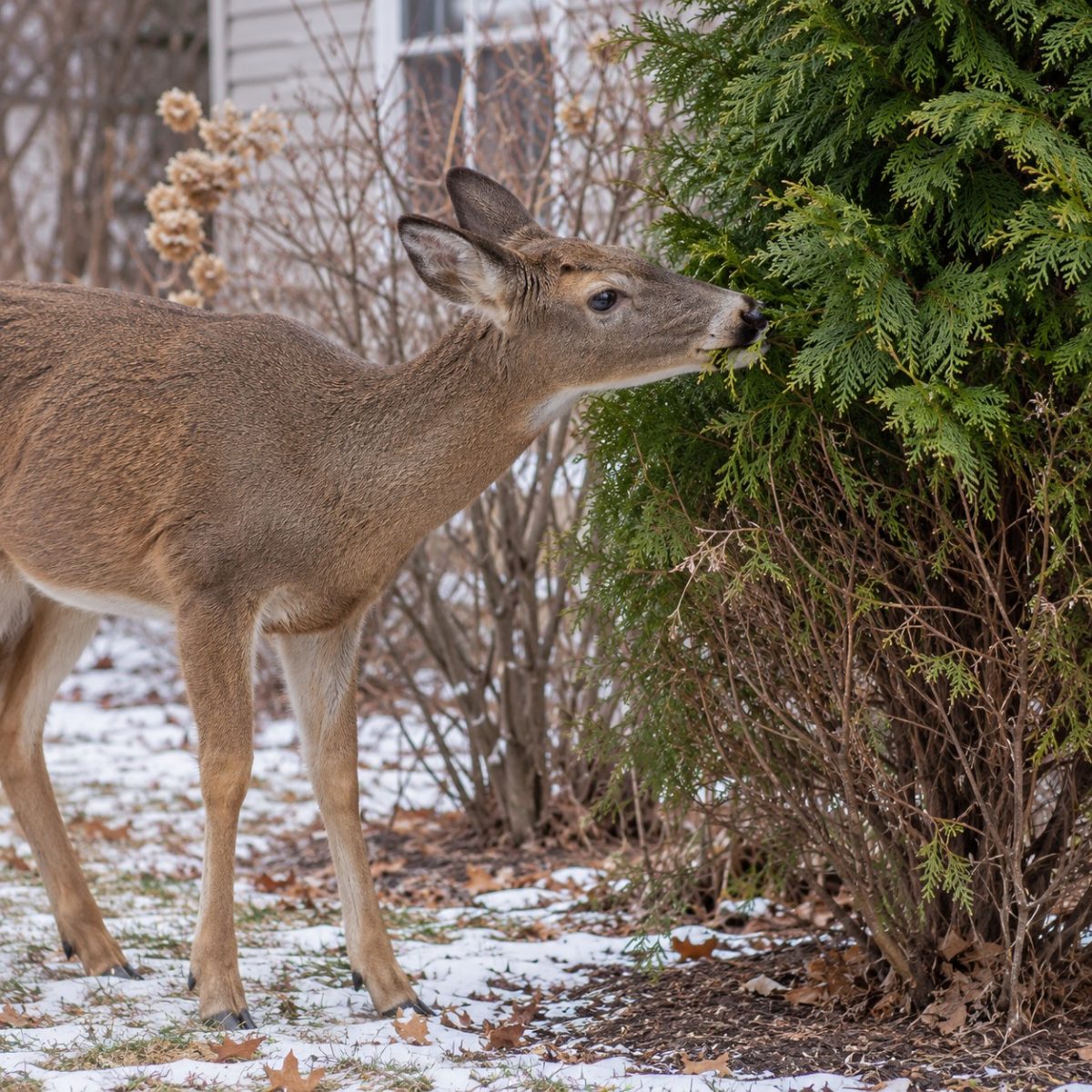
The good news? You can protect vulnerable plants before that damage happens. And the most dependable approach is straightforward - put a properly installed physical barrier between deer and the plants they want to eat.
Repellents can help in some situations, but for bushes you cannot afford to lose, a temporary fence or individual protective cage offers the most reliable protection.
How To Keep Deer From Eating Your Bushes & Plants This Winter
Why Deer Eat More Landscape Plants In Winter
Deer browse on woody plants as part of their normal diet, but winter increases the pressure on your landscape.
Snow covers low-growing vegetation. Many leafy plants disappear or go dormant. As available food changes, deer may spend more time feeding on evergreen foliage, young branches, and flower buds.
That does not mean every shrub will be eaten. Deer preferences vary by location, the available food, and the number of deer using the area. But once deer discover a dependable feeding spot, they can return repeatedly. A few bites on one visit may not look serious. Several weeks of browsing can leave a shrub badly misshapen.

Winter damage can also affect next spring’s flowers. Deer that remove buds from a flowering shrub may take away much of the coming display without killing the plant itself.
That is why prevention matters. Waiting until a bush looks bare means the damage has already occurred.
Which Bushes Need Protection First?
Start with plants deer have eaten in your yard before. Your own landscape history is often more useful than a general list of preferred plants. Arborvitae and yews are frequent targets in many areas. Deer may also browse rhododendrons, azaleas, roses, and other shrubs, particularly when food becomes scarce.
Newly planted shrubs deserve special attention. A small plant has less growth to spare, and repeated browsing can make establishment more difficult.
Protect young trees as well. Deer can eat reachable shoots and buds, while bucks may damage trunks by rubbing their antlers against them in fall. If protecting everything is impractical, concentrate on your most vulnerable and valuable plants.
Perhaps the best advice is to remember when you plant next year - remember to plant with deer in mind. See our article: The Best Deer Resistant Perennials To Plant - 6 Perennial Plants Deer Leave Alone!
Listen To Our Garden Podcast Below

The Best Protection To keep deer from eating bushes - Barriers
A physical barrier works because it prevents access rather than depending on a deer deciding that a plant smells or tastes unpleasant.
For individual shrubs, welded-wire fencing formed into a cylinder is a practical option. It holds its shape, can be secured to stakes, and can often be reused for several winters. The key is building the cage large enough and tall enough to keep deer from reaching the foliage.
For larger areas - deer fence netting works as well. It is also a far less expensive option and can be reused. But it needs to be put up away from the bush or plant. Leaves touching the outer branches offers little protection if deer can bite through the openings. Likewise, a short cage may leave the top of a shrub within easy reach.
To keep deer from eating bushes and plants - think about the space a deer can reach from outside the barrier, not simply whether the plant fits inside it. Affiliate Link: Deer Fence Netting, 7x100ft Garden Net
How To Build A Protective Cage Around A Shrub
Begin by measuring the width of the plant, including its longest branches. Form a cylinder of sturdy fencing around the shrub, leaving a generous gap between the branches and the wire. Allow enough clearance that deer cannot easily reach through and eat the foliage.
Use stakes placed around the outside to support the cage. Fasten the fencing securely so wind, snow, or an animal brushing against it will not push it onto the plant.
For individual shrubs and young evergreens, fencing around six feet tall is a useful starting point when deer browsing is the concern. Taller plants, deep snow, or an exposed top may require a different arrangement.
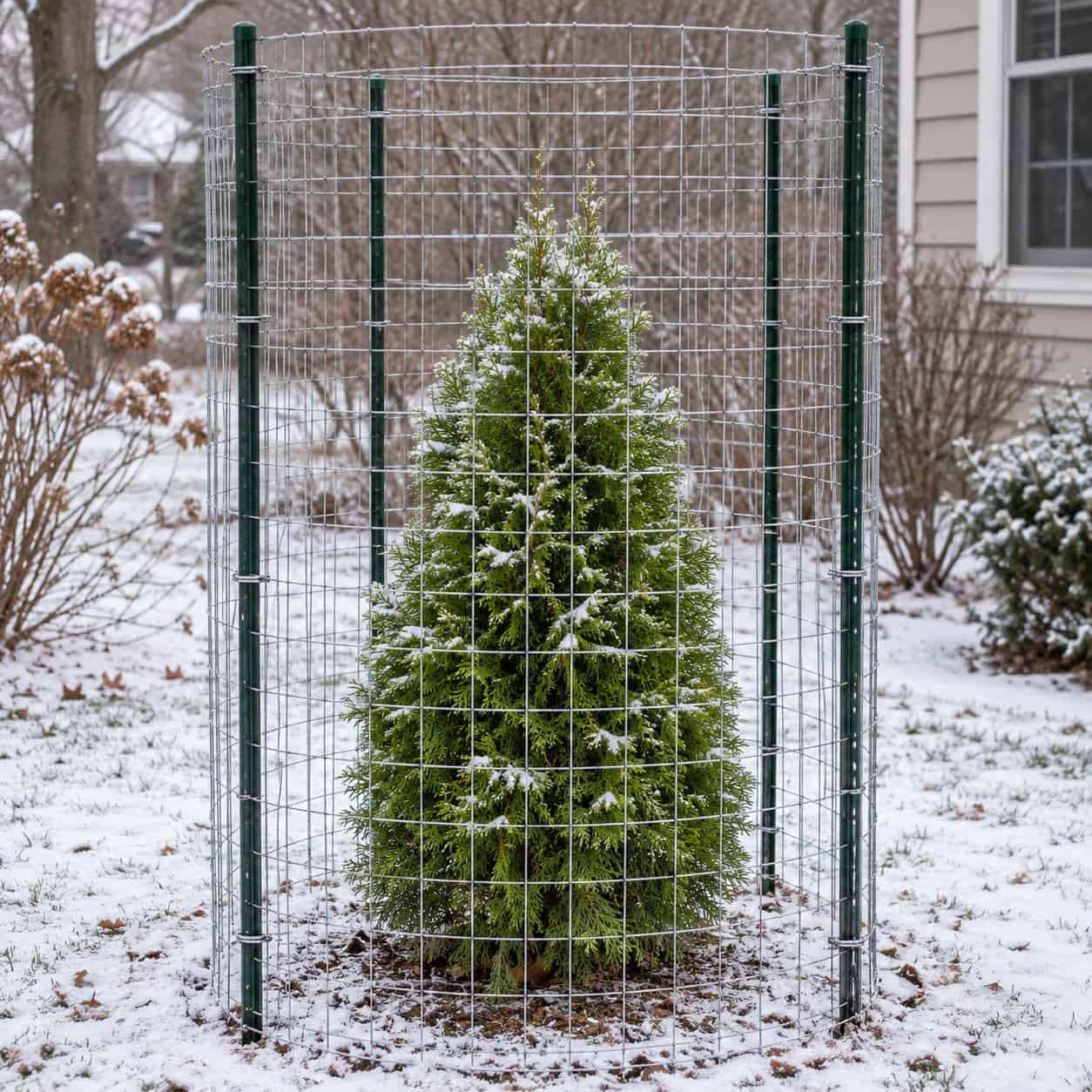
Keep the opening small enough that deer cannot enter the enclosure. An individual cage works differently from a fence surrounding a large garden - there should be no usable space for a deer to jump into.
Check the finished cage from every direction. Make sure no branches are sticking through and no section can easily be pushed inward.
Protecting A Row Of Bushes
For a hedge planted close together, enclosing the entire group may be easier than building separate cages. Install sturdy posts and fencing around the planting, keeping the barrier far enough from the foliage to prevent browsing through or over it.
Pay attention to the ends. A fence stretched only across the front of a hedge will not help much if deer can simply walk behind it.
A building wall may form one side of an enclosure, but close off the remaining access points.
For a large area with room for deer to jump inside, a properly constructed fence about eight feet tall is the usual dependable standard. Shorter fences that help around a single small plant should not be assumed to exclude deer from a roomy garden.

Gates and gaps matter as much as fence height. One open entrance can undo the protection around the rest of the planting.
Do Deer Repellents Help Keep Deer From Eating Bushes?
Deer repellents can reduce browsing, particularly when deer pressure is moderate and other food is available. Some discourage feeding through taste. Others rely primarily on odor. Their effectiveness varies with the product, weather, application, and how determined the deer are.
Apply before browsing becomes established. Follow the directions for temperature, drying time, coverage, and repeat applications.
Winter conditions can complicate treatment. Some products require temperatures above freezing or a dry period after application. Rain, melting snow, and weathering may reduce protection. Do not assume one application in fall will last until spring.
For a favorite arborvitae or expensive new shrub, use repellents as extra support rather than the only protection.
Skip The Homemade Tricks As Your Main Defense
Bars of soap, bags of hair, and other homemade deterrents are commonly recommended for deer. They may appear to help temporarily in some yards, but their performance is inconsistent. Deer can become accustomed to unfamiliar objects and smells, especially when they are hungry.
Motion-activated lights and noise devices can also lose their effect as deer learn that nothing follows the disturbance.
If you have a history of serious browsing, put your effort into a barrier that physically keeps deer away from the plant.
Install Protection Before The Ground Freezes
Late fall is the easiest time to put winter barriers in place. You can drive stakes while the ground is workable, arrange fencing without snow in the way, and protect plants before deer begin making regular visits.
Once installed, walk the planting occasionally. Look for fresh browsing, shifted fencing, exposed branches, and tracks that show where animals are approaching. Leave protection in place while browsing pressure continues. In some yards, that extends into spring when tender new growth appears. Happy Gardening - Jim & Mary.
The Farm @ Old World Garden
Jim and Mary Competti have been writing gardening, DIY and recipe articles and books for over 16 years from their 46 acre Ohio farm. The two are frequent speakers on all things gardening and love to travel in their spare time.
As always, feel free to email us at thefarm@owgarden.com with comments, questions, or to simply say hello! You can sign up for our free email list in the subscribe now box in the middle of this article. Follow us on Facebook here : OWG Facebook. This article may contain affiliate links.
