
Looking for a few simple ways to get your pepper plants to ripen as many peppers as possible in September? Before the growing season comes to an end?
By the time September rolls around, pepper plants can certainly begin to look a little tired. After spending months producing blooms and peppers, plants often have a mix of mature fruit, small developing peppers and a surprising number of brand-new flowers.
Unfortunately, there is only so much energy a pepper plant has to give. And as the days become shorter and nighttime temperatures begin to cool, there is also less and less time for all of those peppers and blooms to turn into a harvest.
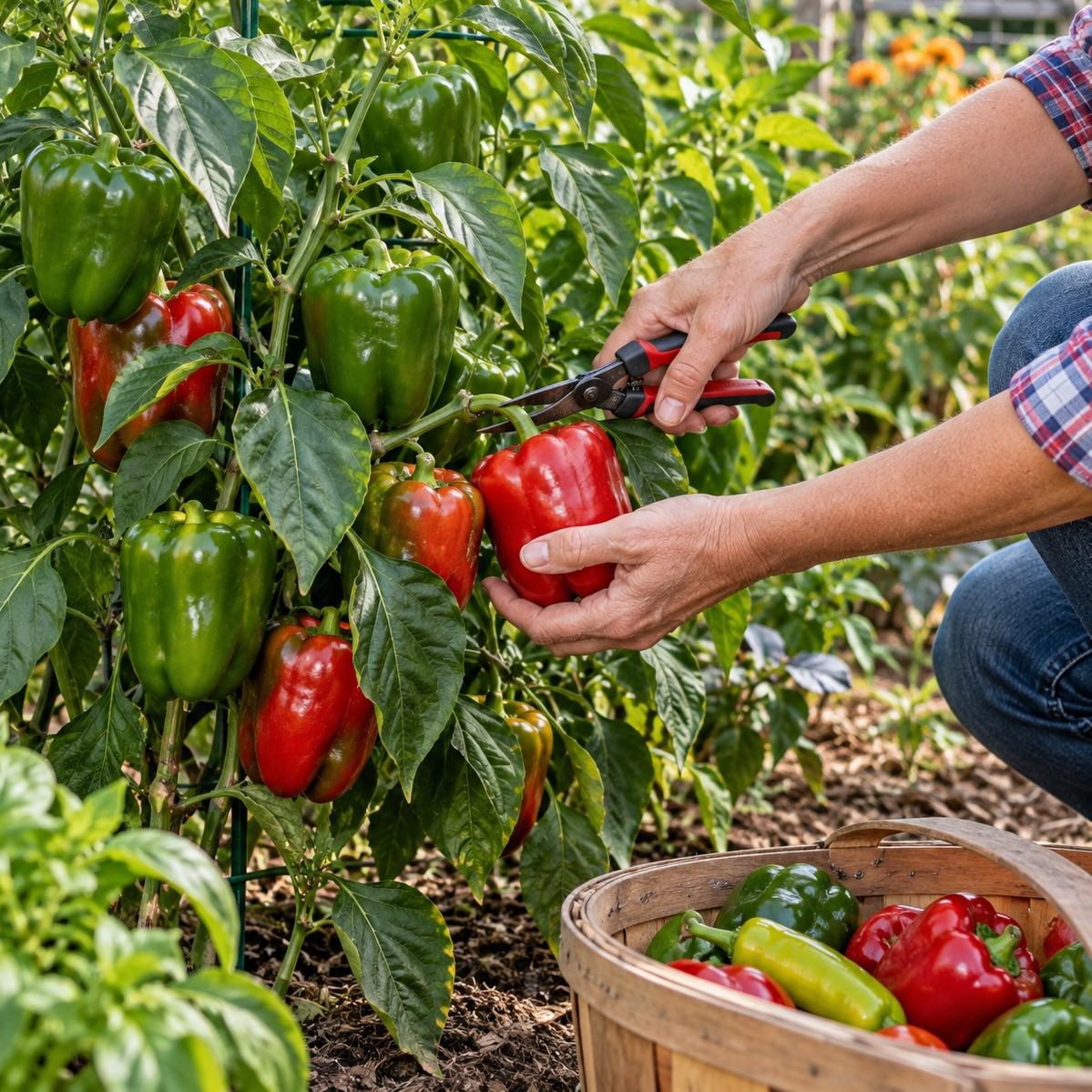
But here is the good news – with just a little help, you can get your plants to concentrate their remaining energy exactly where you need it most.
3 Big Tips To Get The Most From Your Pepper Plants In September
#1 Pick Peppers Regularly – Don’t Let Plants Become Overloaded
One of the easiest ways to keep pepper plants productive in September is to simply keep picking! Pepper plants only have a limited amount of energy available. The more peppers they are trying to maintain and ripen at once, the more their resources have to be divided.
This is especially important late in the growing season. A plant covered in mature peppers is spending valuable energy maintaining and ripening fruit that could already be harvested.
Picking peppers regularly helps take that burden off the plant. Once mature fruit is removed, the plant can redirect more of its resources toward the smaller peppers that remain. Even better, you don’t always have to wait for peppers to reach their final color before harvesting.
Picking Peppers Early
Most sweet and hot peppers can be picked while green once they have reached a usable size. Allowing peppers to mature to red, orange, yellow or another final color gives them a sweeter, more developed flavor. But it also requires them to remain on the plant considerably longer. In September, consider what you need most.
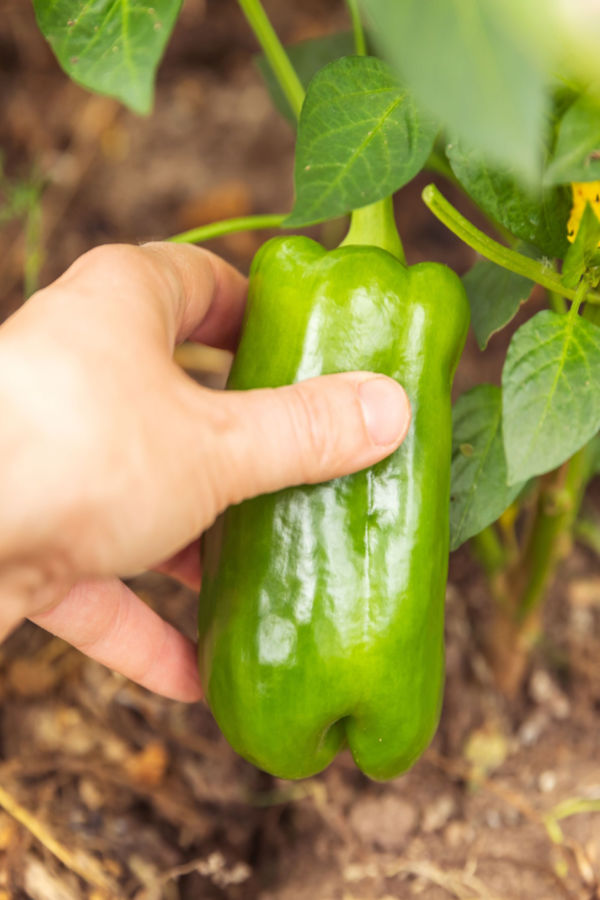
If you have plenty of peppers already ripening, allow a few to develop their final color. But if the plant is heavily loaded with fruit, harvesting some peppers green can help lighten its load.
This is particularly helpful with bell peppers. Removing several full-size green bells can give smaller fruit higher on the plant a better opportunity to grow before temperatures turn cold.
#2 Fertilize For Blooms & Fruit – Not More Leaves
The second big secret to getting more from your pepper plants in September is giving them the right kind of fertilizer. And this is where many gardeners accidentally work against their plants.
Early in the growing season, nitrogen is important because it helps pepper plants develop strong stems and healthy foliage. But by September, encouraging a pepper plant to produce leafy growth is the last thing you want. Unfortunately, a fertilizer high in nitrogen can do exactly that.
Instead of helping the peppers already on the plant develop and ripen, excessive nitrogen can encourage the plant to put its resources into producing new stems and leaves.
For late-season feeding, look for a fertilizer with lower nitrogen and higher levels of phosphorus and potassium. On a fertilizer label, these are represented by the three numbers known as the N-P-K ratio. The first number represents nitrogen, the second phosphorus and the third potassium.
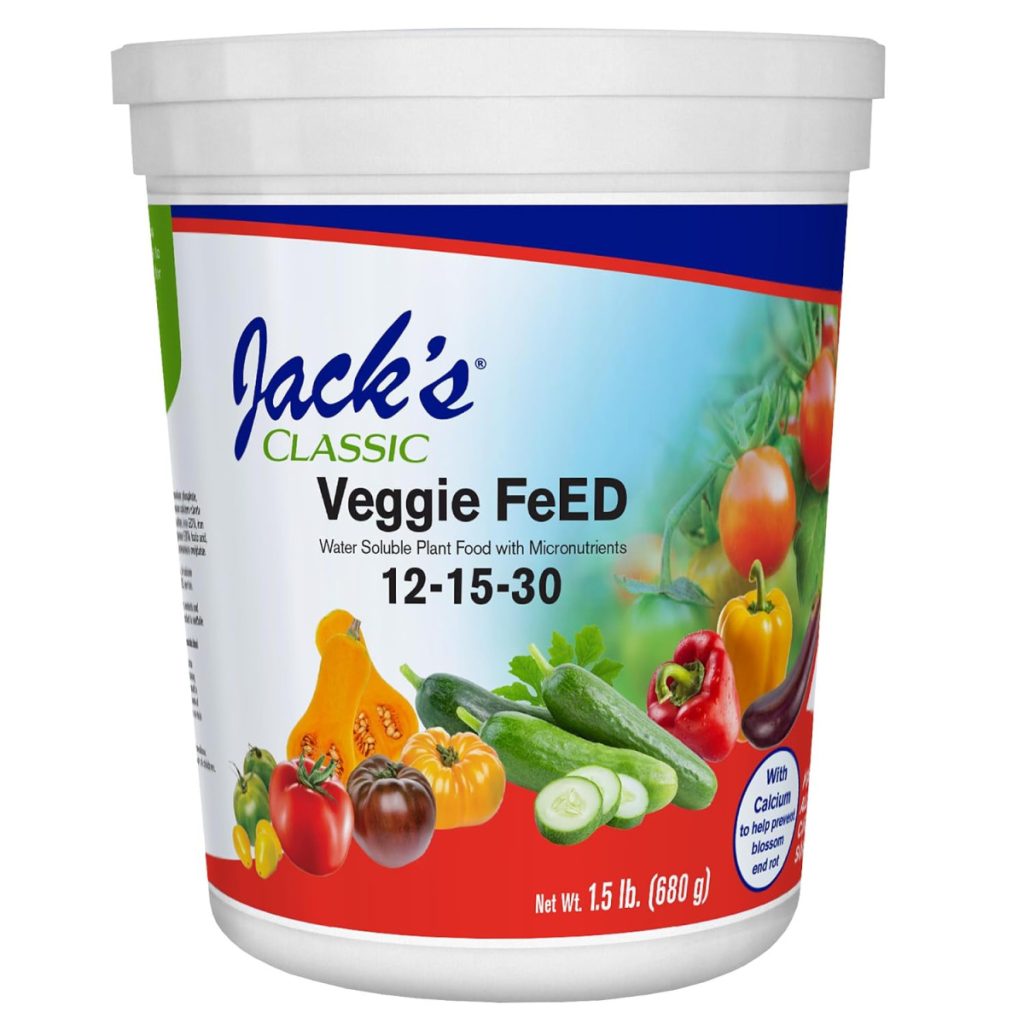
Phosphorus plays an important role in root development, flowering and fruit production, while potassium supports overall plant health and helps with fruit development and stress tolerance.
Why Liquid Fertilizer Works Well In September
A liquid fertilizer formulated for tomatoes and peppers is often a good choice, especially when its nitrogen level is lower than its phosphorus and potassium levels. Affiliate Link: Jack’s Classic 12-15-30 Veggie Feed Water-Soluble Fertilizer, 1.5lb
With the end of the growing season approaching, plants need nutrients they can access quickly. Liquid fertilizers deliver nutrients in a form that roots can absorb much faster. The key is to feed lightly but more often rather than giving plants a massive dose.
A light feeding every 7 to 10 days is more than enough to help support plants through their final weeks of production. Use about half of the recommended dose to feed on the lighter side.
#3 Remove Late Blooms On Your Pepper Plants In Mid To Late September
This final September pepper trick can be difficult for gardeners to do. After all, removing perfectly healthy flowers from a pepper plant can seem like the exact opposite of what you should do if you want more peppers.


But late in the season, those flowers can actually work against your harvest. Every flower a pepper plant produces requires energy. If that bloom is pollinated, the plant then has to spend even more resources creating a new pepper and trying to grow it to maturity.
Early in the summer, that is exactly what you want. But in mid to late September, the growing clock is ticking. A flower that appears late in the season may simply not have enough time to become a usable pepper before cold temperatures or frost bring the plant’s growing season to an end.
Meanwhile, the plant is still spending resources on that bloom and the tiny fruit it produces. That energy would be far more useful going toward the peppers that are already several inches long and simply need additional time to grow or ripen.
When To Start Removing Pepper Blooms
When you begin removing flowers depends on your climate and the expected date of your first frost. As a general rule, once you are about four to six weeks away from your area’s typical first frost, begin looking closely at new blooms.
At that point, flowers that are just beginning to form have a much smaller chance of producing worthwhile peppers. Simply pinch the flowers off with your fingers or use small garden scissors.
Don’t worry about removing peppers that are already developing unless they are extremely tiny and you are very close to frost. Concentrate first on removing fresh blooms and flower buds. And remember – now is also the perfect time to plant a cover crop to protect and recharge your garden – even while your peppers are still growing! See our article: How To Plant A Cover Crop In September While Your Vegetable Plants Are Still Growing!
Here’s to helping your pepper plants finish strong in September – and to harvesting every last delicious pepper you can from your garden this fall! Happy Gardening – Jim & Mary.
The Farm @ Old World Garden
Jim and Mary Competti have been writing gardening, DIY and recipe articles and books for over 16 years from their 46 acre Ohio farm. The two are frequent speakers on all things gardening and love to travel in their spare time.
As always, feel free to email us at thefarm@owgarden.com with comments, questions, or to simply say hello! You can sign up for our free email list in the subscribe now box in the middle of this article. Follow us on Facebook here : OWG Facebook. This article may contain affiliate links.