How To Finally Get Rid Of Wild Onions From Your Flowerbeds In Late Fall
Tired of seeing all of those wild onions pop up in your flowerbeds in late fall - and want to finally get rid of them once and for all?
Just when you think you’re finished weeding your flowerbeds for the year, up come those little clumps of green that look like someone planted chives. They often show up in late fall, after the flowers have faded and the rest of the bed is settling in for winter. And if you’ve ever pulled them in November only to see them again in early spring, you know how stubborn they can be.
The good news is that late fall gives you one of your best chances to get ahead of wild onions. The green shoots tell you exactly where to dig, and after a good rain, the soil is often soft enough to lift the clump without breaking it apart.
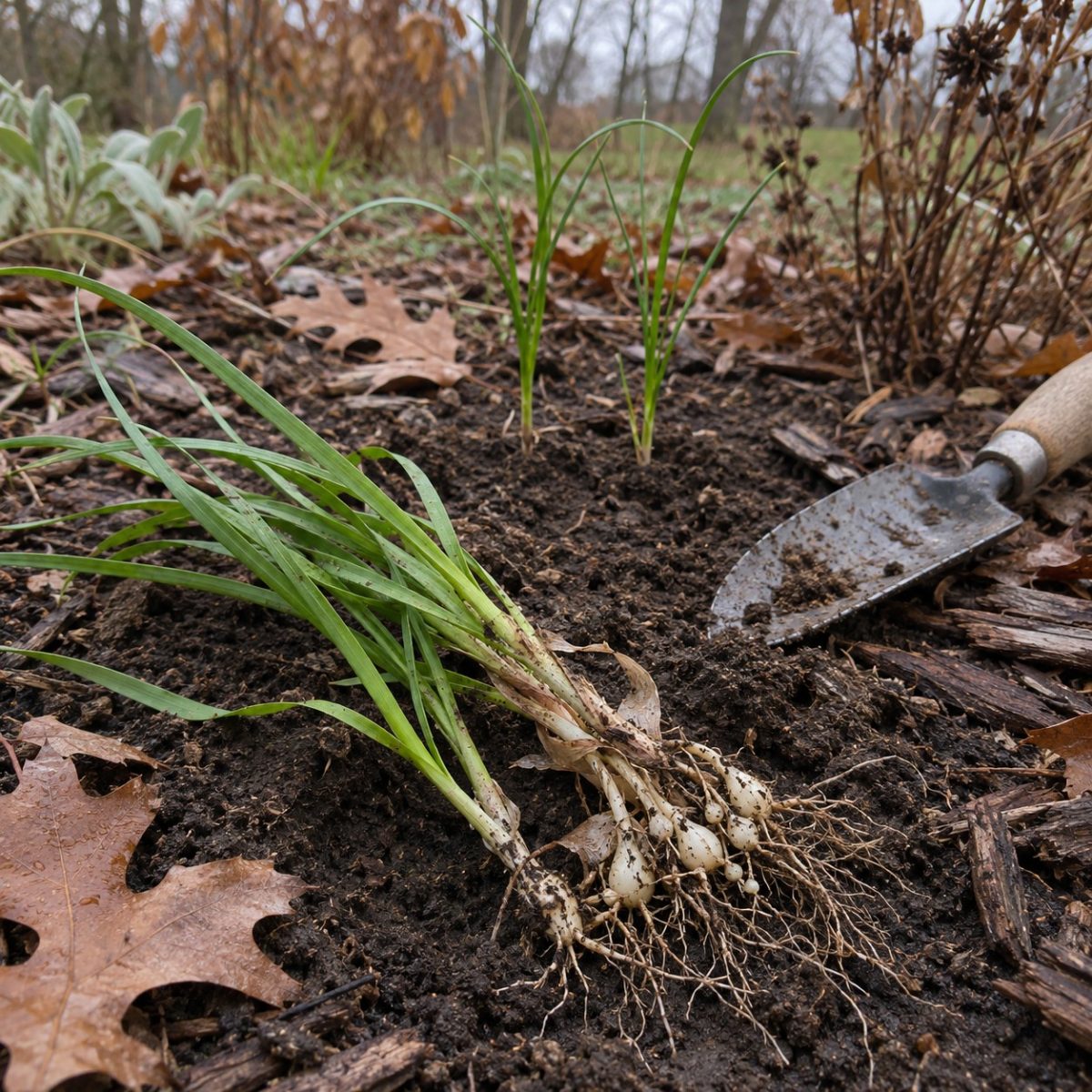
The part that makes all the difference is what comes out underneath those green tops. A single clump can hide a main bulb and several tiny daughter bulbs. Leave even a few behind, and you can be weeding the same spot again next year.
How To Finally Get Rid Of Wild Onions From Flowerbeds
Why Wild Onions Show Up In Late Fall And Early Spring
Wild onions are perennial weeds that grow from underground bulbs. Their leaves can disappear as the weather warms, leaving a bed looking clear through summer. The bulbs survive underground, and when the weather cools again, fresh shoots can pop up right where the old ones were.
Late fall is only the first round. Some bulbs send up leaves in fall, while others emerge in early spring. That’s why a bed you cleaned up in November can have a handful of new clumps by March or April.
Those spring shoots give you a second chance to find bulbs that were still hidden when you worked the bed in fall.
Some of what gardeners call wild onion is actually wild garlic. Both have slender, upright leaves that give off a strong onion or garlic smell when crushed. Wild onion leaves are generally flat and solid. Wild garlic leaves are round and hollow, like tiny drinking straws. In a flowerbed, the same digging method works for both.

Dig Up The Whole Clump While The Soil Is Moist
The easiest time to get rid of wild onions is a day or so after a soaking rain. This helps the soil to be moist and easy to work. That is what makes November such a great time to get control of them!
Grab a narrow garden trowel or a sturdy hand fork and a bucket for the bulbs. A narrow tool makes it easier to work between perennials without disturbing more of the bed than you need to.
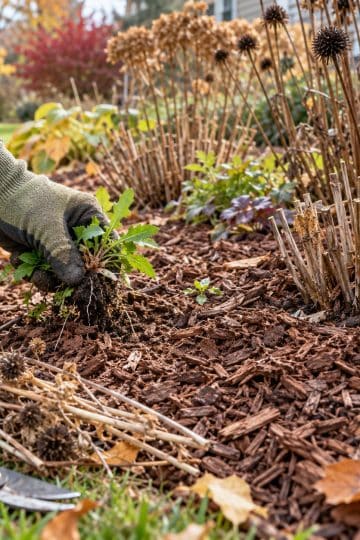
Start by brushing the mulch aside just around the clump. Slide your tool into the soil a few inches away from the shoots. Next, work it down far enough to get beneath the bulbs. If the clump resists when you lift, loosen it from another side. Once the soil gives, lift the whole plug into your bucket or onto a tray where you can see what falls out.
This is where it pays to slow down. Break the soil apart gently and look around the base of the clump for small bulbs. Some are easy to spot, while others blend right in with the soil. Check the bottom and sides of the hole before filling it back in, especially if the clump broke apart as you lifted it.
If you tug on the leaves from above, they can snap off at the soil line. The bed looks better for a little while, but the bulb can send up another set of leaves. Even when a clump seems to come out cleanly by hand, it’s worth checking the hole for smaller bulbs that may have separated.
Listen To Our Garden Podcast

Take Extra Care Around Your Perennials
Wild onions have a way of turning up in the most inconvenient places, right against a daylily or in the middle of a patch of groundcover.
In those tight spots, use the tip of a narrow trowel to loosen the soil from the outside of the clump. Ease the onion bulbs out a few at a time if that helps you work around the roots of the plants you want to keep.
Put the bulbs and any small offsets you find in the trash. A home compost pile can leave bulbs alive, and moving soil that still contains them can start a new patch elsewhere in the garden.
Put The Mulch Back After You Dig
If you want to get rid of wild onions for good, mulch is a must. Once the bulbs are out, smooth the soil and pull the existing mulch back over the spot. If the bed has thinned out, this is the time to mulch! See our article: Why Late Fall Is The Most Important Time To Mulch Flowerbeds - And How To Do It
Mulch does a good job of covering open soil and making it harder for many weeds to get started from seed. Unfortunately, wild onions already in the ground have stored energy in their bulbs, so established plants can push right through a layer of mulch.

If you see green shoots poking through, use them as a marker for where to dig. There’s no need to rake through the whole bed to get at a few clumps. Work each patch individually, replace the mulch where you moved it, and move on to the next spot.
Make A Second Pass In Early Spring
Walk your beds as soon as you start seeing new growth in early spring. Check the places you dug in fall first, then look along bed edges and around the bases of perennials. A little tuft of bright green is much easier to spot before the rest of the flowerbed fills in.
Dig any new clumps while they’re small, using the same method you used in fall. Getting them out early also gives you a chance to remove them before they send up flower stalks and have a chance to spread above ground.
To get rid of wild onions for good - keep checking in late fall and early spring over the next few growing seasons. You may go from a dozen clumps to two or three, then find a single shoot in a spot you thought was clear. Dig that last shoot the same way you dug the first clump. It may lead you right to the little bulb you missed the year before! Happy Gardening - Jim & Mary.
The Farm @ Old World Garden
Jim and Mary Competti have been writing gardening, DIY and recipe articles and books for over 16 years from their 46 acre Ohio farm. The two are frequent speakers on all things gardening and love to travel in their spare time.
As always, feel free to email us at thefarm@owgarden.com with comments, questions, or to simply say hello! You can sign up for our free email list in the subscribe now box in the middle of this article. Follow us on Facebook here : OWG Facebook. This article may contain affiliate links.
More Flowerbeds
- The 2 Most Important Things To Do To Your Flowerbeds In November – Before Winter Arrives!
- 8 Perennials To Plant In Late Summer For Incredible Color This Fall & Next Year!
- What To Do With Coneflowers After They Bloom - Keep Your Coneflowers Healthy!
- Stop Weeding Your Flowerbeds! The 2 Simple Secrets That Will Keep Weeds Away For Good