How To Tell What’s Wrong With Your Vegetable Plants…And Fix It!

This time of year – most of the questions that come to us are centered around plants in the vegetable garden – and what might be the cause of this or that symptom.  We thought for this week’s gardening post – we would cover the 4 most common questions we get asked – along with some remedies to help resolve the issues. So here they are:

Question #1 “My plants look fantastic –  They are healthy and dark green – but I have no blooms or veggies.”

This pepper plant has tons  of deep green foliage, but no blooms or peppers - a classic case of too much fertilizer

This pepper plant has tons of deep green foliage, but no blooms or peppers – a classic case of too much fertilizer

If your plants are thick and full of lush vegetation and foliage – but you have little or no blooms and hardly any fruit at all – then the culprit is most likely too much fertilization. In a garden setting, you can certainly have too much of a good thing – and too much fertilizer leads to all growth in the leaves and stems and no fruit or veggies.  No matter if you use organic or synthetic fertilizers – do so only  during the first 6 week’s of the plant’s growth – about once every 10 to 14 days. This gives the plants the boost they need – but keeps the plant from using all of its energy to keep making leaves and not the coveted veggies that follow.

Question #2: “My plants look like shredded cheese but I don’t see bugs or insects.”

Classic slug damage to leaves - the swiss -heese look

The Swiss-cheese look of a plant – the classic sign of slugs

One of the biggest pests in the garden can be the common slug – and sometimes they are gone by the time morning has turned into daybreak – making it near impossible to find them.  Leaving you to wonder who or what made the swiss-cheese like holes in your plants.  The culprit is usually slugs.  To combat slugs – beer traps work well.  A small amount of beer placed in a flat saucer or lid – and the slugs will crawl in and drink themselves to death. A better way to protect though is to keep your plants pruned up off the ground to discourage easy access for the slugs to make their way up onto the leaves.  Coffee grounds around the base of each plant also really help to deter them – they don’t like crossing over them at all!

Question #3  ”My plants are turning yellow at the bottom and are starting to look sick.”

Yellowing leaves  - like you can see at the bottom of this potted plant, can be a sign of too much water.  Potted plants can show this symptom quickly.

Yellowing leaves – like you can see at the bottom of this potted plant, can be a sign of too much water. Potted plants can show this symptom quickly.

When you begin to see the foliage of plants turning yellow – and there are no other obvious signs of stress or duress –  it is usually a case of too much water for the plant.  This can be common among potted plants that may not drain well or get too much hand watering.  We like to use rocks or twigs in the base of our potted plants before putting soil in to help leave space for water to drain away.  And for your garden, it may more than just too much artificial watering.  Some soils, especially if they are heavy in clay – hold in water for long periods of time – so if you have too much rain – it can lead to the same stress.  For that – begin to add lots of compost to your soil, or even mix in some sand for heavy clay soils.  This allows for better drainage. Remember as a general rule of thumb – plants need about an inch of water per week.

Question #4: “I have healthy plants, and lots of blooms, but I never get any fruits or vegetables to form on the plants.”

The dwindling bee population is a concern for gardeners.

The dwindling bee population is a concern for gardeners.

Unlike the problem of over-fertilization – for this you might be getting plenty of blooms – but no resulting fruit or vegetables.  It is usually a sign of  a pollination problem.  Unfortunately, it is becoming more and more of a problem around the country as our best source of pollination – the honey bee – struggles to stay alive.  The honey bee has really suffered mass losses, and many think it is due to the ever increasing use of pesticides.  Whatever the reason – a lot of blooms but no resulting fruit is usually a sign of low numbers of pollinators in the area.  There are other pollinators that can help – butterflies, other types of bees, and so forth. You can help out your chances by adding additional flowering plants and shrubs that will attract more to the area.  Or, like in our case, you can take up the hobby of bee-keeping! :)

Happy Gardening! – Mary and Jim!

If you would like to receive our DIY & Gardening Tips every Tuesday – be sure to sign up to follow the blog via email in the right hand column, “like” us on Facebook, or follow us on Twitter.

The Farm In Pictures – June’s Blooms In Full Color. The Sunday Farm Update

All of those cold winter days are now just an unpleasant memory.  June has arrived, and with it – the farm has come alive with beautiful blooms, buzzing bees, growing grapes, clucking chickens -and a growing garden!

The clematis in full bloom

The clematis in full bloom

As we try to do once a month during the colorful spring, summer and fall months – today’s post is all about photo’s from the farm.

Before we get to the pictures – just a quick note to let everyone know that we will have a special post out tomorrow with full details of our upcoming Hometalk Meet-up and Great-Gardening Event scheduled for July 27th at Wilson’s Garden Center in Newark, Ohio.   The event is part of the Hometalk Meet-Up Series – giving viewers and readers a chance to meet up with bloggers such as Mary and I and share our experiences.  The event will also coincide with a tour and open house at Old World Garden Farms, immediately following the meet-up – located just a few miles down the road from Wilson’s beautiful Garden Center.  All are welcome to attend – and look for tomorrows post with full details of the event!

So with that said – below are the farm in pictures for June of 2013!

Happy Gardening! – Mary and Jim

If you would like to receive our Gardening / DIY and Farm Updates each week – be sure to sign up to follow the blog via email in the right had column, “like” us on Facebook, or follow us on Twitter.

The view from the barn pergola up to the garden - the transplanted grasses have really begun to fill in during their second year of growth.

The view from the barn pergola up to the garden – the transplanted grasses have really begun to fill in during their second year of growth.

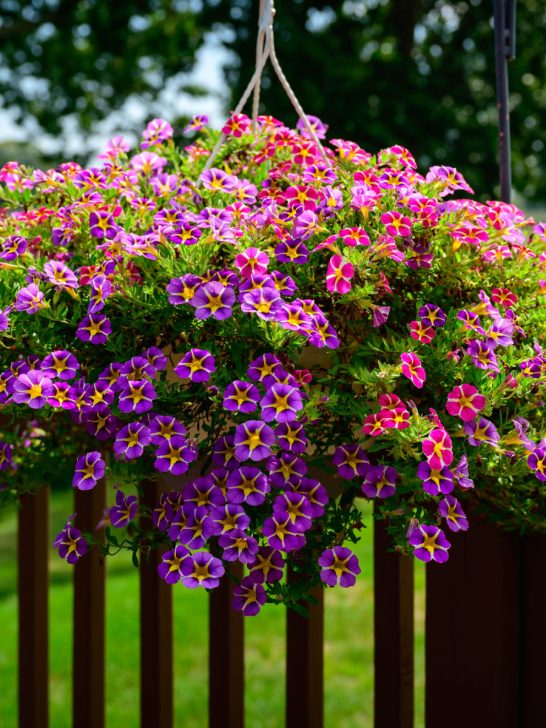
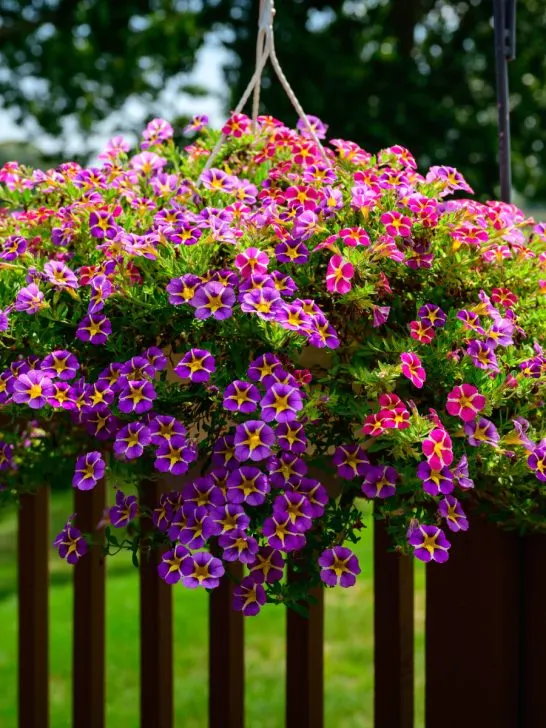
The wave petunias in the front baskets at the farm are in full bloom

The wave petunias in the front baskets at the farm are in full bloom

Clematis starts to climb up the posts of the upper pergola area.

Clematis starts to climb up the posts of the upper pergola area.

The chickens are enjoying their new home - including their shad patio we added in back.

The chickens are enjoying their new home – including their shade patio we added in the back to give them a break from the sun.

3 of our chickens have somehow discovered it is fun to escape the free range area each day and explore.  The same 3 every time!

3 of our chickens have somehow discovered it is fun to escape the free range area each day and explore. The same 3 every time!

Catching us off guard - we had our first two eggs laid this week by the new chicks. They are only approaching 15 weeks old - and usually don't start laying until week 18 or so. It was early enough that we didn't even have straw in the egg boxes yet!

Catching us off guard – we had our first two eggs laid this week by the new chicks. They are only approaching 15 weeks old – and usually don’t start laying until week 18 or so. It was early enough that we didn’t even have straw in the egg boxes yet!

The new bee hive is doing well...we added another honey super to the hive this week as the bees continue to work the  flowers and blooms.

The new bee hive is doing well…we added another honey super to the hive this week as the bees continue to work the flowers and blooms.

The Stella de Oro Daylillies are opening up all over the farm - they are such a great all purpose landscaping plant.  Easy to divide, low maintenance and very drought tolerant.

The Stella de Oro Daylillies are opening up all over the farm – they are such a great all purpose landscaping plant. Easy to divide, low maintenance and very drought tolerant.

The purple cabbage is already starting to form small heads

The purple cabbage is already starting to form small heads

There is nothing like eating fresh snow pea pods right out of the garden!

There is nothing like eating fresh snow pea pods right out of the garden!

The tomatoes and peppers are dark green and growing what seems to be an inch or two a day now - it won't be long!

The tomatoes and peppers are dark green and growing what seems to be an inch or two a day now – it won’t be long!

The beginnings of the vineyard!  The poles are up - and the grapes have have grown up to the 2nd training line.  We will be putting in the wire and securing in the coming weeks.

The beginnings of the vineyard! The poles are up – and the grapes have have grown up to the 2nd training line. We will be putting in the wire and securing in the coming weeks.

The natural rock retaining wall behind the barn.  All of the transplants have really taken hold now in year 2.  We also have added rock paths to the garden and coop to make it easier to get around.

The natural rock retaining wall behind the barn. All of the transplants have really taken hold now in year 2. We also have added rock paths to the garden and coop to make it easier to get around.

We have finally put together the charcoal box for the outdoor kitchen - now all that is left is to finish the trim...and cook! :)

We have finally put together the charcoal grill box for the outdoor kitchen – now all that is left is to finish the  trim and base brick work…and then cook on it! :)

These buttercups are a transplant from my mom's house last fall - and it is so nice to see them taking hold!

These buttercups are a transplant from my mom’s house last fall – and it is so nice to see them taking hold!

The zucchini and cucumber straw bale crates are really taking off - they are loaded with blooms!

The zucchini and cucumber straw bale crates are really taking off – they are loaded with blooms!

The hanging baskets on the porch.  We add lots of compost to our potting soil, and it really seems to give the baskets and pots a boost!

The hanging baskets on the pergola patio are starting to flow over the sides. We add lots of compost to our potting soil, and it really seems to give the baskets and pots a boost!

What To Make With Garlic Scapes – Garlic Hummus and Other Recipe Ideas

Garlic Scape Hummus - A refreshing spring treat.

Garlic Scape Hummus – A delicious and healthy treat.

If you planted garlic last fall, you may have discovered that you have some strange looking spiral shoots emerging from the center of your plants.  Or maybe you are part of a CSA, and included with your last bunch of spring lettuces and sugar snap peas, you also received garlic scapes, and you have no idea how to use them.  Don’t worry – you aren’t alone.

Earlier this week as we strolled through the garden, we noticed that the garlic scapes were among us.  Honestly, I think this happened overnight – caused by all the rain and humidity that we have had.  On Friday our garlic looked normal, and the very next evening, we were cutting the brand new garlic scapes.

Garlic scapes snapped off from our plants at The Farm.

Garlic scapes snapped off from our plants at The Farm.

What are garlic scapes?  These are what most would consider to be the flower stalk of hardneck garlic plants.  If left on, they eventually form small bulbs that can be planted to grow more garlic, but it takes several years for them to become large enough to use. When garlic scapes appear, in Ohio typically mid-June, most gardeners cut or snap them off at the base to allow the plant’s strength to focus on the actual garlic bulb rather than the scape.  This in theory is to promote larger garlic during harvest time.  You can pick the scapes when they first appear, and they will be tender and delicious.  The longer that you wait, the more intense heat and flavor they produce.  We usually pick ours when there is one loop on the scape.

You can use the scapes in any recipe that you want to add that garlic flavor to.  You can think of it more like a green onion, when compared to large bulb onions. Below are several recipe ideas and don’t forget – if you aren’t ready to use them right away, freeze them for later use – before the real garlic is ready to be picked!  And of course, if you didn’t get your garlic planted this year, you can always find them at the local farmer’s market when they are in season.

Garlic Scape Recipe Ideas

Freeze your garlic scapes for use throughout the summer.

Freeze your garlic scapes for use throughout the summer.

1. Chop them to use in a salad as a topping, like you would a scallion.

2. Sautee them and use them in your stir-fry or pasta dishes. – We cut them in two inch increments.

3. Roast them with a little olive oil – the same way you do asparagus. Hint – you can even knot them together for easy turning.

4. Use them to make Garlic Pesto – Just add in 1/2 pound of scapes with your standard pesto recipe.

5. Make Garlic Butter – Soften 1/4 cup of butter and mix in chopped garlic scapes to your preferred taste.

6. Add them to soups and stews.

7. Use in your favorite dip/sauce – puree your scapes in your food processor for a smooth texture.

8. Add to your guacamole and salsas in place of garlic bulbs.

9. Top your pizza with finely chopped scapes and you will be amazed at the flavor it provides.

10. Garlic Scape Hummus

Place all ingredients into a food processor and blend until you reach the desired thickness.

Place all ingredients into a food processor and blend until you reach the desired thickness.

Ingredients:

2 cans of chick peas (garbanzo beans), drained
1 cup tahini
2 tablespoons olive oil
1/2 cup lemon juice
1/2 cup fresh chopped garlic scapes
salt to taste
curry (optional) to taste

**You can cut this recipe in half for a perfect portion size for 2 people to share.

Garlic Scape Hummus served with crackers for a delicious and healthy snack!

Garlic Scape Hummus served with crackers for a delicious and healthy snack!

Instructions:

Place the ingredients in a food processor and pulse until a thick paste forms. If it is too thick you can slowly add water to thin it out.  Salt and add curry (optional) to taste.  You can serve and eat immediately, however, if you let it sit overnight, the flavors meld and it tastes even better.  Serve with your favorite pita chips, crackers or as a dip with veggies.

Enjoy!

Mary and Jim

**If you would like to receive our Recipe Of The Week each Friday – be sure to sign up to follow the blog via email in the right had column, “like” us on  the Facebook, or follow us on Twitter

Creating A Mason Jar Centerpiece From Old Barn Wood Or Pallets

Using just a few pieces of old barn wood and some mason jars, you can create this centerpiece to hold flowers, candles and more.

Using just a few pieces of old barn wood and some mason jars, you can create this centerpiece to hold flowers, candles and more.

With the garden all planted and growing, and a little bit of extra time before the heavy picking and canning season begins – we thought today would be a great time to focus on an easy DIY project using old barn or pallet wood.

Mary had been wanting a centerpiece for our barn table at the farm –  and with the table measuring 12′ long – the hardest part was to come up with something that could fill the space and still look like it belonged.  The answer came in the form of some left over barn wood and a few mason jars.

The old barn wood and mason jars make a perfect combo for a centerpiece

The old barn wood and mason jars make a perfect combo for a centerpiece.

The best part about this project is that you can create it in less than an hour using some simple scraps of barn wood or pallets.  We built ours to be 48″ long and with 5 mason jars evenly spaced to fit the long table – but you can adjust the final length to accommodate whatever size you need.

Now we have an easy to use centerpiece carrying on our barn theme that can hold fresh-cut flowers, candles – or whatever is in season.

Here is how we built it:

Materials List:

All of the pieces cut out and ready for assembly

All of the pieces cut out and ready for assembly.

***We have included the material list for our centerpiece that measures 48″ long.  If you would like a smaller version, you can simply adjust the length of the boards, and the number of mason jars to suit your needs.

(2)  old barn, pallet or wooden boards measuring 48″ long x 5″ wide (top and bottom pieces)

(4) pieces of matching wood 4″ high x 5″ wide  (middle dividing pieces)

(2) pieces of matching wood 5 1/2″ high x 5″ wide  (end pieces)

Wood glue (optional)

Trace around the mason jars to create the cut lines for the jigsaw

Trace around the mason jars to create the cut lines for the jigsaw.

We then used a drill with a 1/2" bit to create a hole for the jigsaw to cut through

We then used a drill with a 1/2″ bit to create a hole for the jigsaw to cut through.

The top piece with all of the mason jar hole cut outs.

The top piece with all of the mason jar hole cut outs.

(5)  Mason quart jars

(24) 1 1/2 inch finish nails, or screws for assembly

Tools Needed:

Jigsaw
Drill with a 1/2″ bit
Tape Measure
Circular or Table Saw To Cut Barn Pieces to length and width

How We Built It:  

We started by running two pieces of old barn wood through a table saw to make them a uniform 5″ wide.  We then cut two pieces to 48″ lengths for the top and bottom, and cut the remaining divider and end pieces as well.

Our barn boards were 3/4 thick wood – so we cut our two end pieces at 1.5″ longer than the middle dividing pieces to cover the top and bottom boards at the ends.

Once all the pieces were cut – we selected one of the 48″ long boards and traced our 5 mason jar holes evenly spaced across the board.  To cut out, we used a drill with a 1/2 bit to cut a hole inside of each traced square, and slipped in the jigsaw blade and cut out the trace line.

Then, we simply assembled the end boards and middle dividing boards with a couple of nails, and in a little under an hour – our centerpiece was complete!

The completed barn wood and mason jar project out on the table at the farm.

The completed barn wood and mason jar project out on the table at the farm.

Happy Gardening! – Mary and Jim

If you would like to receive our DIY & Gardening Tips every Tuesday – be sure to sign up to follow the blog via email in the right hand column, “like” us on Facebook, or follow us on Twitter.

Visitors To The Farm And The Open House Date Is Set!…The Sunday Farm Update

Members of the Union County Master Gardener's Association listen in as we talk about our chickens at the farm.

Members of the Union County Master Gardener’s Association listen in as we talk about our chickens at the farm.

Food From The Garden... Visitors to the farm always love to see the end results of a growing season.

Food From The Garden… Visitors to the farm always love to see the end results of a growing season.

In the garden discussing the raised row, no till method.

In the garden discussing the raised row, no till method.

Mary talks about the leaf "corn-crib" and how we store fall leaves for use in our summer composting.  I think even the dog seems very interested! :)

Mary talks about the leaf “corn-crib” and how we store fall leaves for use in our summer composting. I think even the dog seems very interested! :)

The barn table's centerpiece for the day - made from some left over barn wood and mason jars we had on hand.

The barn table’s centerpiece for the day – made from some left over barn wood and mason jars we had on hand.

The straw bale crates made from old pallets were a big topic for the day - here our zucchini starts to grow up and over the crates.

The straw bale crates made from old pallets were a big topic for the day – here our zucchini starts to grow up and over the crates.

Talking about our tomato stake-a cages in the garden.

Talking about our tomato stake-a cages in the garden.

It’s always such a great experience to have visitors out to the farm.  Not only is it an opportunity to share our story and our love of gardening – but Mary and I both enjoy hearing and learning valuable information from others who love to garden and enjoy the outdoors as well.

On Saturday, we were really fortunate to have a great group from the Union County (Ohio) Master Gardener’s Association come out to tour the farm.

The weather couldn’t have been more perfect for the day – with the temperatures in the mid 70′s, sunny skies – and it led to a lot of great gardening conversation.

We spent the afternoon giving a two hour tour of the barn, composting and rain-water systems, chicken coop, and garden areas.

One of the things that visitors to the farm love to hear about – is the entire process of bringing the farm to the table – including not just fresh vegetables, but canning and preserving for year round use.

It never ceases to amaze both of us how friendly and sharing fellow gardeners are, and how much we learn every-time we have a group out for a tour.

When we first started the little farm a few years back, I don’t think either of us ever anticipated giving tours – but it has certainly become one of our favorite things to do – and as crazy as it sounds, I always feel like we are the ones who get to learn so much each time.

Speaking of tours, we will have final details in next week’s Sunday Farm Update – but it looks like July 27th will be the date for our Hometalk Meet-up and gardening discussion on Gardening and Gardening Recipes – and we are even more excited to announce that we will be working with an incredible local greenhouse, Wilson’s Garden Center, to host the event.

Wilson’s has a beautiful greenhouse facility and an amazingly friendly staff – and we are so excited to have them as a partner to host the event!

Even better, since it is only a few miles from the farm – we will also be giving tours and have an open house at the farm that day following the event.  We will have a complete run down with times and event details next Sunday

Speaking of the garden and the farm, everything has really taken off the past week with some timely and much-needed rains.  Along with some pictures of yesterday’s tour – we included some pictures about the farm for today’s Sunday Update.

The tomatoes and peppers have now begun to take hold and are starting to really shoot up – and the lettuce, radishes and other spring crops are in full pick mode – and with that – we need to get out there and get busy :)

Happy Gardening  -  Jim and Mary

If you would like to receive our Gardening / DIY and Farm Updates each week – be sure to sign up to follow the blog via email in the right had column, “like” us on Facebook, or follow us on Twitter.

Top view of the zucchini straw bale pallet crate planting.

Top view of the zucchini straw bale pallet crate planting.

Touring the new chicken coop

Touring the new chicken coop

The cucumbers are fully set in blooms

The cucumbers are fully set in blooms

The bees are enjoying all of the blooms and are hard at work at the farm too.

The bees are enjoying all of the blooms and are hard at work at the farm too.

So far, the red cabbage is looking good in the garden - hopefully, we will enjoy some fresh cole slaw this summer from it!

So far, the red cabbage is looking good in the garden – hopefully, we will enjoy some fresh cole slaw this summer from it!

Whole Wheat Blueberry Muffin Recipe – Get Ready For Blueberry Season!

Homemade blueberry muffins - a healthy and delicious snack

Homemade blueberry muffins – a healthy and delicious snack

School let out for the summer this week, and you know what that means. The kids are going to raid the cabinets in search of something to eat at all hours of the day, and night!  We try very hard to have healthy snack options in the house, but it is amazing what they can find in the back of the pantry or in the bottom of the freezer when there is nothing ‘good’ to eat within their immediate eyesight.

Soon it will be time to pick fresh blueberries from our bushes.

Soon it will be time to pick fresh blueberries from our bushes.

Everyone loves our homemade granola bars, but I try to use what’s in season at the farm to add variety and spontaneity to our recipes.  Blueberries have begun to bloom and we are awaiting our first batch to pick.  You can’t go wrong with a Blueberry Muffin recipe – even the little ones love them.  However, we have made them quite a bit healthier by using whole wheat flour, applesauce in place of vegetable oil, and honey instead of white sugar. We make them from scratch which takes only 10 minutes to prepare and 20 minutes to bake.  Yes, it is a little longer than the open the bag and add milk/water variety, but don’t worry – the kids don’t know that they are ‘healthy’ and they think the muffins are ‘the best ever’.

Whole Wheat Blueberry Muffin Recipes

Ingredients:

IMG_2684

After mixing the ingredients, fold in a cup of fresh blueberries.

1 large egg
1/2 cup milk
1/4 cup applesauce
1 1/2 cup whole wheat flour
1/2 cup honey
2 tsp baking powder
1/2 teaspoon salt
1 teaspoon vanilla
1/2 teaspoon cinnamon
1/2 teaspoon lemon zest (optional)
1 cup blueberries

Instructions:

Fill muffin cups 2/3rds full - Hint - use a large self-releasing scoop for easy filling of the tins.

Fill muffin cups 2/3rds full – Hint – use a large self-releasing scoop for easy filling of the tins.

1. Heat oven to 400 degrees F

2. Line muffin cups with paper lines or grease muffin pan well.

3. Beat egg – then stir in milk and applesauce.

4. Mix in remaining ingredients except for the blueberries.  Don’t over mix – batter should be lumpy.

5. Fold blueberries into the batter.

IMG_2704

Add a glass of milk and these muffins not only make a great snack, but also a great breakfast!

6. Fill muffin cups 2/3 full. **I use a large self-releasing large scoop to easily add the batter to each cup eliminating any mess.

7. Bake for approximately 20 minutes, or until golden brown.

Enjoy!

Mary and Jim

**If you would like to receive our Recipe Of The Week each Friday – be sure to sign up to follow the blog via email in the right had column, “like” us on  the Facebook, or follow us on Twitter

Tomatoes..How To Get The Most From Your Plants In The Garden!

A big bowl of La Roma tomatoes picked from last year's garden

With a few easy steps, you can help your plants to grow an abundant supply of fresh tomatoes this season.

Your tomatoes are planted, they are starting to grow and you can’t wait to taste those first amazing globes of garden goodness!

Lately, we have been getting an abundance of emails and comments about how we grow and maintain our tomatoes once planted.  Besides making sure they have at least 1″ of water each week (via rain or watering) – here are some steps we take to make sure we get the most out of our tomato crop.

PRUNING:

Pruning up 6 to 8" under each plant helps with air flow, watering, and leads to more productive plants

Pruning up 6 to 8″ under each plant helps with air flow, watering, and leads to more productive plants

Yes, pruning can be an important part of keeping your tomatoes healthy, and can also create larger and sweeter fruits on the vine.  Just a little work now can pay off huge in a month or so when harvest time begins.

As each tomato plant starts to grow strong – we like to prune off the bottom 6 to 8″ of stems from the main stock of the plant for several helpful reasons.  For one – it allows for good air flow and easy watering of the plant – both of which help the plant to grow stronger and speed along the ripening process later.  Second, and maybe even of more importance – it will help to reduce the chances for disease and bug infestation.  By clearing out the area around the bottom of each plant - you are reducing the ability for plant feeding insects to find their way up onto the plants, and the improved circulation helps cut down on the chance for fungus to develop on the plants.  Last but not least – by trimming off the bottom area – you allow the nutrients to go to building stronger stems and larger tomatoes on top.

There are those that prune even more aggressively by thinning out some of the top growth – but we’ve had great success in just making sure the bottom of our plants are pruned.  It takes only a few seconds per plant – and makes a big difference.

SUPPORT:

Give good support for your tomatoes - we use our home made stake a cage's - a blend of a stake and a cage all in one.

Give good support for your tomatoes – we use our home made stake a cage’s – a blend of a stake and a cage all in one.

No matter if you use a stake, a cage, panel fencing or whatever – give those tomatoes some support! Tomatoes can easily become weak and more prone to disease when you allowing them to just sprawl around the ground.  It’s also an open invitation to pests and bugs to climb aboard and go to town.  The close contact to the ground also is an invitation for damaging mildew, mold and fungus to develop on the leaves.  So give them some support!  (See: How To Make Your Own Stake-A-Cages Cheap!)

As for what to tie them up with  - use materials that will hold up but still provide some elasticity for the plants to grow. Old t-shirts cut up into strips and old pantyhose work well.  We use a big spool of thick cotton yarn to tie ours up – buying a few old rolls in the bargain bin each year.

FERTILIZING:

You can make your own organic fertilizer "compost tea" - simply by steeping water in fresh compost!

We use a few applications of compost tea to get our plants off to a strong start.

Tomatoes are heavy feeders – and even with the best of soil – they can certainly benefit from a little added nutrition.  We use an application of our compost tea liquid fertilizer (See: How To Make Compost Tea) to give a good feeding to the plants.  We apply our first application after the plants have been in the ground a couple of weeks, and then about every 10 days for a total of 3 applications.  That seems to be the perfect amount for our plants – boosting their growth in the beginning to get them off to a good start. Remember, if you apply too much of any fertilizer, your tomatoes will spend all of their energy on growing foliage – and not fruit.

MULCH:

Egg shells and coffee grounds...perfect for the compost bin - and your tomato plants!

Egg shells and coffee grounds…perfect for the compost bin – and your tomato plants!

Finally, mulch the area around your tomatoes to help keep in the moisture and keep the soil at a moderate temperature.  We like to use our compost to mulch about a 6″ diameter around each stalk – this also provides nutrients for the plant as the compost breaks down and is watered into the soil.  You can also use grass clippings, straw or shredded leaves.

Here is an extra little secret we use: Add a little coffee grounds and crushed egg shells to the mulching area right around each plant.  Crush up about 3 to 4 shells per plant – and sprinkle the coffee grounds (about 1 filters worth) into the mulch you have around each plant. The added nutrients really help your tomatoes take off – and the crushed egg shells can help to prevent black rot.  (We add a few to each planting hole when we plant as well).

DON’T COMPACT YOUR ROOTS:

cajun bellesFinally – be careful as you work around your tomatoes and their root zones.  One of the reasons we really prefer raised beds or raised row beds are they keep foot traffic around plants to a minimum.   But even if you use a traditional flat garden – make sure to stay off the area directly around plants.

The root zone of your tomato plants that lie just below the soil’s surface are the life blood of the plants above ground.  Those roots are responsible for sucking up the water and nutrients the plants need to grow strong and produce healthy and abundant fruit.  Loose, uncompacted soil is a key component to their growth – and the more you step in and around them – the more compacted the soil becomes and the less root growth will develop.  We try hard to never ever step within 12″ of the ground right around each plant – and it pays off in good root structure.  When we pull our plants at the end of each year – it is amazing to see the 12 to 18″ of deep roots that each plant has developed by being allowed to grow freely without compaction.

So there you have it – how we care for our tomatoes through the summer months.  It’s hard to believe in about another 45 days – fresh tomatoes and canning season will be here!

Happy Gardening!

Mary and Jim

If you would like to receive our DIY & Gardening Tips every Tuesday – be sure to sign up to follow the blog via email in the right hand column, “like” us on Facebook, or follow us on Twitter