
Want to turn all of those leaves that are falling down from your trees this fall into amazing compost for next year’s flowerbeds and garden?
There is simply no better way to build great soil and power plants than with compost. But for so many gardeners, making enough of it to go around can be a difficult task. But that is exactly where using all of those falling leaves in the autumn months can save the day!
Not only are leaves in large supply each and every fall, they are also free for the taking. And with just a few simple steps, they can be turned into incredibly rich and powerful compost – and way faster than you probably ever imagined!
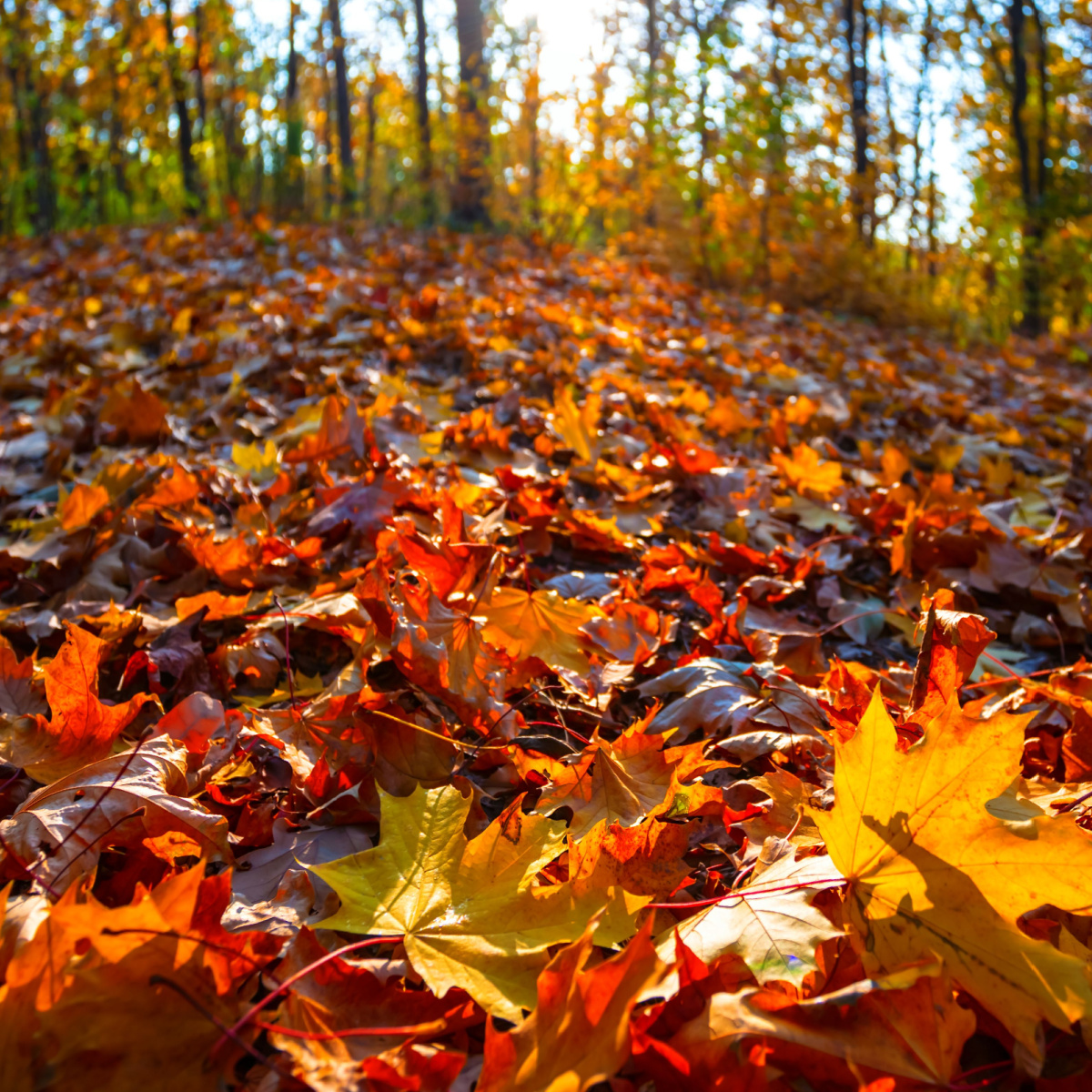
With that in mind, here is a look at how to turn an overabundance of leaves into the best soil amendment ever – all-natural compost.
How To Turn Leaves Into Compost – Faster Than Ever!
Choosing The Best Leaves For Composting
When it comes to making great compost from leaves, it all starts with selecting the best varieties of leaves. As you will see below, some tree’s leaves are not well-suited for compost, while others need to be used in moderation.
At the top of the list of “great leaves” are maple, birch, ash, cherry, cottonwood and fruit trees. All of these are excellent choices to create great compost. Not only do these leaves contain the best nutrients, their leaf structures also happen to break down quickly.
For any of the leaves mentioned above, the more you can find, the better. But there are other leaf varieties you will want to limit in your pile’s makeup. At the top of that list are the leaves of oak trees
You can use oak leaves in moderation, but since they lean toward the acidic side, they can throw a pile’s PH level off. In addition, oak leaves are among the lowest in nitrogen and other trace nutrients, so they simply do not provide as much energy to the finished compost.

This doesn’t mean you can’t use oak leaves in your pile, but it’s best to keep the ratio of oak leaves to other varieties at 20 percent or below. At this ratio, the pH of your compost will still be perfect for using for vegetables and flowers.
Tree Leaves To Avoid Composting – How To Compost Leaves Fast
There are a few tree leaves to avoid altogether when it comes to composting. Walnut, eucalyptus and horse chestnut (buckeye) leaves should be completely left out of a pile. The leaves from walnut and eucalyptus contain toxins that can harm plants. They can also prevent some seed crops from germinating.
As for the horse chestnut and its close relative the Buckeye tree, they can produce a toxin that can be harmful to humans and animals if in high enough doses. Although the toxin is concentrated in the nuts of these trees, it can be hard to separate out when collecting. It’s simply best to leave them out of the pile to be safe.
Shred Those Leaves – The Key To Fast Compost!
So now that you know the best leaves to use, it’s all about building a leaf-filled compost pile that will decompose as fast as possible. And to do that, it all starts with shredding.

Whole leaves can take years to fully break down. Not only do they mat down and become soggy, whole leaves also prevent airflow and oxygen, which is a vital ingredient in heating up a compost pile. And that is exactly why shredding your leaves before building your compost pile is critical!
A whole leaf has one edge line around its entire perimeter. But by shredding the leaves, you create hundreds of smaller edges that can break down fast. It is a simple formula: the smaller the leaves are shredded, the faster they will decompose.
A push mower or riding mower can quickly accomplish this task with ease. We use our push mower and bag attachment to shred huge piles of leaves quickly every fall. It’s easy to do, and makes quick work of the task.
There is also a wide range of electric and gas leaf shredders now on the market that do an excellent job of shredding leaves as well. The electric models are surprisingly sturdy and efficient, and can be found at a far lower cost than gas models. Affiliate Product Link: Worx WG430 13 Amp Electric Leaf Mulcher


Building Your Pile For Success – How To Compost Leaves Fast
Unlike a typical compost pile that you create and continue adding to as materials become available, a leaf pile can be made up all at once. This is important for the speed of composting as it can start to decompose all of its ingredients and not have to break down additional “new materials” later.
Unfortunately, a pile made from just leaves will still take a long time to decompose. Even when they are shredded. That is exactly why adding a few more ingredients when you build your pile is a huge key to success.
For a compost pile to decompose quickly, it needs to have a good mix of brown and green materials. In fact, a ratio of 3 to 4 parts brown to one part green is ideal for heating a pile up fast. In this case, the leaves are a lot of brown, so adding in some green is vital. See: How To Make A Compost Pile Get Hot!
Getting The Right Mix
It just so happens that green grass clippings are one of the best “green” materials of all. And they can usually be created pretty quickly in the fall with a simple mowing to add to your pile. Even better, they are already chopped up too!
Other great green materials are animal manure (chickens, rabbits, horses, cows), coffee grounds and food scraps. All of these heat up a pile and also break down quickly – making them perfect additions.
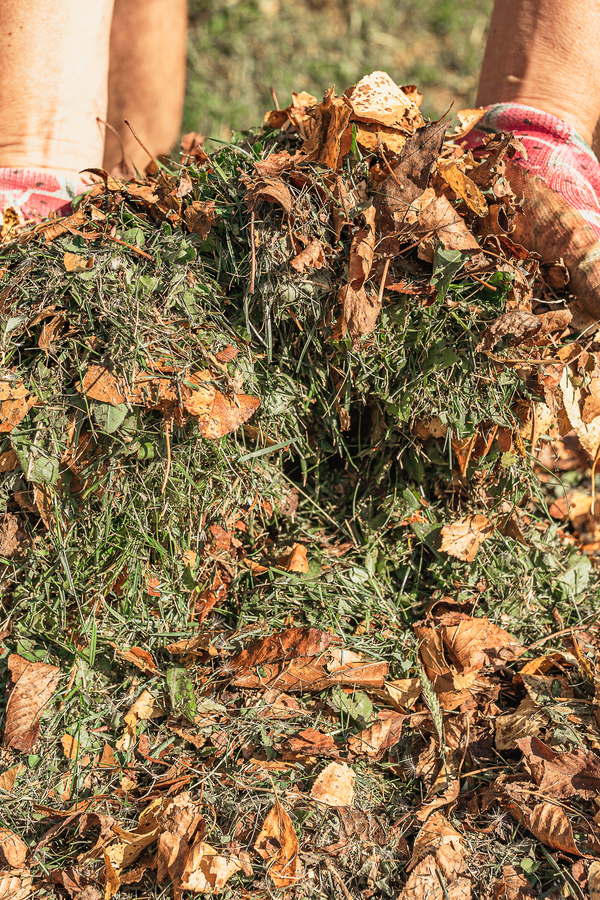
But there is one more vital ingredient to add as well that is the most important of all – and that is fresh compost or a compost starter. Why? because they instantly introduce all of the beneficial microbes and organisms that are key to breaking down materials.
If you have a bit of compost from your compost pile left over, toss it in and mix it in with the leaves. If you don’t, purchase an inexpensive bag of compost starter to add in. Without those microbes present at the beginning, it can take a long time for your pile to create its own! Product Link : Compost Starter
Creating The Pile – How To Turn Leaves Into Compost
You will want to build your compost pile to be at least 3′ x 3′ x 3′. This size allows for the pile to have enough mass to heat up. More importantly, it is also still manageable enough to turn and work.
In addition to the green grass, manures and any available vegetable scraps, you can add other great ingredients at the start. We usually start by adding a 5 gallon bucket of fresh compost to start our pile. We add to that two to three additional buckets of fresh green grass clippings.
To that, we often throw in the soil/plant mix from a few of our hanging basket and container plants. Since it is the end of the season, these are readily available. We finish by adding in a few 5 gallon buckets of our chicken manure / straw mix from our coop, and any vegetable scraps, coffee grounds, etc. we might have on hand.
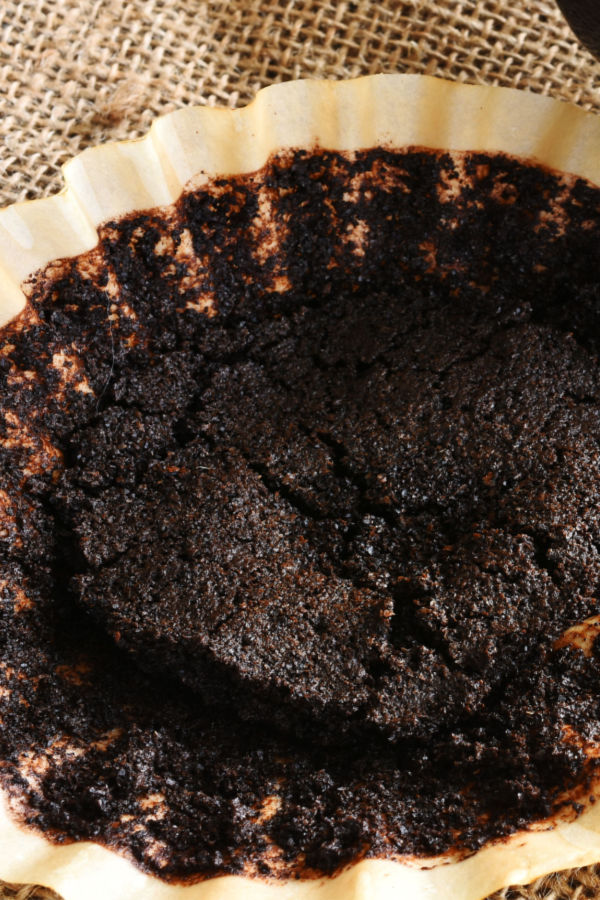
From then on until spring, the only ingredient we will add to the leaf pile is our morning coffee grounds. They continue to add an ongoing source of green energy to the pile. They also are already ground down, so they incorporate quickly to the mix.
Turning The Pile
Just like a traditional compost pile, you will need to turn your pile frequently to keep it powered up. Not only will turning your pile a few times each week introduce oxygen, but it also helps to distribute the moisture levels in the pile.
And when it comes to creating a fast working pile, oxygen and water are absolutely vital. Turn your pile a minimum of two times per week up until the pile freezes in cold temperatures. If it gets too dry, add a bit of water to the mix to help it along. As soon as spring temperatures warm, continue turning on a bi-weekly basis.
For us, our leaf compost is all ready to go and power our plants by late May. And does it ever help during planting season! Here is to making incredible compost from your leaves this year, and having mountains of black gold next spring. Happy Gardening – Jim & Mary
Old World Garden
Jim and Mary Competti have been writing gardening, DIY and recipe articles and books for over 15 years from their 46 acre Ohio farm. The two are frequent speakers on all things gardening and love to travel in their spare time.
As always, feel free to email us at thefarm@owgarden.com with comments, questions, or to simply say hello! You can sign up for our free email list in the subscribe now box in the middle of this article. Follow us on Facebook here : OWG Facebook. This article may contain affiliate links.