
All About Tomatoes – Growing, Eating and Canning

A ripened Celebrity tomato waiting to be picked from the vine.

A ripened Celebrity tomato waiting to be picked from the vine.

Today’s post is dedicated to our most beloved fruit – The Tomato! Yes, scientifically speaking, the tomato is a fruit, although we like so many others consider it a vegetable too :) .  No matter what you call them, tomatoes are delicious, nutritious and have thousands of uses fresh, frozen and canned – making them the perfect plant to grow in the garden!

Tomatoes are truly the most important crop we grow.  Not just because we love to eat them – but because they are also the main ingredient in many of the canning jars we fill our pantry with each year from the garden.  Salsa, pasta and pizza sauce, tomato juice, ketchup and sun-dried tomatoes are all canned each year from our tomato crop – providing us year round with great tasting food from the garden.

So what are some great varieties to grow?  And what types do best for roasting, canning or eating fresh?  Well, here is a little info to help you through tomato land:

Heirloom Varieties: The Perfect Fresh Tomato

brandywine tomato

The Brandywine heirloom tomato

There is a big push today for heirloom tomatoes – and for good reason – they have amazing flavor, taste and texture.  In general, heirloom tomatoes are old-time tomato seed varieties that are open pollinated, have been passed down from generation to generation - and have unique and special characteristics.  Some of the more popular - like Brandywine, Black Cherry, Mr Stripey, Green Zebra and Lemon Boy – are grown and coveted by many gardeners for their intense flavor.  They are the perfect fresh tomato for salads, hamburgers – or to slice and eat!

The rich texture of the brandywine

The rich texture of the Brandywine

There are some drawbacks however to be aware of when growing them. They are not going to be as hardy as most of today’s hybrid varieties that have been bred for higher yields and disease, wilt and bug resistance. Some gardeners who are new to growing heirloom varieties become disappointed when they plant a whole area of heirloom tomatoes – only to see them produce fewer tomatoes and die off earlier due to disease.

If you want to can and preserve in larger quantities – you  will also want to plant some of today’s newer varieties that have some disease resistance and higher yields.  As an example – our La Roma sauce tomato that we plant for canning our salsa and sauces may be a modern hybrid, but organically grown, the taste is still light years above anything we could ever buy “fresh” in a store or supermarket.

Here are some of the hybrid and resistant varieties that we grow for canning and preserving:

Slicing:

Celebrity tomatoes on the vine

Celebrity tomatoes on the vine – they are a versatile tomato – great for slicing, eating and canning.

The Celebrity and Rutgers are two great choices for a slicing tomato.  They seem to always have perfectly round fruits that fill up a bun or sandwich.  They also both have a  great juice to flesh ratio.  The Big Beef and Beef Steak varieties do well for slicing too.

Salad Tomato:

Everyone knows the “cherry” and “plum” tomatoes that have become so popular on salads, or for simply popping in your mouth to enjoy.  There are hundreds of versions, but the ”cherry 100″ and “sweet 100″ have always performed well for us.

Another favorite among tomato aficionado’s is the Campari Tomato.  It is a little larger than the cherry or plum types (about golf ball size), but it is super juicy with a high sugar content for great flavor.

Cherry tomatoes are a great add in when making juice

Cherry tomatoes are a great add in when making juice

We tend to grow our cherry and plum tomatoes in large pots on the patio and keep them out of the garden.  For one, they make a great potted plant and it makes it easy to pick them for salads or to eat. Second – the plants grow so large and produce so much – they are hard to keep control of in the garden. They also tend to overpopulate the ground below with hundreds of seeds that keep coming back the next year – making weeding and issue – and planted pots eliminate that.

If you do become overrun with a supply of them – they are great to add to your juicing operation.   Although small, the high liquid and sugar content make them good for juicing.

Making Tomato Juice:

Speaking of juice, we make and certainly go through a lot – usually to the tune of a couple of quarts a week year round.    You can certainly use any tomato variety when juicing – but our favorite is to use a mixture of La Roma and Celebrity Tomatoes to create the perfect juice.  The Celebrity contains a lot of juice and it is balanced with the thicker meaty style of the La Romas.  The result, a really great tasting juice with good texture.  See our Hot and Spicy Tomato Juice Recipe

Sauces and Salsa’s

Picante Salsa - one of our favorites to make and eat!

Picante Salsa – one of our favorites to make and eat!

We can a lot of sauce and a lot of salsa – and for us, as we stated earlier – nothing can beat the La Roma tomato as the main ingredient.  The plants are hardy, with thick and meaty fruits that cook down into a great sauce.  The meaty texture also lends itself to a great salsa tomato. The chunks stay firm and meaty.  Our La Roma Plants are big producers too – we grow 24 plants and usually harvest a good 30 to 40  pounds of tomatoes per plant.

You can see our recipes here for our Picante Salsa and Pasta Sauce.

Success In Growing Tomatoes

Proper watering and good soil can make for a big tomato crop

Proper watering and good soil can make for a big tomato crop

You can check out our previous post on How to Grow Great Tomatoes for more information – but in general – tomatoes love sun and warm humid nights.  They also need a fair amount of water – so make sure they are getting a good 1″ of water per week.  As an extra tip – make sure to add a few crushed egg shells to every planting hole. The added calcium will help to avoid black rot and wilt on your tomatoes throughout the season.

Happy Gardening – And Enjoy Those Tomatoes!

Mary and Jim

If you would like to receive our DIY & Gardening Tips every Tuesday – be sure to sign up to follow the blog via email in the right hand column, “like” us on Facebook, or follow us on Twitter

Planting The Garden! The Sunday Farm Update

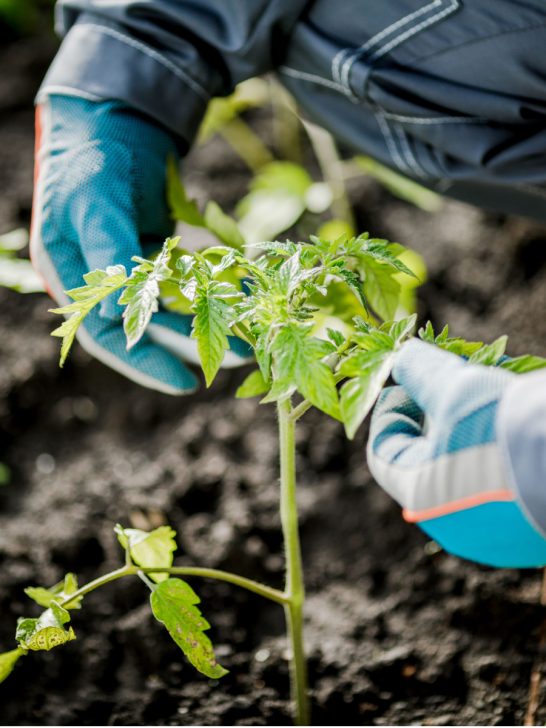
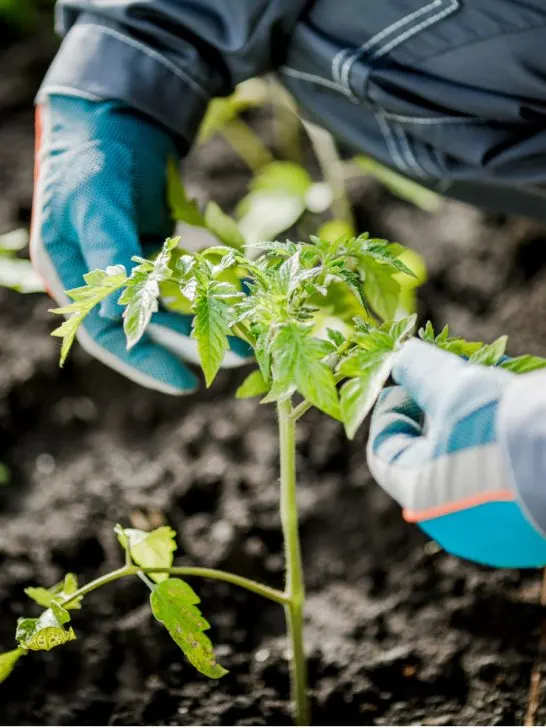
A Celebrity tomato plant stands ready to grow after being planted this past week.

A Celebrity tomato plant stands ready to grow after being planted this past week.

It is always one of our favorite weeks of the year…the planting of our garden!

Winter had a final stand last Sunday and Monday night with one last frost at the farm.  By Wednesday however, the temperatures quickly rose into the 70 and 80′s – and the threat of cold weather became a distant memory.  It was finally time to get the full garden planted!

It doesn’t take long for us to get the plants in with the raised row system, and with a few hours of work each evening on Thursday and Friday – the 2013 Garden Plan came to life.  All in all, over 140 plants went into the ground – including 40 tomato and peppers plants each, along with rows of cabbage and head lettuce transplants.  We also seeded in multiple rows of green beans, potatoes and onions to go with the early spring crops of radishes, sugar snap peas, lettuce, arugala and carrots already in the ground.  (You can see the entire garden plan at the bottom of the post)

All of the raised rows are planted - we will be heading out today to straw the walking rows.

All of the raised rows are planted – we will be heading out today to straw the walking rows.

We create all of the holes in each row with a post hole digger.  It allows us to quickly have a planting hole that is both deep and wide enough to easily plant in. Next – we add in a shovel full of compost to the hole – and mix back in the existing soil to plant the transplant.

Finally,  we add a thin layer of compost as a top dressing and mulch around each transplant, water them in – and move on to the next plant.

The strawberry plants are off to a good start

The strawberry plants are in and will even give us a small harvest this year.

One of our other goals this year was to get our strawberry and blueberry patches planted.

Over the last few weeks we had turned over and prepared the soil for the patch where the old chicken coop once stood. The soil is rich in nutrients from the chickens over the the last few years, and should provide years of good blueberry and strawberry harvests.

We chose a June bearing variety (Sparkle) for our strawberries. Ever-bearing varieties can provide berries throughout the season, but the June bearing will provide larger and more abundant harvests – which are perfect for canning and preserving.  For the blueberries, we chose three different varieties of bushes – allowing for better pollination and higher yields.

Bringing back pollen to the hive...if you look closely you can see the yellow pollen on the incoming bee

Bringing back pollen to the hive…if you look closely you can see the yellow pollen on the incoming bee

The bees have plenty of fresh blooms to choose from - here the wegelia at the front entrance

The bees have plenty of fresh blooms to choose from – here the wegelia at the front entrance

The chicks are now almost 13 weeks old, and have taken to sunning themselves outside of the coop.

The chicks are now almost 13 weeks old, and have taken to sunning themselves outside of the coop.

The honey bees and our new hive are off to a great start.  The queen has successfully found her way out of her cage, and the bees have begun to diligently bring in pollen at an amazing pace.  It is truly amazing to sit and watch them fly in, one after another, with their bodies and legs covered in the colorful yellow and purple pollen of the surrounding blooms.  It’s a great feeling to know that they are close by to help pollinate our crops – and even better to know that if all continues to go well, we can hope to have our first harvest of our own “local honey” this fall.

The new chicks are likewise off to a great start.  They seem to love their new coop – and have more than doubled in size since moving out  to the farm from the brooder from the house.  They will turn 13 weeks old this Monday – which means we are only 5 to 7 weeks away from them starting to lay.  Our new chicks are all Golden Comets, and most will begin to lay somewhere between weeks 18 and 20. We have been able to let them free range over the entire farm for the last few weeks – but with the garden, strawberry, and blueberry patch areas planted now – we will lay out some large fenced-in grazing areas to keep them from damaging any of the crops.

Here’s to a great start to the growing season!

Happy Gardening – Jim and Mary!

If you would like to receive our Gardening / DIY and Farm Updates each week – be sure to sign up to follow the blog via email in the right had column, “like” us on Facebook, or follow us on Twitter.

The 2013 Garden Plan.

The 2013 Garden Plan.

Shaved Asparagus Pizza Recipe

IMG_2315

Grilled Asparagus Pizza

So you don’t know what to do with all that fresh asparagus that is in season right now?  Have you roasted it with olive oil and garlic the last few times and need a new idea?  You can always pickle and can asparagus, but if you are looking for a fresh way to add this tasty vegetable as part of your main dish – this is the recipe for you!

Pizza is a ‘go to’ staple in our house.  This time of year we are on the run constantly and at the end of a long spring day, pizza is just too easy to resist.  In order to make our meals a little healthier and add a little twist to our pizza night, we decided to use our fresh ingredients straight from the garden for this recipe.  Feel free to add other ingredients to make your own version!

Shaved Asparagus Pizza Recipe

Ingredients:

Shave the asparagus with a standard vegetable peeler.

Shave the asparagus with a standard vegetable peeler.

1 recipe of your favorite pizza dough (Old World Garden Pizza Dough Recipe)
1/2 pound asparagus
1/4 cup grated Parmesan
1/2 pound shredded mozzarella
2 teaspoons olive oil
1/2 teaspoon coarse salt
Several grinds black pepper
1 scallion, thinly sliced
1 lemon (optional)

Instructions:

1.Preheat your oven to 475 degrees F

2. To prepare asparagus – Hold a single asparagus spear by its tough end, lay it flat on a cutting board.  Use a vegetable peeler to create long shavings of asparagus by drawing the peeler from the base to the top of the stalk. Repeat with remaining stalks.

Toss asparagus with olive oil, salt and pepper.  Add red pepper flakes for an extra kick!

Toss asparagus with olive oil, salt and pepper. Add red pepper flakes for an extra kick!

**Some pieces will be unevenly thick or too thin to peel (the tip of the stalk).  The mixed thickness gives the pizza a great variety of  texture. Discard tough ends.

3. Toss peelings with olive oil, salt and pepper in a bowl.

4. Roll your pizza dough out on a 12 inch pan or pizza stone.  You can use a standard round pizza pan, square one, or keep your dough in an oblong shape – whatever you chose!

5.  Sprinkle pizza dough with Parmesan  then mozzarella cheese.

Shaved Asparagus Pizza

Shaved Asparagus Pizza

6. Pile asparagus on top.  **I added a little red pepper flakes here for some added flavor.

7. Bake pizza for 10 to 15 minutes, or until edges are browned, the cheese is bubbly and the asparagus might be lightly charred.

8. Remove from the oven and immediately sprinkle with scallions, lemon juice and lemon zest.

9. Slice and eat!

Enjoy!!!

Mary and Jim

**If you would like to receive our Recipe Of The Week each Friday – be sure to sign up to follow the blog via email in the right had column, “like” us on  the Facebook, or follow us on Twitter

Growing Lettuce – Experience Real Flavor!

Concept - a Summer Crisp lettuce is a great choice to sow in late spring because it can tolerate more heat than most lettuce types

Concept – a Summer Crisp lettuce is a great choice to sow in late spring because it can tolerate more heat than most lettuce types

Lettuce is one of the fastest and easiest to grow crops around.  It can be grown in the garden, in containers and raised beds, or almost anywhere you can clear out a little space.

There are hundreds upon hundreds of varieties available – in a myriad of colors, textures, all with their own unique taste.   In fact, for most that begin to grow their own lettuce – they are shocked to realize the amazing difference in taste from the generic varieties available in most super markets and grocery stores.  Most “supermarket” lettuce, (like the familiar Iceburg head lettuce) are grown specifically for their ability to handle shipping and store well – not for taste.  When you begin to grow your own – you might just find out that with all that flavor – salad dressing isn’t even needed!

The first of the lettuce is through and almost ready for the first picking - this is Summer Crisp

The first of our lettuce is up and through, almost ready for harvest. Pictured if Black Seeded Simpson.

Lettuce can be divided into many categories – but most will agree on these main four  : Butterhead (Bibb style lettuce) , Crisphead (Iceberg, etc.), Looseleaf (Cutting varieties) and Romaine style.

Lettuce in general prefers cooler weather – so you will want to plant a spring/early summer crop, with a second fall crop as well.  The hot summer heat tends to wilt and bolt lettuce.  The good news is that it’s a quick grower, and can actually go from seed to table in as little as three to four weeks!

Preparing The Soil And Planting Lettuce:

Rich, fertile soil is the key to great lettuce.

Rich, fertile soil is the key to great lettuce.

Lettuce prefers loose, fertile, and well-drained soil.  It will struggle to grow well in hard, clay-type soils.  Prepare your beds by adding in lots of compost and organic matter. If your soil is on the clay-type side – you can also add a few shovel-fulls of sand to help loosen the soil structure and aid in drainage.

Lettuce can be planted with transplants or by directly sowing seed into the soil. We prefer planting most of ours by seed, mainly for the convenience, and for us, they have seemed to do better emerging from the soil than they have as transplants.

If your soil is fertile, lettuce will not require much additional care other than keeping it watered throughout dry periods.  Lettuce, like most vegetable crops, should receive about 1″ of water per week.  If you do want to fertilize – an application of compost tea can be applied once the crops have emerged through the ground.

There is so much more to choose from than just "traditional" Iceburg lettuce

There is so much more to choose from than just “traditional” Iceburg lettuce

We use a fair amount of straw mulch around the plants to keep weeds to a minimum – weeds can wreak havoc on lettuce crops.  Be sure to take care when weeding – lettuce roots are shallow and are easily pulled from the soil.

To help keep pests at bay – we like to plant a few of our hot pepper plants near our lettuce or directly in the middle of the lettuce bed. Garlic and onions are also known to have the same effect when planted near lettuce crops.

Harvesting Your Lettuce Crop:

Leaf lettuce can be harvested whenever the plants begin to become large enough to snip their tasty leaves.  The beauty of leaf style lettuce is that you can get multiple cutting from the same planting – increasing your yields.  Be aware though, that after the first few cuttings, the leaves will start to become a little less tender with each cutting.  If left alone, leaf lettuce will usually reach their maximum size in about 50 to 55 days.

Most head lettuce varieties mature in 55 to 70 days - and it is important to harvest them before the summer heat begins to wilt their leaves and change their taste.

To store lettuce, wash, drip or spin dry, and place in a plastic bag in the refrigerator. Lettuce keeps best right around 32°F.

Here are some of the types we grow and love:

We love Romaine Ridge - an organic variety we found at Johnny's Seeds.

We love Romaine Ridge – an organic variety we found at Johnny’s Seeds.

Buttercrunch :  The name says it all!  Tasty, buttery leaves with a crisp bite.

Black Seeded Simpson :  A crisp, leaf lettuce with great flavor – also handles heat a little better than other varieities

Red Salad Bowl :   Just like its name, a great tasting, beautiful red-leafed lettuce adding lots of color to your plate.

Bibb Lettuce :  We use a variety call “Winter Bibb” – but bibb lettuce in general has a sweet, buttery leaf perfect for fresh salads.

Bibb lettuce is a great choice for the home gardener - it is full of flavor!

Bibb lettuce is a great choice for the home gardener – it is full of flavor!

Romaine (Ridgeline) : This is an amazing variety of romaine – easy to grow, with wonderful flavor.

Concept : A Summer Crisp lettuce, it’s a great choice to sow in late spring because it can tolerate more heat than most lettuce types

Happy Gardening – Jim and Mary

If you would like to receive our DIY & Gardening  Tips every Tuesday – be sure to sign up to follow the blog via email in the right hand column, “like” us on Facebook, or follow us on Twitter

The Farm Hits 1,000,000…And Exciting News With Hometalk!

Building our barn was the best

Our Recycled Barn – One of our favorite projects completed on the farm

Our garden - one of our favorite places to write about and work in!

Our garden – one of our favorite places to write about.

Saturday was a good day for Old World Garden Farms!

15 months ago, when we first started this blog to document building our little farm – we felt fortunate to have a few followers and a few hundred visitors each week. We enjoyed sharing our 3 weekly updates, The Sunday Farm Update Post, Tuesday DIY and gardening articles, and our Friday recipes.  

We used to joke about someday getting to 10,000 visitors, and a 100 followers.  Well, yesterday – in what still seems crazy to us – we passed our 1,000,000th visitor to the site and our 11,000th email follower!  

The milestone couldn’t have come at a better time – as we have a lot of exciting new ventures going on at the farm and the blog. We figured it was a great time to announce them today on the Sunday Update.

Hometalk and Old World Garden Farms – Planning Our First Garden Meet-Up Event

hometalkMaybe the most exciting news of the week is being selected by Hometalk to host a Meet-Up that will be taking place later this summer in Central Ohio. For those that don’t know – Hometalk is an incredible website devoted to DIY, Gardening And Landscaping – and creating a platform for people to instantly tap into others hard-earned experience.  They have featured many of our projects on their site in the past year, and we are so excited to be chosen to co-host a meet up event with them on our favorite subject – gardening!

old world garden farms logo smallWe have been working with Miriam Illions, the Director Of Community Development for Hometalk, to host the event here in Central Ohio.  We are still working out the details, but we will be partnering with Hometalk and a local Central Ohio Greenhouse to host an afternoon covering gardening techniques and tips that we use at the farm – including composting, raised bed gardening and more.  We will even have a a demo on working with pallets to build your own compost bin. It will be a great day to share gardening ideas and spread the word about one of our favorite sites, Hometalk.

We will be sure to publish all the details of the event in next Sunday’s post.  If you are close to the Columbus, Ohio area – we invite you to come on over and meet with us and share in a great day.  For those a little farther away – we will be sure to post lost of pictures and updates of the event!

sunday farm updates

Click To See All Of Our Past Sunday Farm Updates

While we are at it, we also want to take a minute to thank so many other blogs and websites that have helped us grow over the last year by showcasing our stories, recipes and gardening tips. In particular, Homestead Survival, Canning Granny and Prepper Chicks have all been instrumental in highlighting so many of our stories and posts to their readers – and they are incredibly wonderful web sites full of great information!

Last but not least – we extend a huge Old World Garden Farm “Thank You” to everyone who has visited, commented and shared in our stories to get us to our first million visits. We feel so fortunate to have such wonderful and loyal followers, and hope you continue along with us as our story at Old World Garden unfolds.  We hope someday, to document the entire journey in our ultimate dream – the writing and publishing of a book about our little farm. More than anything else, we will continue to do what we love the most – work and build our little farm one day at a time.

Happy Gardening – Jim and Mary!

f you would like to receive our Gardening / DIY and Farm Updates each week – be sure to sign up to follow the blog via email in the right had column, “like” us on Facebook, or follow us on Twitter.

Canned Strawberry Lemonade Concentrate – With Home Made Strawberry Daiquiri Mix Recipe Too!

Strawberry Lemonade Concentrate - canned and ready to be mixed for a nice refreshing summer time drink!

Strawberry Lemonade Concentrate – canned and ready to be mixed for a nice refreshing summer time drink!

Nothing signifies spring time better than the taste of fresh picked strawberries.  Strawberry recipes are popping up everywhere – jams, jellies, pies, cakes and all sorts of desserts.  Instead of letting those extra strawberries go to waste, how about   making your own strawberry drink recipes.

As summer approaches, there are a lot of events to host and attend. Memorial Day, graduation parties, end of the season sports banquets, Independence Day, and of course those ‘out of this world’ family reunions.  What a great way to use fresh ingredients in everything, including your drinks.  So prepare early and it will not only save you time, but you’ll have the satisfaction that you made something from fresh ingredients.

Strawberry Lemonade Concentrate Recipe

Ingredients

One lemon yields about 4 tablespoons of juice - roll lemon or place in microwave for 15 seconds before juicing.

One lemon yields about 4 tablespoons of juice – roll lemon or place in microwave for 15 seconds before juicing to get all the juice out of the lemon.

6 cups strawberries, cleaned and hulled
4 cups freshly squeezed lemon juice
6 cups sugar (or 4 cups agave nectar)

Instructions: 

1. If you are canning this recipe – begin to prepare your jars, lids and water for the hot water bath process.  If not, proceed to step 2.

2. In a food processor or blender puree strawberries.  You might have to do it in batches to make sure that all the strawberries have been pureed.
Heat liquid to 190 degrees Fahrenheit making sure the mixture does not boil.

Heat liquid to 190 degrees Fahrenheit making sure the mixture does not boil.

3. Transfer strawberry puree to a stainless steel saucepan over medium heat. Add lemon juice and sugar while stirring to combine.

4. DO NOT boil the liquid - Using a thermometer,  heat to 190 degrees Fahrenheit, stirring occasionally. Because this recipe has sugar, it will get to the desired temperature rather quickly, so keep your eye on the thermometer. If you use agave, the heat will rise even quicker.

5. Once the temperature reaches 190 degrees F, remove the pan from the heat source.

If Canning: ladle mixture into jars leaving 1/4 inch head space. Wipe rim, add hot lids and tighten rings just finger tight. Process in a water bath canner at a boil for 15 minutes.  Makes 6-8 pint jars or 3 quart jars

If Freezing: let mixture cool.  Stir and add mixture in 1/2-1 cup increments to a freezer safe container.

TO  DRINK:

Mix one part concentrate with one part water, lemon-lime soda, or ginger ale. Adjust concentrate to suit your taste.

Strawberry Daiquiri Mix Recipe

And of course, when you put the words strawberry and drink together, most people think of a Strawberry Daiquiri.  It makes me think of being somewhere nice, warm and tropical.  For now, Ohio will do!  There is nothing better than knowing you made your own Daiquiri and didn’t use a bottled mix or a bagged drink where you have to squeeze your beverage into a glass.  From start to finish, this recipe took 5 minutes – and next time it will even be shorter since the mix is already prepared!

Strawberry Daiquiri Mix

Homemade Strawberry Daiquiri - A quick and easy summer time drink

Homemade Strawberry Daiquiri – A quick and easy summer time drink

2 cups fresh strawberries, sliced
1/2 cup granulated sugar
1/2 cup water
1/4 cup fresh squeezed lime juice

To Make the Daiquiri you will need: 
1 1/2 cups of ice
2 fresh strawberries
3 tablespoons rum (white or brown)

Instructions: 

1. In a small saucepan combine the water and the sugar over medium heat. Stir until sugar dissolves.

2. Combine sugar syrup, lime juice, and strawberries in a blender and puree until smooth.

**You can store this mixture in the refrigerator for several days or use immediately.

3. Combine ice, strawberries, rum, and 1/4 cup of the daiquiri mix into a blender.  Blend until smooth.

Pour into a glass – add a straw and garnish with a strawberry

**If you like your daiquiri a little thicker just add more ice.

Enjoy!

Mary and Jim

**If you would like to receive our Recipe Of The Week each Friday – be sure to sign up to follow the blog via email in the right had column, “like” us on  the Facebook, or follow us on Twitter

How To Grow Asparagus

There is nothing like having fresh asparagus from your own garden!  Asparagus is just one of those crops that no matter how fresh it may look or feel in the supermarket – the taste of home grown can’t be beat!

There is nothing like fresh picked asparagus from the garden!

There is nothing like fresh picked asparagus from the garden!

Asparagus is different than most of the vegetable crops planted in the garden.  Unlike annual varieties such as tomatoes, cucumber and peppers that need planted each year – asparagus is a perennial.  Once established, they can provide a good crop for 20 to 25 years for you and your family to enjoy!

They also differ because plants are either male or female.  The males are known to have larger and more abundant spear production, while the female varieties tend to be thinner and produce seeds in the fall for reproduction.   Most prefer to plant only the male for the added production levels.  Popular male varieties such as Jersey Giant and Jersey Knight are great choices for those looking for maximum yields.

Asparagus can be started from seed or from what are called crowns – which are nothing more than the roots of 1 to 2-year-old asparagus plants.  Most, (including us) really prefer starting them with the crowns and not from seed.  Growing from seed can take up to 2 to 3 years to have edible spears formed – while starting with crowns can give you a few spears to enjoy by the second year.  It’s also easier to start and maintain the crowns – as their growth is more defined early on, making it easier to keep weeded.

How To Plant :

The first spear of Asparagus breaking through the soil

The first spear of Asparagus breaking through the soil

With the long crop cycle of 20 or more years – it is important to prepare your bed space accordingly.  Work in generous amounts of compost to the soil before planting to provide a good starting base for your crop.  Asparagus will do best in a nice, sunny location.  They can tolerate some partial shade, but grow and thrive much better with full sun.

To plant asparagus, you will want to dig a trench about 6″ deep and about 8″ wide.   We like to space ours about 18″ between crowns.  Place the crown at the bottom of the trench, and cover with about 2″ of topsoil.  As the crown begins to grow through the soil, keep adding a few inches of soil until the soil level has filled in the trench over the course of a few weeks.  This process allows the asparagus to develop a deep root system to provide for years of crop harvests.

In the first year, allow your asparagus to grow tall and wispy to generate good root growth

In the first year, allow your asparagus to grow tall and wispy to generate good root growth.

For your first year, allow the plants to grow tall.   Resist the temptation to cut a few spears –  you want all of the growth to go to the plant and root structure.  In the fall after they have died off, you can cut them off about 1″ above the soil and place a little straw or compost mulch over them for the winter.

In year two, you will begin to see some small spears shoot through the earth in the spring. You can harvest the first week or two of spears, then allow the plants to once again grow tall and build up strength.  The year 2 spears will be smaller, but still very tasty!

Year 3 is where the fun begins!  You should be close to full harvest – enjoying fresh spears each and every spring for many years to come. After each spring harvest, let your asparagus grow tall in the beds and repeat the process of cutting back after they have died off in the fall.

Upkeep and Maintenance of Beds:

Add a few inches of compost to your beds  as a mulch each fall to keep them growing strong.

Add a few inches of compost to your beds as a mulch each fall to keep them growing strong.

The biggest key to good productive asparagus is to keep your beds weed free. Weeds and grass compete for valuable nutrients, and a weedy bed will result in smaller, less productive harvests.  We use either straw or compost mulch to keep ours weed-free throughout the year.  It’s also a good idea each fall to put on a two-inch covering of compost on top of your beds to give some added nutrients. Other than that - once established, your asparagus beds will provide you with years of fresh and amazing tasting crops each spring!

Happy Gardening!  - Jim and Mary

If you would like to receive our DIY & Gardening Tips every Tuesday – be sure to sign up to follow the blog via email in the right hand column, “like” us on Facebook, or follow us on Twitter.

The Honey Bees Arrive At The Farm! The Sunday Farm Update

The bees are dumped into our waiting hive.  In spite of some nervousness...the whole process went fairly well.

The bees are dumped into our waiting hive. In spite of some nervousness…the whole process went fairly well.

The bees are shipped in a wooden crate like box with a can of syrup to keep them fed.  The little tab you see on can is what is holding the queen's cage suspended in the box

The bees are shipped in a wooden crate like box with a can of syrup to keep them fed. The little tab you see on can is what is holding the queen’s cage suspended in the box

The dream of having our own bee hive at the farm – and of course our own  honey, finally became a reality this past week!  On Friday, we received our package of bees and within a few hours – Mary and I officially became “beekeepers”.

All in all, it was a fairly smooth process – taking only about 15 minutes to open the package, remove the queen and bees and place them into the hive.  We had both went over the process of hiving the packaged bees a hundred times in our head – but that doesn’t mean we weren’t a little nervous heading to the farm with about 8,000 bees in a box in the trunk!

Knowing that calm is a good thing when working with bees – we did our best to stay relaxed (or at least a good fake job :) ). We put on the bee suit and went to work.  We had installed the base and bee-hive structure the previous day in a semi-protected area along a tree line at the farm.  All we had to do now was open the box – remove the queen cage, dump the remaining bees into the hive, and then place the queen in with them.

The queen comes with the bees in a little “cage” suspended from the top of the bee package. On one end of the cage is a wooden plug that once removed, reveals a hard sugary substance. The entire cage is hung in the new hive, and the worker bees will slowly eat the sugar and release the queen. The time it takes this process to occur allows the bees and the queen to become familiar with each other and the bees to accept her as their queen.

Prying out the wooden plug from the queen's cage.  Once the wood plug is out -t he worker bees will begin to eat through the remaining sugar plug to free her into the hive.

Prying out the wooden plug from the queen’s cage. Once the wood plug is out -t he worker bees will begin to eat through the remaining sugar plug to free her into the hive.

About the only hiccup in the whole process is that I dropped the queen box into the mass of bees when opening the shipping box.   Needless to say, the bees were not very happy with me at that point!  But as they swarmed around me – I tried hard to remember the words of our bee-keeping mentor that “calm is good” – and that I was also fully protected.  I slowly reached in, removed it, and then continued on by dumping the remaining bees into the hive.  Next, we suspended the queen and her cage between the frames, closed it up, and all was well!

For the first week or two, we will supplement the bees with a syrup solution made simply from one part water and one part sugar.  It will provide the new colony with some nutrition while the bees become familiar with the surroundings and begin to collect and bring back pollen to the hive.  That is the yellow jar-like object you see attached to the hive.

Placing the Queen in the hive

Placing the Queen in the hive

After placing the queen in the hive, we simply closed the top.  The yellow jar attached to the hive is the  sugar water feeder.

After placing the queen in the hive, we simply closed the top. The yellow jar attached to the hive is the sugar water feeder.

By yesterday afternoon, just about 24 hours after we had released the bees into the hive – you could already see them flying in and out exploring their new surroundings. Most likely, we will be able to remove the feeder soon – especially with as warm as it is, and with plenty of pollen now available for the bees to collect.

It will be exciting to see the activity throughout the summer.  We will wait about 2 more days and then open the hive to make sure the queen has been freed from her cage and that she has begun to perform her duties. After that – we will leave them “be” for a while and let them to their work of gathering pollen and pollinating our crops.  Hopefully, by summer’s ends, we will have added a couple more super boxes to the hive and have some honey to share with friends and family.

Much like the bees, we have been busy as well this week with the early stages of planting – and continued work on the garden and grape vine fencing.

The sugar snap peas emerging through the ground

The sugar snap peas emerging through the ground

The radishes, carrots, sugar snap peas, onions, lettuce and kale have all emerged from the ground and are coming along nicely. The asparagus spears have broken through the ground as well. We started our asparagus patch last year with crowns – and now in their second season they are starting to really take off.  We will harvest just a few this year – and leave the rest to grow and become strong.  By next year, we should be starting to harvest a pretty good crop.  We were even able to plant our first 3 cucumbers yesterday in the straw bale garden crate.

This coming week – planting will continue with some of our peppers and zucchini, potatoes and onions will go in – followed by all of our tomatoes and peppers next week.  It’s hard to believe that within two weeks it will all be in the ground!

Happy Gardening!  - Jim and Mary

If you would like to receive our Gardening / DIY and Farm Updates each week – be sure to sign up to follow the blog via email in the right had column, “like” us on Facebook, or follow us on Twitter.

Peach Habanero Salsa Recipe and Canning Instructions- Celebrating Cinco de Mayo With a Twist

Peach Habanero Salsa - the sweetness mixed with the heat is irresistible!

Peach Habanero Salsa – the sweetness mixed with the heat is irresistible!

With May finally here, it is time to celebrate!  Not only has the weather changed, but things are starting to take shape at the farm.  We have been working hard to catch up from the ever lasting winter and now we can step back and enjoy it (just for a few minutes though – there is more work to be done).

In honor of Cinco de Mayo, I am sharing a twist on the traditional salsa recipe.  With peaches ripening in the south, it is a perfect time to try something new as you celebrate with your family and friends.  You can’t beat the sweet taste of the peaches mixed with that unexpected kick of the habanero peppers. It’s just enough heat so you know it is there.  Of course….if you are feeling dangerous – add more peppers or keep the seeds.  Just be sure to have enough cold beverages on hand!

Peach Habanero Salsa Recipe

Habanero Peppers from the garden.

Habanero Peppers from the garden.

Ingredients

1 c white vinegar

12 c chopped pitted peeled peaches

2 1/2  c chopped red onion

2 habanero peppers, seeded and chopped

2 red bell peppers, seeded and chopped

1 c loosely packed finely chopped fresh cilantro

Cilantro started from seed...just cut and it's ready to use.

Cilantro started from seed…just cut and it’s ready to use.

1/4 cup honey (or substitute agave nectar or white sugar)

2 cloves of minced garlic

1 Tbsp ground cumin

1 tsp cayenne pepper

Instructions:

Cut up ingredients and add them to the vinegar and peaches.

Cut up ingredients and add them to the vinegar and peaches.

In a nonreactive pot add vinegar. Chop peaches and add to vinegar to prevent browning.  Add remaining ingredients.  Bring to a boil over medium-high heat, stirring constantly. Reduce heat and boil gently, stirring frequently, until slightly thickened – about 10 minutes. Remove from heat.  If you do not plan to can this recipe, let cool and serve.  Prepare canner, jars and lids. Ladle hot salsa into hot jars, leaving 1/2 inch head space. Remove air bubbles and adjust head space, if necessary, by adding hot salsa.

If canning:  Prepare canner, jars and lids.  Process in water bath canner 15 minutes. Will make approximately 8 pint jars.

Enjoy!

Mary and Jim

**If you would like to receive our Recipe Of The Week each Friday – be sure to sign up to follow the blog via email in the right had column, “like” us on  the Facebook, or follow us on Twitter

The Straw Bale Pallet Crate Garden – Simple, Attractive – And Cheap!

A simple crate planter made from pallets and using a straw bale for a growing medium

A simple crate planter made from pallets and using a straw bale for a growing medium

So you have little space, little time, little money and you still want to garden.  Or maybe you would like to add a great looking focal point to your existing garden or landscape to grow something unique.   Even better, maybe you know of someone who still likes to garden but can’t get out or handle as much of the physical activity anymore.

Here is a great solution to all three!  Create your own Pallet Straw Bale Crate Garden.  It’s attractive, simple to build, and best of all, low or no cost to make.

To build on the cheap, you can create the straw bale frame using the slats from a single pallet

To build on the cheap, you can create the straw bale frame using the slats from a single pallet

With a single pallet, (3) 2x4x8′s, a bale of straw, and a bag or two of soil and compost – you can create an instant garden space that can provide fresh vegetables or flowers all summer long.

You can purchase all the materials you need for under $15.00 – or build for virtually free using pallets and scrap lumber.   We made a few single bale boxes last week for our garden – and will use them along our fence row to grow our cucumbers in.  You can also double the measurements to make a double bale box and plant to your heart’s content.

The straw bale crates have a lot of built-in advantages!  They are easy to maintain – with little weeding ever needed.  The 2’ high design lends itself to less stooping and bending while tending, and the combination straw, compost and soil make for a great instant growing medium – without the hassle of digging up the earth.

The best part of all – at the end of the season – you can add all of the contents to the compost pile –or start a compost pile right in the pallet box to have fresh compost next year when you’re ready to grow again!

Here is how we made ours:

Start by assembling 2 rectangle frames from scrap wood or 2 x 4's.

Start by assembling 2 rectangle frames from scrap wood or 2 x 4′s.

Next - attach the two rectangles with four of your slat boards in each corner

Next – attach the two rectangles with four of your slat boards in each corner

Next - screw in additional slat boards to create the crate "look".

Next – screw in additional slat boards to create the crate “look”.

Materials List:

(1) Straw Bale
(4) 2 x 4 x 20”
(4) 2 x 4 x 44”
(1) Pallet – for vertical boards – be sure to use untreated pallets to be “food safe”
(1) bag of compost – substitute your own for free material
(1) bag of topsoil – substitute your own for free material

***The straw bales we use measure 20″ wide, 18″ high and a little less than 46″ long. Bales can vary in length – so be sure to measure your bale to adjust the length and width of frame boards.  You can also reference our previous post’s on How To Disassemble A Pallet Quickly, and How To Make Your Own Compost for more info.

Building The Garden:

Assemble 2 rectangles from your 2×4’s – screwing or nailing together 2 of the 20” pieces and 2 of the 44” pieces.   Once you have both rectangles together – use your pallet boards to attach vertically to connect the two rectangles to create your straw bale box.

We cut our pallet slat boards into 18″ lengths, (we got about 2 boards for each slat) and then screwed them into the inside of the two frames to form the crate. The spacing is up to you – we put about 4” between each board for ours – we wanted the look of an “old-time” crate.

Planting The “Garden”

Next -use a sharp knife, reciprocating saw or shovel to dig out a 6 to 8" planting hole

Next -use a sharp knife, reciprocating saw or shovel to dig out a 6 to 8″ planting hole

Simply place your plant in the hole and cover with more soil.

Simply place your plant in the hole and cover with more soil.

We like to put a layer of compost or mulch over the top of the bale to complete the look.

We like to put a layer of compost or mulch over the top of the bale to complete the look.

Now it’s easy – place the bale down inside the frame – you may need to wiggle a little and cut a little off here and there to get it to fit depending on the size of the bale.

Simply use a sharp knife or blade to cut out your planting holes – we went about 8” deep and 5” around– filling them with a good mixture of garden soil and compost.  Plant, cover up, water – and the garden is in!  Depending on what you plant – you can fit in 5 to 6 tomato plants, or a combination of pepper and tomato plants per bale, etc.  You can plant a little closer than traditional garden rows because of the raised beds.  Only your imagination is the limit to what you want to grow!

You will get some compression of the bale as the season progresses – the bale will slowly decompose, giving even more nutrients to the plants.  Your plant and roots will thrive in the soil, compost and straw because the garden is off the ground – there will be very little weeds that develop, and should be easy with the added height to pick and maintain.

End of the Season :

If you have a compost bin already set up – you can certainly take the contents and throw them into the pile.  The decomposed straw and soil mixture are great for a pile – adding a lot of carbon material. If not – use the crate box as a compost bin!  Mix up the bale and contents right in the pallet box structure – and start adding some shredded fall leaves, coffee grounds,  vegetable scraps , lawn clippings and more.  By next spring – you will have enough compost made to use in the next bale for planting, with extra if you need it.

So how about trying a straw bale pallet crate garden this year!  And if you have a neighbor or relative that loves garden but finds it difficult now – it’s a great gift to let them have their very own garden

Happy Gardening – Jim and Mary

If you would like to receive our DIY & Gardening Tips every Tuesday – be sure to sign up to follow the blog via email in the right hand column, “like” us on Facebook, or follow us on Twitter.

Shared On Gnowfglins