The Farm In Pictures – June’s Blooms In Full Color. The Sunday Farm Update

All of those cold winter days are now just an unpleasant memory.  June has arrived, and with it – the farm has come alive with beautiful blooms, buzzing bees, growing grapes, clucking chickens -and a growing garden!

The clematis in full bloom

The clematis in full bloom

As we try to do once a month during the colorful spring, summer and fall months – today’s post is all about photo’s from the farm.

Before we get to the pictures – just a quick note to let everyone know that we will have a special post out tomorrow with full details of our upcoming Hometalk Meet-up and Great-Gardening Event scheduled for July 27th at Wilson’s Garden Center in Newark, Ohio.   The event is part of the Hometalk Meet-Up Series – giving viewers and readers a chance to meet up with bloggers such as Mary and I and share our experiences.  The event will also coincide with a tour and open house at Old World Garden Farms, immediately following the meet-up – located just a few miles down the road from Wilson’s beautiful Garden Center.  All are welcome to attend – and look for tomorrows post with full details of the event!

So with that said – below are the farm in pictures for June of 2013!

Happy Gardening! – Mary and Jim

If you would like to receive our Gardening / DIY and Farm Updates each week – be sure to sign up to follow the blog via email in the right had column, “like” us on Facebook, or follow us on Twitter.

The view from the barn pergola up to the garden - the transplanted grasses have really begun to fill in during their second year of growth.

The view from the barn pergola up to the garden – the transplanted grasses have really begun to fill in during their second year of growth.

The wave petunias in the front baskets at the farm are in full bloom

The wave petunias in the front baskets at the farm are in full bloom

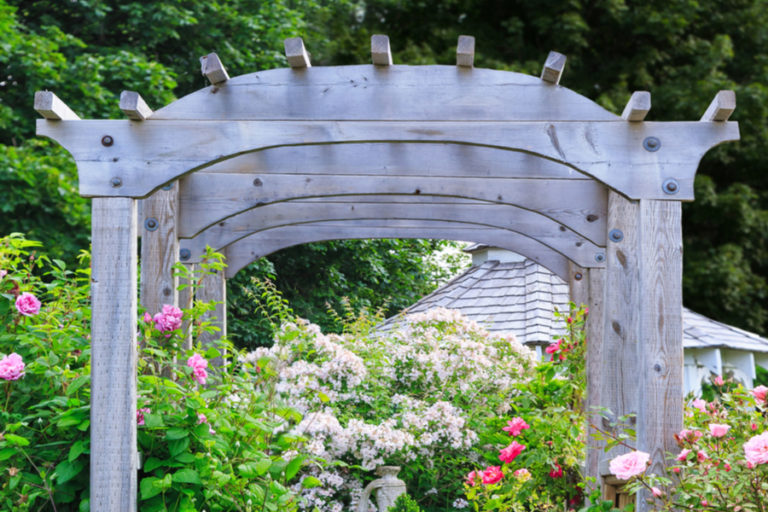
Clematis starts to climb up the posts of the upper pergola area.

Clematis starts to climb up the posts of the upper pergola area.

The chickens are enjoying their new home - including their shad patio we added in back.

The chickens are enjoying their new home – including their shade patio we added in the back to give them a break from the sun.

3 of our chickens have somehow discovered it is fun to escape the free range area each day and explore.  The same 3 every time!

3 of our chickens have somehow discovered it is fun to escape the free range area each day and explore. The same 3 every time!

Catching us off guard - we had our first two eggs laid this week by the new chicks. They are only approaching 15 weeks old - and usually don't start laying until week 18 or so. It was early enough that we didn't even have straw in the egg boxes yet!

Catching us off guard – we had our first two eggs laid this week by the new chicks. They are only approaching 15 weeks old – and usually don’t start laying until week 18 or so. It was early enough that we didn’t even have straw in the egg boxes yet!

The new bee hive is doing well...we added another honey super to the hive this week as the bees continue to work the  flowers and blooms.

The new bee hive is doing well…we added another honey super to the hive this week as the bees continue to work the flowers and blooms.

The Stella de Oro Daylillies are opening up all over the farm - they are such a great all purpose landscaping plant.  Easy to divide, low maintenance and very drought tolerant.

The Stella de Oro Daylillies are opening up all over the farm – they are such a great all purpose landscaping plant. Easy to divide, low maintenance and very drought tolerant.

The purple cabbage is already starting to form small heads

The purple cabbage is already starting to form small heads

There is nothing like eating fresh snow pea pods right out of the garden!

There is nothing like eating fresh snow pea pods right out of the garden!

The tomatoes and peppers are dark green and growing what seems to be an inch or two a day now - it won't be long!

The tomatoes and peppers are dark green and growing what seems to be an inch or two a day now – it won’t be long!

The beginnings of the vineyard!  The poles are up - and the grapes have have grown up to the 2nd training line.  We will be putting in the wire and securing in the coming weeks.

The beginnings of the vineyard! The poles are up – and the grapes have have grown up to the 2nd training line. We will be putting in the wire and securing in the coming weeks.

The natural rock retaining wall behind the barn.  All of the transplants have really taken hold now in year 2.  We also have added rock paths to the garden and coop to make it easier to get around.

The natural rock retaining wall behind the barn. All of the transplants have really taken hold now in year 2. We also have added rock paths to the garden and coop to make it easier to get around.

We have finally put together the charcoal box for the outdoor kitchen - now all that is left is to finish the trim...and cook! :)

We have finally put together the charcoal grill box for the outdoor kitchen – now all that is left is to finish the  trim and base brick work…and then cook on it! :)

These buttercups are a transplant from my mom's house last fall - and it is so nice to see them taking hold!

These buttercups are a transplant from my mom’s house last fall – and it is so nice to see them taking hold!

The zucchini and cucumber straw bale crates are really taking off - they are loaded with blooms!

The zucchini and cucumber straw bale crates are really taking off – they are loaded with blooms!

The hanging baskets on the porch.  We add lots of compost to our potting soil, and it really seems to give the baskets and pots a boost!

The hanging baskets on the pergola patio are starting to flow over the sides. We add lots of compost to our potting soil, and it really seems to give the baskets and pots a boost!

Visitors To The Farm And The Open House Date Is Set!…The Sunday Farm Update

Members of the Union County Master Gardener's Association listen in as we talk about our chickens at the farm.

Members of the Union County Master Gardener’s Association listen in as we talk about our chickens at the farm.

Food From The Garden... Visitors to the farm always love to see the end results of a growing season.

Food From The Garden… Visitors to the farm always love to see the end results of a growing season.

In the garden discussing the raised row, no till method.

In the garden discussing the raised row, no till method.

Mary talks about the leaf "corn-crib" and how we store fall leaves for use in our summer composting.  I think even the dog seems very interested! :)

Mary talks about the leaf “corn-crib” and how we store fall leaves for use in our summer composting. I think even the dog seems very interested! :)

The barn table's centerpiece for the day - made from some left over barn wood and mason jars we had on hand.

The barn table’s centerpiece for the day – made from some left over barn wood and mason jars we had on hand.

The straw bale crates made from old pallets were a big topic for the day - here our zucchini starts to grow up and over the crates.

The straw bale crates made from old pallets were a big topic for the day – here our zucchini starts to grow up and over the crates.

Talking about our tomato stake-a cages in the garden.

Talking about our tomato stake-a cages in the garden.

It’s always such a great experience to have visitors out to the farm.  Not only is it an opportunity to share our story and our love of gardening – but Mary and I both enjoy hearing and learning valuable information from others who love to garden and enjoy the outdoors as well.

On Saturday, we were really fortunate to have a great group from the Union County (Ohio) Master Gardener’s Association come out to tour the farm.

The weather couldn’t have been more perfect for the day – with the temperatures in the mid 70′s, sunny skies – and it led to a lot of great gardening conversation.

We spent the afternoon giving a two hour tour of the barn, composting and rain-water systems, chicken coop, and garden areas.

One of the things that visitors to the farm love to hear about – is the entire process of bringing the farm to the table – including not just fresh vegetables, but canning and preserving for year round use.

It never ceases to amaze both of us how friendly and sharing fellow gardeners are, and how much we learn every-time we have a group out for a tour.

When we first started the little farm a few years back, I don’t think either of us ever anticipated giving tours – but it has certainly become one of our favorite things to do – and as crazy as it sounds, I always feel like we are the ones who get to learn so much each time.

Speaking of tours, we will have final details in next week’s Sunday Farm Update – but it looks like July 27th will be the date for our Hometalk Meet-up and gardening discussion on Gardening and Gardening Recipes – and we are even more excited to announce that we will be working with an incredible local greenhouse, Wilson’s Garden Center, to host the event.

Wilson’s has a beautiful greenhouse facility and an amazingly friendly staff – and we are so excited to have them as a partner to host the event!

Even better, since it is only a few miles from the farm – we will also be giving tours and have an open house at the farm that day following the event.  We will have a complete run down with times and event details next Sunday

Speaking of the garden and the farm, everything has really taken off the past week with some timely and much-needed rains.  Along with some pictures of yesterday’s tour – we included some pictures about the farm for today’s Sunday Update.

The tomatoes and peppers have now begun to take hold and are starting to really shoot up – and the lettuce, radishes and other spring crops are in full pick mode – and with that – we need to get out there and get busy :)

Happy Gardening  -  Jim and Mary

If you would like to receive our Gardening / DIY and Farm Updates each week – be sure to sign up to follow the blog via email in the right had column, “like” us on Facebook, or follow us on Twitter.

Top view of the zucchini straw bale pallet crate planting.

Top view of the zucchini straw bale pallet crate planting.

Touring the new chicken coop

Touring the new chicken coop

The cucumbers are fully set in blooms

The cucumbers are fully set in blooms

The bees are enjoying all of the blooms and are hard at work at the farm too.

The bees are enjoying all of the blooms and are hard at work at the farm too.

So far, the red cabbage is looking good in the garden - hopefully, we will enjoy some fresh cole slaw this summer from it!

So far, the red cabbage is looking good in the garden – hopefully, we will enjoy some fresh cole slaw this summer from it!

Tomatoes..How To Get The Most From Your Plants In The Garden!

A big bowl of La Roma tomatoes picked from last year's garden

With a few easy steps, you can help your plants to grow an abundant supply of fresh tomatoes this season.

Your tomatoes are planted, they are starting to grow and you can’t wait to taste those first amazing globes of garden goodness!

Lately, we have been getting an abundance of emails and comments about how we grow and maintain our tomatoes once planted.  Besides making sure they have at least 1″ of water each week (via rain or watering) – here are some steps we take to make sure we get the most out of our tomato crop.

PRUNING:

Pruning up 6 to 8" under each plant helps with air flow, watering, and leads to more productive plants

Pruning up 6 to 8″ under each plant helps with air flow, watering, and leads to more productive plants

Yes, pruning can be an important part of keeping your tomatoes healthy, and can also create larger and sweeter fruits on the vine.  Just a little work now can pay off huge in a month or so when harvest time begins.

As each tomato plant starts to grow strong – we like to prune off the bottom 6 to 8″ of stems from the main stock of the plant for several helpful reasons.  For one – it allows for good air flow and easy watering of the plant – both of which help the plant to grow stronger and speed along the ripening process later.  Second, and maybe even of more importance – it will help to reduce the chances for disease and bug infestation.  By clearing out the area around the bottom of each plant - you are reducing the ability for plant feeding insects to find their way up onto the plants, and the improved circulation helps cut down on the chance for fungus to develop on the plants.  Last but not least – by trimming off the bottom area – you allow the nutrients to go to building stronger stems and larger tomatoes on top.

There are those that prune even more aggressively by thinning out some of the top growth – but we’ve had great success in just making sure the bottom of our plants are pruned.  It takes only a few seconds per plant – and makes a big difference.

SUPPORT:

Give good support for your tomatoes - we use our home made stake a cage's - a blend of a stake and a cage all in one.

Give good support for your tomatoes – we use our home made stake a cage’s – a blend of a stake and a cage all in one.

No matter if you use a stake, a cage, panel fencing or whatever – give those tomatoes some support! Tomatoes can easily become weak and more prone to disease when you allowing them to just sprawl around the ground.  It’s also an open invitation to pests and bugs to climb aboard and go to town.  The close contact to the ground also is an invitation for damaging mildew, mold and fungus to develop on the leaves.  So give them some support!  (See: How To Make Your Own Stake-A-Cages Cheap!)

As for what to tie them up with  - use materials that will hold up but still provide some elasticity for the plants to grow. Old t-shirts cut up into strips and old pantyhose work well.  We use a big spool of thick cotton yarn to tie ours up – buying a few old rolls in the bargain bin each year.

FERTILIZING:

You can make your own organic fertilizer "compost tea" - simply by steeping water in fresh compost!

We use a few applications of compost tea to get our plants off to a strong start.

Tomatoes are heavy feeders – and even with the best of soil – they can certainly benefit from a little added nutrition.  We use an application of our compost tea liquid fertilizer (See: How To Make Compost Tea) to give a good feeding to the plants.  We apply our first application after the plants have been in the ground a couple of weeks, and then about every 10 days for a total of 3 applications.  That seems to be the perfect amount for our plants – boosting their growth in the beginning to get them off to a good start. Remember, if you apply too much of any fertilizer, your tomatoes will spend all of their energy on growing foliage – and not fruit.

MULCH:

Egg shells and coffee grounds...perfect for the compost bin - and your tomato plants!

Egg shells and coffee grounds…perfect for the compost bin – and your tomato plants!

Finally, mulch the area around your tomatoes to help keep in the moisture and keep the soil at a moderate temperature.  We like to use our compost to mulch about a 6″ diameter around each stalk – this also provides nutrients for the plant as the compost breaks down and is watered into the soil.  You can also use grass clippings, straw or shredded leaves.

Here is an extra little secret we use: Add a little coffee grounds and crushed egg shells to the mulching area right around each plant.  Crush up about 3 to 4 shells per plant – and sprinkle the coffee grounds (about 1 filters worth) into the mulch you have around each plant. The added nutrients really help your tomatoes take off – and the crushed egg shells can help to prevent black rot.  (We add a few to each planting hole when we plant as well).

DON’T COMPACT YOUR ROOTS:

cajun bellesFinally – be careful as you work around your tomatoes and their root zones.  One of the reasons we really prefer raised beds or raised row beds are they keep foot traffic around plants to a minimum.   But even if you use a traditional flat garden – make sure to stay off the area directly around plants.

The root zone of your tomato plants that lie just below the soil’s surface are the life blood of the plants above ground.  Those roots are responsible for sucking up the water and nutrients the plants need to grow strong and produce healthy and abundant fruit.  Loose, uncompacted soil is a key component to their growth – and the more you step in and around them – the more compacted the soil becomes and the less root growth will develop.  We try hard to never ever step within 12″ of the ground right around each plant – and it pays off in good root structure.  When we pull our plants at the end of each year – it is amazing to see the 12 to 18″ of deep roots that each plant has developed by being allowed to grow freely without compaction.

So there you have it – how we care for our tomatoes through the summer months.  It’s hard to believe in about another 45 days – fresh tomatoes and canning season will be here!

Happy Gardening!

Mary and Jim

If you would like to receive our DIY & Gardening Tips every Tuesday – be sure to sign up to follow the blog via email in the right hand column, “like” us on Facebook, or follow us on Twitter

Finding Ways To Make More Compost…The Sunday Farm Update

Our "new" old corn crib structure...not used to hold corn, but leaves for use in our compost bin

Our “new” old corn crib structure…not used to hold corn, but leaves for use in our compost bin

Egg shells and coffee grounds...perfect for the compost bin!

Egg shells and coffee grounds…perfect for the compost bin!

It seems that we can never make enough or have enough compost on hand at the farm.  We use a healthy scoop or two in every single planting hole and as a mulch around all of our vegetable plants.  We also use it as a main ingredient in making our own potting and seed starting soil, and in each batch of our organic compost tea fertilizer.  When we are lucky enough to have any left over – we also add and incorporate it into our raised row beds at the end or beginning of each growing season to keep them full of vitality.

The problem is that even though we compost almost everything we can from the farm and house (leaves, grass clippings, vegetable scraps, chicken manure and straw bedding, etc.) – we still run out of materials to make as much compost as we could use.  One of our goals over the last year was to begin to find additional sources of materials to make more compost, and of course, do so for free :) .

Building A Win-Win Relationship With A Local Restaurant.

We have now partnered with the first of what we hope will be several local restaurants. The Big Apple Cafe, now saves all of their coffee grounds and eggs shells for us.

big apple cafeIt is a simple process – we provide them with a couple of clean 5 gallon buckets – and they fill them up with the coffee and eggs shells they use each day. Twice a week we stop by and provide them with two clean buckets, picking up the filled ones and add them to our compost pile.  It’s a win-win for everyone.  They create less waste to have hauled away – and we get a steady supply of incredible materials for our compost pile.  It is an arrangement that we hope to duplicate with a couple of other local restaurants.  Just a note – I think it is fantastic that a place like Big Apple supports the initiative – and hopefully, more and more places can do this in communities around the country – it really is a win-win!  If you get a chance – head over to their Facebook page “Big Apple Cafe” and give them a “like” and “thank you” for helping out the cause.

The Leaf Silo…Wait…The Leaf Corn Crib….

The original silo project started out great - then the winds came....

The original silo project started out great – then the winds came….

Late last fall, those who have followed along with us will remember that we began our leaf silo project.  It was another way to take advantage of a great compost material – leaves.  We wanted to design an outbuilding that could store the tons of leaves that are free for the taking in the fall around our neighborhood.  Leaves are so abundant here in the fall – the only real problem was to create a place to store them all for use throughout the year as a main ingredient in our compost. And so began the leaf silo project – an idea to build a mini farm silo that could store the leaves.

The silo project started off great  - and in fact we had the entire carcass of the structure and the curved roof supports all built heading into late fall.  The plan was to finish it up over winter with a metal roof and then make and secure it to a foundation in the early spring.  That is where it all went south so to speak. The silo was pretty large – and from the get go after constructing it – we worried about its ability to withstand strong winds.  Twice it toppled over in windstorms in December – only to crash a 3rd time and destroy most of the intricate curved roofing cuts.

We used old barn boards to make the slats, and of course, more old metal siding to match the barn and coop.

We used old barn boards to make the slats, and of course, more old metal siding to match the barn and coop.  We added a gutter to the back of the roof, to help collect extra rain water for the garden watering tank.

The chicken coop project was completed with it's barn matching coat of stain and paint put on this past week.

The chicken coop project was completed with it’s barn matching coat of stain and paint put on this past week.

There are times to work harder and there are times to work smarter.  It became obvious that the “leaf silo” building plan had to be revised.  We really wanted to keep with the theme of using old farm style buildings to keep the look of the farm  - so we decided to use another old-time farm structure, the corn crib – to create our leaf storage unit.

The corn crib “leaf storage” structure is 10′ long x 8.5′ feet high in the front, sloping to 6′ in the back.  We installed a wire mesh floor about  a foot off the ground to allow air flow through the leaves – and then cut down old barn boards we had on hand to make the slat walls.  They too allow for air flow.  The entire structure holds about 12 cubic yards of material – or more than enough to hold about 200 large yard bags of filled leaves. The best part is we were able to re-use much of the broken silo wood frame to help create the new leaf crib structure –  and the metal siding from the silo was taken off and used for the roof of the new chicken coop!

We still have the dream of a small silo for something someday…but for now, the corn crib looks great up by the garden –  and is holding a nice supply of leaves for the coming year of composting.

The important thing for us – is the more compost we can create – the more productive our little farm and garden will be.

Happy Gardening – Jim and Mary

If you would like to receive our Gardening / DIY and Farm Updates each week – be sure to sign up to follow the blog via email in the right had column, “like” us on Facebook, or follow us on Twitter.

The Basics Of Mulch – What, Where, How and Why To Use In The Garden And Landscape

Mulching has become a huge business – in fact, it’s hard to go a few blocks in any direction without running into a store where mulch can be purchase by the bag or the truckload.

We used a combination of rock and pine bark much here to add contrast to the back wall landscape

We used a combination of rock and pine bark much here to add contrast to the back wall landscape

But what is the best mulch to use in your flowerbeds?  And what about in the garden?  Well, although there are many choices and products to choose from – we hope this article can shed some light on the basics of mulching around the home and garden.

Whether in flower, landscaping or garden beds – mulch performs 3 basic duties.  It is a soil insulator, a moisture retainer and a weed suppressor.  It can also have a 4th and very powerful use depending on the type – and that is one of a soil enhancer.  If the right mulch is chosen, over time it can add valuable organic material to your soil as it breaks down (much like compost will).

Mulch is a great insulator for  the soil, and can be a huge factor in growing large, healthy plants.

Mulch is a great insulator for the soil, and can be a huge factor in growing large, healthy plants.

Mulch is great in helping to regulate soil temperature.  It can keep the hot summer sun from heating the soil too warm, and it can keep it warmer through cool nights.  That constant temperature is a key in healthy and strong plant growth.  That is an important point, because one of the most common mistakes people make is to mulch too early in the season.  It is important in the early spring to let your soil warm up before mulching – if you don’t – laying down that layer of mulch can keep it from warming up even longer and hurt your plant’s growth.  At minimum, allow a week of warmer temperatures to go by before laying down that mulch.

Using Mulch In The Landscape:

One mulch we don't recommend is cypress - it adds zero value to the soil and can create a matted mess!

One mulch we don’t recommend is cypress – it adds zero value to the soil and can create a matted mess!

The choices for mulch in the landscape are endless.  Stone, wood based products, and even synthetic mulches are available now.  Pebble or rock-based stone products can be a good choice for mulching around large established landscape areas – that might include large to medium ornamental grasses, trees and shrubs.  They allow water to get through easily and do not have to be replaced year after year.  Just remember with stone – the added maintenance of weeding can become more difficult, and you want to use it in areas where the plants will not need constant soil improvement.

Shredded Wood based products are by far the most commonly available, and can range from finely shredded to large nugget chunks.  Some of the best choices are the shredded hardwoods that add organic material to the soil as they break down.

Litrope

Pine mulch is a great accent here for Liriope – which can handle a more acidic soil

Remember that when you select a super-shredded or fine mulch – it will tend to disappear a little quicker.  That is not necessarily a bad thing – as it adds nutrients to your soil quicker – although it may take more from your pocket-book as you need to apply it more often :) .

The one mulch we are not fans of are the cypress-based mulch products.  For one, they add very little nutritional value to the soil as they break down – and they tend to mat into one big rug of tangled mess in the beds.  That makes it hard for moisture and nutrients to get through as well.  They take forever to break down – and in general, can cause more problems than they solve.

What about the synthetic mulches now appearing on the market?  Well, beyond adding zero value to your soil, they tend to be made with rubber or plastic based materials – and for us – it’s a no-brainer to keep out of an organic landscape and garden.

As for how much mulch to apply in the landscape – in general, a 2 to 3 inch layer of mulch is the perfect amount.  Any less – and you begin to lose the soil moisture retaining and weed blocking properties that make it so important.  Any more -and you can choke out your plant’s growth.

Using Mulch In The Garden:

We use only straw, leaf and compost mulch in the garden

We use only straw, leaf and compost mulch in the garden

Our recycled "leaf"corn crib we built to store tons of leaves gathered each fall for free.

Our recycled “leaf”corn crib we built to store tons of leaves gathered each fall for free.

We get asked quite often about using bagged or bulk wood-based mulches in the garden.  I have never been a fan of it for a couple of reasons.  For one, they tend to take much longer to break down – and in the garden – we want materials that will decompose quickly and add organic matter to the beds.  Secondly, most mulch manufactures apply fungicides and chemicals to their products to help prevent mildew, mold and termite damage – and I don’t like putting them anywhere near where we grow our food.

In the garden – we like to use  3 basic forms of organic mulch – straw, shredded leaves and compost. All 3 are terrific retainers of moisture, and the shredded leaves and compost can both be had for free.  It is one of the reason we built our new leaf “corn-crib” storage bin – so that we could store tons of leaves each fall to use throughout the gardening season.

We use straw in our walking rows to keep weeds to a minimum, and then use shredded leaves and compost right up around our plants.  The compost / shredded leaf mix really helps to retain moisture, and it breaks down quickly, adding those valuable nutrients to the plants.  For us – it is the perfect garden mulch.  We put about a 1 to 2″ layer of finished compost about 6″ inches in diameter around the base of each plant.  It really does wonders in helping our plants to need less watering, and keeping competing weeds out!

Happy Gardening!

Mary and Jim

If you would like to receive our DIY & Gardening Tips every Tuesday – be sure to sign up to follow the blog via email in the right hand column, “like” us on Facebook, or follow us on Twitter

How To Battle Frost On The Cheap – And The Farm Expands! The Sunday Farm Update

A crystal clear, full moon night at the farm on Friday and Saturday dropped temps into the low 30's

A crystal clear, full moon night at the farm on Friday and Saturday dropped temps into the low 30′s

Who knew lunch bags and nails could save the crops from frost!

Who knew lunch bags and nails could save the crops from frost!

Every possible container was used...even the upside down jack-o-lantern planter!

Every possible container was used…even the upside down jack-o-lantern planter!

Someone somewhere needs to explain to Mother Nature that we should not be battling frost a few days before June!  But there we were on Friday night, and again last night – covering every single at-risk garden plant and flower from the impending frost.

Quite honestly, we have never had the entire garden and flower beds all planted with the worry of a frost.  So when the warnings first came out mid-week that Friday and Saturday night could be a problem – we had to scramble to come up with a way to cover over 300 annual vegetable and flowering plants.  Like any good gardener – we have a small stash of empty pots – but not 300!  Every available pot, bucket and container was pulled out to cover the larger of the plants – but that still left us short a few hundred covers.

The answer came in the form of the humble brown paper lunch bag!  For a few dollars – we purchased a few hundred of the cheap brown paper lunch bags and turned them into our custom-made plant covers.  We just opened them up, slipped them over the 6 to 8″ plants, and used a common nail through the bottom of the bag and into the soil to hold it down.  As crazy as it sounds – it worked perfect – and saved the plants from a pretty hard frost here the last two nights.  

Without a doubt – the hodgepodge of pots, containers and brown paper bags made our garden look like the second coming of Sanford and Son’s Junk Yard – but hey – it worked! :)

The Daylillies are beginning to bloom - a sure sign of late spring and summer.

The Daylillies are beginning to bloom – a sure sign of late spring and summer.

The temperatures are supposed to moderate today - so hopefully it’s our last little brush with the cold and frost danger this year!  I guess at the least – we learned it’s possible to save all of them through a late spring / early summer frost.

In spite of the recent cold snap -the garden is off to a good start.  The sugar snap peas have started to climb the trestle grid, and we’ve begun to harvest the first of our lettuce and radish crop – with the spring onions not far behind.

The Farm Expands:

We will finish today’s Sunday Farm update with some exciting news for us and the farm.  We’re growing….literally!

"Willie" made quick work of clearing off the property

“Willie” made quick work of clearing off the property

The barn and pergola area - one of the first buildings to go up at the farm.

The barn and pergola area – one of the first buildings that went up at the farm.

When Mary and I started this project on the little 3 acre plot we call Old World Garden Farms, I’m not sure we realized how much space our garden and building projects would take up!

We quickly began to realize that between the barn and pergolas, raised bed gardens, flowerbeds, chicken coop, sensory garden area, small apple and cherry tree orchard and the hillside grape plantings - we were running out of room for a place to put our house someday!

Well, we were very fortunate last week to put and end to those worries with the purchase of an adjoining 2.5 acre parcel of land.  We couldn’t be more excited to have added the land – and in fact, within a day, we had “Willie”, our Old Ford Tractor clearing off the lot!

It now gives us the opportunity to expand the grape vineyard the rest of the way up the main hill – and a spot to someday to build a house at the far top to overlook the whole farm.  Even better, it will give us a great view of all of the plants covered in brown paper lunch bags when we have to cover for the next frost!

Happy Gardening – Jim and Mary

If you would like to receive our Gardening / DIY and Farm Updates each week – be sure to sign up to follow the blog via email in the right had column, “like” us on Facebook, or follow us on Twitter.

All About Tomatoes – Growing, Eating and Canning

A ripened Celebrity tomato waiting to be picked from the vine.

A ripened Celebrity tomato waiting to be picked from the vine.

Today’s post is dedicated to our most beloved fruit – The Tomato! Yes, scientifically speaking, the tomato is a fruit, although we like so many others consider it a vegetable too :) .  No matter what you call them, tomatoes are delicious, nutritious and have thousands of uses fresh, frozen and canned – making them the perfect plant to grow in the garden!

Tomatoes are truly the most important crop we grow.  Not just because we love to eat them – but because they are also the main ingredient in many of the canning jars we fill our pantry with each year from the garden.  Salsa, pasta and pizza sauce, tomato juice, ketchup and sun-dried tomatoes are all canned each year from our tomato crop – providing us year round with great tasting food from the garden.

So what are some great varieties to grow?  And what types do best for roasting, canning or eating fresh?  Well, here is a little info to help you through tomato land:

Heirloom Varieties: The Perfect Fresh Tomato

brandywine tomato

The Brandywine heirloom tomato

There is a big push today for heirloom tomatoes – and for good reason – they have amazing flavor, taste and texture.  In general, heirloom tomatoes are old-time tomato seed varieties that are open pollinated, have been passed down from generation to generation - and have unique and special characteristics.  Some of the more popular - like Brandywine, Black Cherry, Mr Stripey, Green Zebra and Lemon Boy – are grown and coveted by many gardeners for their intense flavor.  They are the perfect fresh tomato for salads, hamburgers – or to slice and eat!

The rich texture of the brandywine

The rich texture of the Brandywine

There are some drawbacks however to be aware of when growing them. They are not going to be as hardy as most of today’s hybrid varieties that have been bred for higher yields and disease, wilt and bug resistance. Some gardeners who are new to growing heirloom varieties become disappointed when they plant a whole area of heirloom tomatoes – only to see them produce fewer tomatoes and die off earlier due to disease.

If you want to can and preserve in larger quantities – you  will also want to plant some of today’s newer varieties that have some disease resistance and higher yields.  As an example – our La Roma sauce tomato that we plant for canning our salsa and sauces may be a modern hybrid, but organically grown, the taste is still light years above anything we could ever buy “fresh” in a store or supermarket.

Here are some of the hybrid and resistant varieties that we grow for canning and preserving:

Slicing:

Celebrity tomatoes on the vine

Celebrity tomatoes on the vine – they are a versatile tomato – great for slicing, eating and canning.

The Celebrity and Rutgers are two great choices for a slicing tomato.  They seem to always have perfectly round fruits that fill up a bun or sandwich.  They also both have a  great juice to flesh ratio.  The Big Beef and Beef Steak varieties do well for slicing too.

Salad Tomato:

Everyone knows the “cherry” and “plum” tomatoes that have become so popular on salads, or for simply popping in your mouth to enjoy.  There are hundreds of versions, but the ”cherry 100″ and “sweet 100″ have always performed well for us.

Another favorite among tomato aficionado’s is the Campari Tomato.  It is a little larger than the cherry or plum types (about golf ball size), but it is super juicy with a high sugar content for great flavor.

Cherry tomatoes are a great add in when making juice

Cherry tomatoes are a great add in when making juice

We tend to grow our cherry and plum tomatoes in large pots on the patio and keep them out of the garden.  For one, they make a great potted plant and it makes it easy to pick them for salads or to eat. Second – the plants grow so large and produce so much – they are hard to keep control of in the garden. They also tend to overpopulate the ground below with hundreds of seeds that keep coming back the next year – making weeding and issue – and planted pots eliminate that.

If you do become overrun with a supply of them – they are great to add to your juicing operation.   Although small, the high liquid and sugar content make them good for juicing.

Making Tomato Juice:

Speaking of juice, we make and certainly go through a lot – usually to the tune of a couple of quarts a week year round.    You can certainly use any tomato variety when juicing – but our favorite is to use a mixture of La Roma and Celebrity Tomatoes to create the perfect juice.  The Celebrity contains a lot of juice and it is balanced with the thicker meaty style of the La Romas.  The result, a really great tasting juice with good texture.  See our Hot and Spicy Tomato Juice Recipe

Sauces and Salsa’s

Picante Salsa - one of our favorites to make and eat!

Picante Salsa – one of our favorites to make and eat!

We can a lot of sauce and a lot of salsa – and for us, as we stated earlier – nothing can beat the La Roma tomato as the main ingredient.  The plants are hardy, with thick and meaty fruits that cook down into a great sauce.  The meaty texture also lends itself to a great salsa tomato. The chunks stay firm and meaty.  Our La Roma Plants are big producers too – we grow 24 plants and usually harvest a good 30 to 40  pounds of tomatoes per plant.

You can see our recipes here for our Picante Salsa and Pasta Sauce.

Success In Growing Tomatoes

Proper watering and good soil can make for a big tomato crop

Proper watering and good soil can make for a big tomato crop

You can check out our previous post on How to Grow Great Tomatoes for more information – but in general – tomatoes love sun and warm humid nights.  They also need a fair amount of water – so make sure they are getting a good 1″ of water per week.  As an extra tip – make sure to add a few crushed egg shells to every planting hole. The added calcium will help to avoid black rot and wilt on your tomatoes throughout the season.

Happy Gardening – And Enjoy Those Tomatoes!

Mary and Jim

If you would like to receive our DIY & Gardening Tips every Tuesday – be sure to sign up to follow the blog via email in the right hand column, “like” us on Facebook, or follow us on Twitter

Planting The Garden! The Sunday Farm Update

A Celebrity tomato plant stands ready to grow after being planted this past week.

A Celebrity tomato plant stands ready to grow after being planted this past week.

It is always one of our favorite weeks of the year…the planting of our garden!

Winter had a final stand last Sunday and Monday night with one last frost at the farm.  By Wednesday however, the temperatures quickly rose into the 70 and 80′s – and the threat of cold weather became a distant memory.  It was finally time to get the full garden planted!

It doesn’t take long for us to get the plants in with the raised row system, and with a few hours of work each evening on Thursday and Friday – the 2013 Garden Plan came to life.  All in all, over 140 plants went into the ground – including 40 tomato and peppers plants each, along with rows of cabbage and head lettuce transplants.  We also seeded in multiple rows of green beans, potatoes and onions to go with the early spring crops of radishes, sugar snap peas, lettuce, arugala and carrots already in the ground.  (You can see the entire garden plan at the bottom of the post)

All of the raised rows are planted - we will be heading out today to straw the walking rows.

All of the raised rows are planted – we will be heading out today to straw the walking rows.

We create all of the holes in each row with a post hole digger.  It allows us to quickly have a planting hole that is both deep and wide enough to easily plant in. Next – we add in a shovel full of compost to the hole – and mix back in the existing soil to plant the transplant.

Finally,  we add a thin layer of compost as a top dressing and mulch around each transplant, water them in – and move on to the next plant.

The strawberry plants are off to a good start

The strawberry plants are in and will even give us a small harvest this year.

One of our other goals this year was to get our strawberry and blueberry patches planted.

Over the last few weeks we had turned over and prepared the soil for the patch where the old chicken coop once stood. The soil is rich in nutrients from the chickens over the the last few years, and should provide years of good blueberry and strawberry harvests.

We chose a June bearing variety (Sparkle) for our strawberries. Ever-bearing varieties can provide berries throughout the season, but the June bearing will provide larger and more abundant harvests – which are perfect for canning and preserving.  For the blueberries, we chose three different varieties of bushes – allowing for better pollination and higher yields.

Bringing back pollen to the hive...if you look closely you can see the yellow pollen on the incoming bee

Bringing back pollen to the hive…if you look closely you can see the yellow pollen on the incoming bee

The bees have plenty of fresh blooms to choose from - here the wegelia at the front entrance

The bees have plenty of fresh blooms to choose from – here the wegelia at the front entrance

The chicks are now almost 13 weeks old, and have taken to sunning themselves outside of the coop.

The chicks are now almost 13 weeks old, and have taken to sunning themselves outside of the coop.

The honey bees and our new hive are off to a great start.  The queen has successfully found her way out of her cage, and the bees have begun to diligently bring in pollen at an amazing pace.  It is truly amazing to sit and watch them fly in, one after another, with their bodies and legs covered in the colorful yellow and purple pollen of the surrounding blooms.  It’s a great feeling to know that they are close by to help pollinate our crops – and even better to know that if all continues to go well, we can hope to have our first harvest of our own “local honey” this fall.

The new chicks are likewise off to a great start.  They seem to love their new coop – and have more than doubled in size since moving out  to the farm from the brooder from the house.  They will turn 13 weeks old this Monday – which means we are only 5 to 7 weeks away from them starting to lay.  Our new chicks are all Golden Comets, and most will begin to lay somewhere between weeks 18 and 20. We have been able to let them free range over the entire farm for the last few weeks – but with the garden, strawberry, and blueberry patch areas planted now – we will lay out some large fenced-in grazing areas to keep them from damaging any of the crops.

Here’s to a great start to the growing season!

Happy Gardening – Jim and Mary!

If you would like to receive our Gardening / DIY and Farm Updates each week – be sure to sign up to follow the blog via email in the right had column, “like” us on Facebook, or follow us on Twitter.

The 2013 Garden Plan.

The 2013 Garden Plan.

Shaved Asparagus Pizza Recipe

IMG_2315

Grilled Asparagus Pizza

So you don’t know what to do with all that fresh asparagus that is in season right now?  Have you roasted it with olive oil and garlic the last few times and need a new idea?  You can always pickle and can asparagus, but if you are looking for a fresh way to add this tasty vegetable as part of your main dish – this is the recipe for you!

Pizza is a ‘go to’ staple in our house.  This time of year we are on the run constantly and at the end of a long spring day, pizza is just too easy to resist.  In order to make our meals a little healthier and add a little twist to our pizza night, we decided to use our fresh ingredients straight from the garden for this recipe.  Feel free to add other ingredients to make your own version!

Shaved Asparagus Pizza Recipe

Ingredients:

Shave the asparagus with a standard vegetable peeler.

Shave the asparagus with a standard vegetable peeler.

1 recipe of your favorite pizza dough (Old World Garden Pizza Dough Recipe)
1/2 pound asparagus
1/4 cup grated Parmesan
1/2 pound shredded mozzarella
2 teaspoons olive oil
1/2 teaspoon coarse salt
Several grinds black pepper
1 scallion, thinly sliced
1 lemon (optional)

Instructions:

1.Preheat your oven to 475 degrees F

2. To prepare asparagus – Hold a single asparagus spear by its tough end, lay it flat on a cutting board.  Use a vegetable peeler to create long shavings of asparagus by drawing the peeler from the base to the top of the stalk. Repeat with remaining stalks.

Toss asparagus with olive oil, salt and pepper.  Add red pepper flakes for an extra kick!

Toss asparagus with olive oil, salt and pepper. Add red pepper flakes for an extra kick!

**Some pieces will be unevenly thick or too thin to peel (the tip of the stalk).  The mixed thickness gives the pizza a great variety of  texture. Discard tough ends.

3. Toss peelings with olive oil, salt and pepper in a bowl.

4. Roll your pizza dough out on a 12 inch pan or pizza stone.  You can use a standard round pizza pan, square one, or keep your dough in an oblong shape – whatever you chose!

5.  Sprinkle pizza dough with Parmesan  then mozzarella cheese.

Shaved Asparagus Pizza

Shaved Asparagus Pizza

6. Pile asparagus on top.  **I added a little red pepper flakes here for some added flavor.

7. Bake pizza for 10 to 15 minutes, or until edges are browned, the cheese is bubbly and the asparagus might be lightly charred.

8. Remove from the oven and immediately sprinkle with scallions, lemon juice and lemon zest.

9. Slice and eat!

Enjoy!!!

Mary and Jim

**If you would like to receive our Recipe Of The Week each Friday – be sure to sign up to follow the blog via email in the right had column, “like” us on  the Facebook, or follow us on Twitter

Growing Lettuce – Experience Real Flavor!

Concept - a Summer Crisp lettuce is a great choice to sow in late spring because it can tolerate more heat than most lettuce types

Concept – a Summer Crisp lettuce is a great choice to sow in late spring because it can tolerate more heat than most lettuce types

Lettuce is one of the fastest and easiest to grow crops around.  It can be grown in the garden, in containers and raised beds, or almost anywhere you can clear out a little space.

There are hundreds upon hundreds of varieties available – in a myriad of colors, textures, all with their own unique taste.   In fact, for most that begin to grow their own lettuce – they are shocked to realize the amazing difference in taste from the generic varieties available in most super markets and grocery stores.  Most “supermarket” lettuce, (like the familiar Iceburg head lettuce) are grown specifically for their ability to handle shipping and store well – not for taste.  When you begin to grow your own – you might just find out that with all that flavor – salad dressing isn’t even needed!

The first of the lettuce is through and almost ready for the first picking - this is Summer Crisp

The first of our lettuce is up and through, almost ready for harvest. Pictured if Black Seeded Simpson.

Lettuce can be divided into many categories – but most will agree on these main four  : Butterhead (Bibb style lettuce) , Crisphead (Iceberg, etc.), Looseleaf (Cutting varieties) and Romaine style.

Lettuce in general prefers cooler weather – so you will want to plant a spring/early summer crop, with a second fall crop as well.  The hot summer heat tends to wilt and bolt lettuce.  The good news is that it’s a quick grower, and can actually go from seed to table in as little as three to four weeks!

Preparing The Soil And Planting Lettuce:

Rich, fertile soil is the key to great lettuce.

Rich, fertile soil is the key to great lettuce.

Lettuce prefers loose, fertile, and well-drained soil.  It will struggle to grow well in hard, clay-type soils.  Prepare your beds by adding in lots of compost and organic matter. If your soil is on the clay-type side – you can also add a few shovel-fulls of sand to help loosen the soil structure and aid in drainage.

Lettuce can be planted with transplants or by directly sowing seed into the soil. We prefer planting most of ours by seed, mainly for the convenience, and for us, they have seemed to do better emerging from the soil than they have as transplants.

If your soil is fertile, lettuce will not require much additional care other than keeping it watered throughout dry periods.  Lettuce, like most vegetable crops, should receive about 1″ of water per week.  If you do want to fertilize – an application of compost tea can be applied once the crops have emerged through the ground.

There is so much more to choose from than just "traditional" Iceburg lettuce

There is so much more to choose from than just “traditional” Iceburg lettuce

We use a fair amount of straw mulch around the plants to keep weeds to a minimum – weeds can wreak havoc on lettuce crops.  Be sure to take care when weeding – lettuce roots are shallow and are easily pulled from the soil.

To help keep pests at bay – we like to plant a few of our hot pepper plants near our lettuce or directly in the middle of the lettuce bed. Garlic and onions are also known to have the same effect when planted near lettuce crops.

Harvesting Your Lettuce Crop:

Leaf lettuce can be harvested whenever the plants begin to become large enough to snip their tasty leaves.  The beauty of leaf style lettuce is that you can get multiple cutting from the same planting – increasing your yields.  Be aware though, that after the first few cuttings, the leaves will start to become a little less tender with each cutting.  If left alone, leaf lettuce will usually reach their maximum size in about 50 to 55 days.

Most head lettuce varieties mature in 55 to 70 days - and it is important to harvest them before the summer heat begins to wilt their leaves and change their taste.

To store lettuce, wash, drip or spin dry, and place in a plastic bag in the refrigerator. Lettuce keeps best right around 32°F.

Here are some of the types we grow and love:

We love Romaine Ridge - an organic variety we found at Johnny's Seeds.

We love Romaine Ridge – an organic variety we found at Johnny’s Seeds.

Buttercrunch :  The name says it all!  Tasty, buttery leaves with a crisp bite.

Black Seeded Simpson :  A crisp, leaf lettuce with great flavor – also handles heat a little better than other varieities

Red Salad Bowl :   Just like its name, a great tasting, beautiful red-leafed lettuce adding lots of color to your plate.

Bibb Lettuce :  We use a variety call “Winter Bibb” – but bibb lettuce in general has a sweet, buttery leaf perfect for fresh salads.

Bibb lettuce is a great choice for the home gardener - it is full of flavor!

Bibb lettuce is a great choice for the home gardener – it is full of flavor!

Romaine (Ridgeline) : This is an amazing variety of romaine – easy to grow, with wonderful flavor.

Concept : A Summer Crisp lettuce, it’s a great choice to sow in late spring because it can tolerate more heat than most lettuce types

Happy Gardening – Jim and Mary

If you would like to receive our DIY & Gardening  Tips every Tuesday – be sure to sign up to follow the blog via email in the right hand column, “like” us on Facebook, or follow us on Twitter