
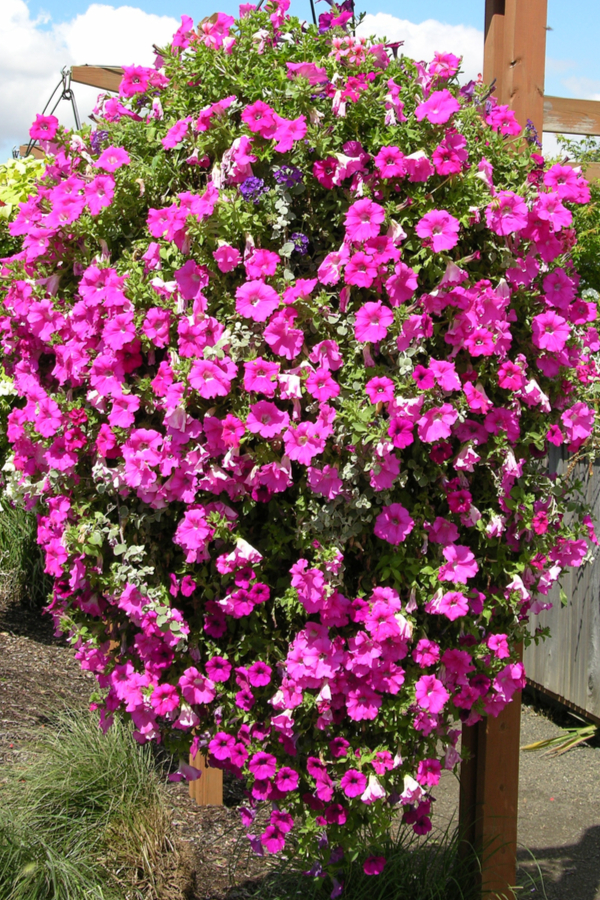
You might just be amazed to find out how well worm castings & hanging baskets go hand in hand. In fact, for us at the farm, it has been our secret go-to ingredient for years to power our baskets to incredible health – and the longest and biggest bloom sets around!
If you’ve never used worm castings – you truly are missing out. Plain and simple – they work wonders everywhere. Not only do they successfully power our vegetables plants, annuals and perennials in our garden and flowerbeds, they also happen to be our secret ingredient to growing hanging baskets and container plants that overflow with blooms and foliage.
So why are worm castings perfect for fertilizing hanging baskets? The answer lies not only with the mix of nutrients within the castings, but how easily those nutrients are absorbed by plants. And for baskets – castings work like magic!

The Power Using Worm Castings With Hanging Baskets
Why Worm Castings Work
Worm castings are the dried remnants of worm manure. As worms eat there way through the soil, they consume a myriad of organic materials. Their digestive system breaks down that organic material into an ultra-fine form as it exits as manure.
Just as with animal manure, worm castings contain all types of nutrients that are critical food for plant life, including nitrogen, potassium and phosphorus.
But here is the real kicker, because they are broken down into an ultra fine form, they are one of the easiest of all sources of nutrients for plants to absorb. Even more, those nutrients are balanced, meaning they won’t burn or overcharge plants like other manures or fertilizers can do.
Worm castings in essence, are the ideal low & slow fertilizer for hanging baskets. They give annual plants just the right amount of energy to thrive, without growing them too quickly. That can be a big plus to keep plants thriving in baskets all summer long.
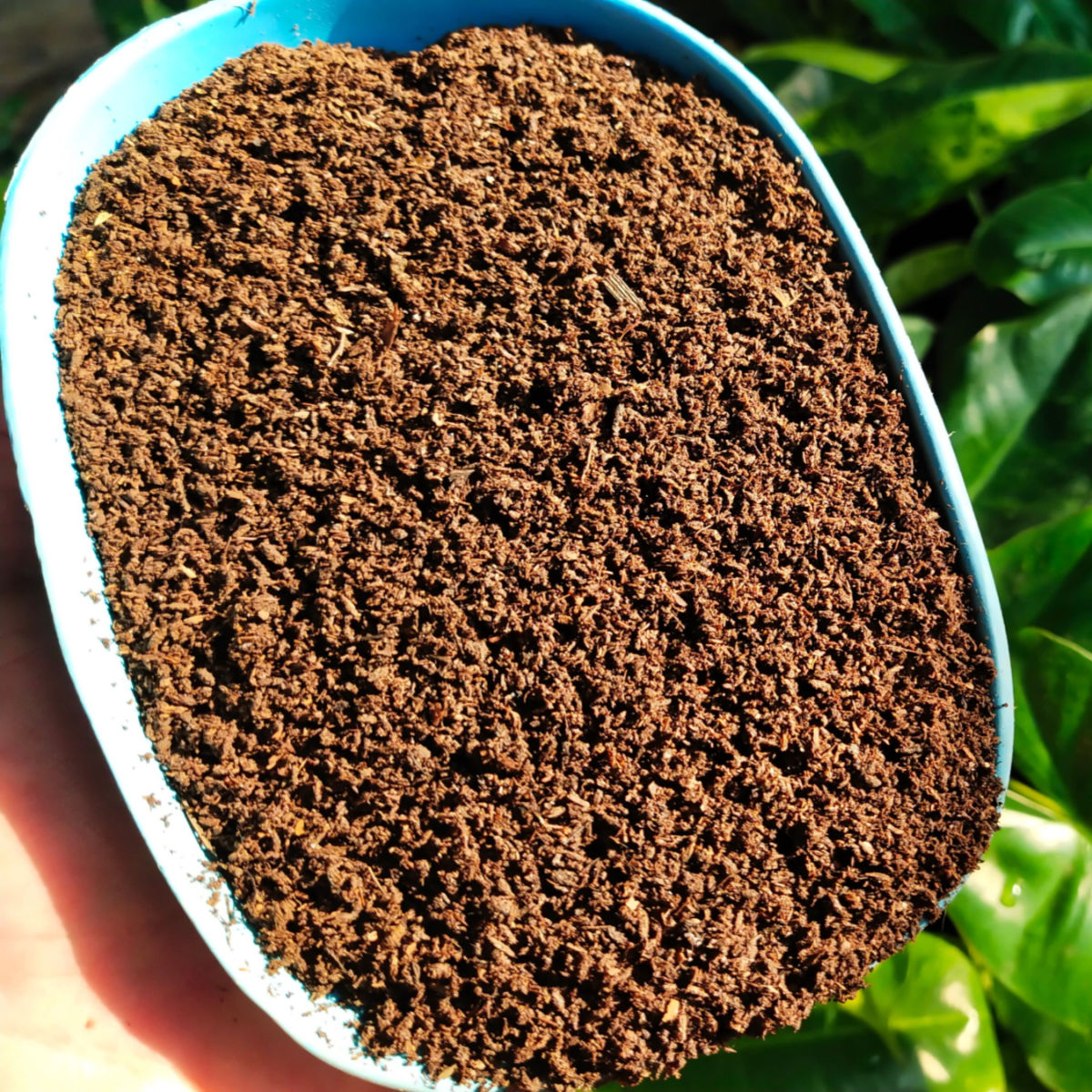
How To Use Worm Castings For Great Hanging Baskets
Whether you plant your own hanging baskets or purchase them from your local greenhouse or nursery, worm castings can work magic on your plants.
We use worm castings to power our hanging baskets in three distinct ways. First, when we plant them, we add castings into the soil to provide a great source of slow-release nutrients. But that is just the start. Even if you already have your baskets up and growing, castings can work wonders in two easy ways.
We start by using worm castings periodically throughout the season as a topical mulch & fertilizer. Then, we create an amazingly powerful liquid tea from the castings. We use the tea on a very regular basis to provide perfect power for strong blooms and growth.
Together, they work to keep hanging baskets strong and healthy from early spring right up until late fall. All from one simple bag of worm castings! Affiliate Link: 100% Pure Organic Worm Castings Fertilizer
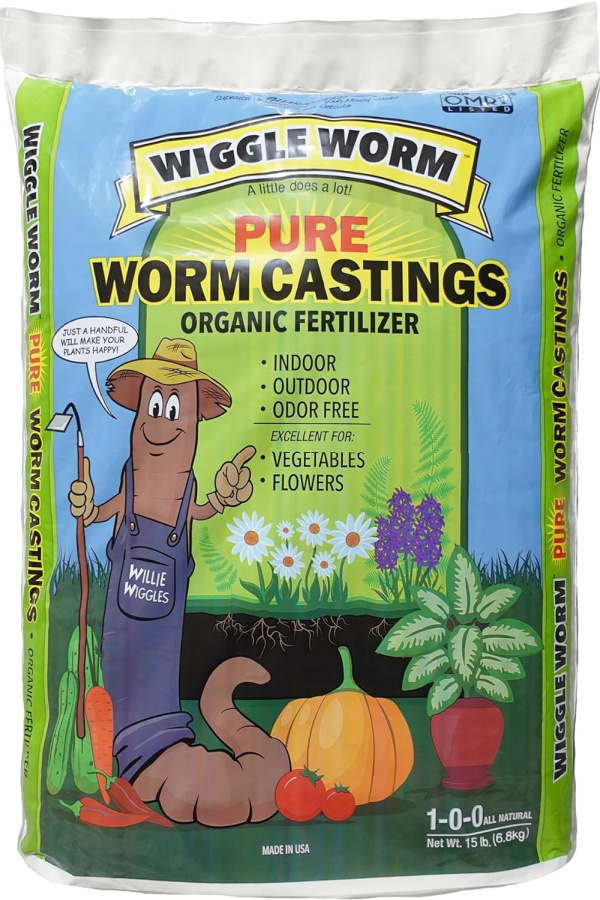
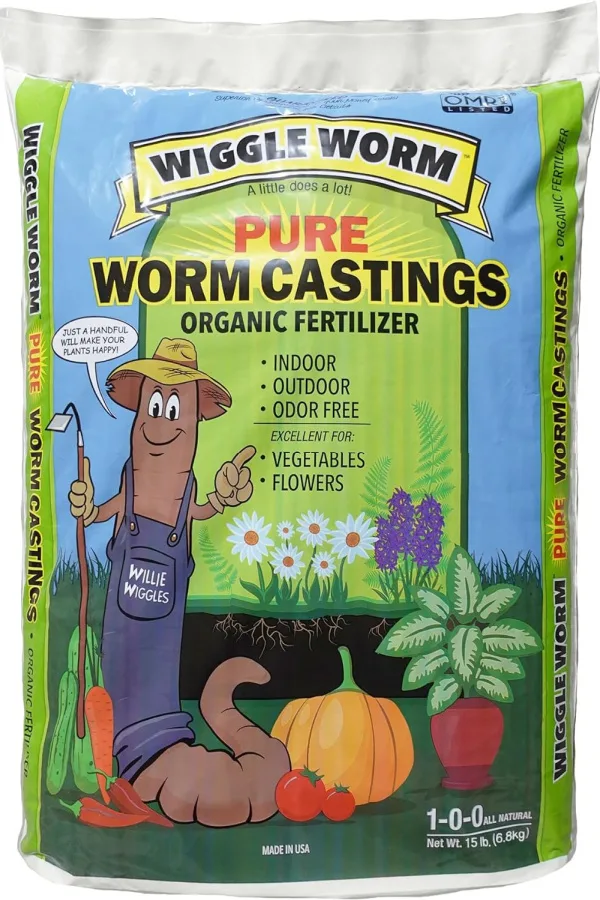
With that in mind, here is an in-depth look at how each method for using worm castings can work to power your hanging baskets to new heights this year.
3 Ways To Fertilize Hanging Baskets With Worm Castings
Worm Castings In The Potting Soil
If you plant your own hanging baskets or containers, using worm castings as an additive to your potting soil is a must. Not only will it help to keep your potting soil lightweight, it also fills it with valuable energy.
In addition to containing the traditional “BIG 3” of fertilizing power (Nitrogen, Potassium & Phosphorous), castings also include traces of copper, magnesium, manganese, carbon, cobalt, iron, magnesium and calcium. All of which also help play an important role in plant health and vitality.
If that wasn’t enough, worm castings are also able to absorb multiple times their body weight in moisture. That means the roots of your plants have a better chance of having the moisture they need, when they need it. We mix 1 cup of castings for every 5 to 6 cups of potting soil when planting containers and hanging baskets.
Listen To Our Podcast Below On Using Worm Castings On Vegetable Plants, Flowers & More!
Top Dressing Hanging Baskets With Worm Castings
Even if you don’t plant your own baskets, you can still use worm castings on top of your potting soil to help provide them with low and slow power.
Every three to four weeks, we apply 1/2 cup to 3/4 cup of worm castings to the top of each of our hanging baskets . We do this as a top dressing and mulch. The top coat of castings act as an incredible slow-release fertilizer every time we water.
The nutrients within the castings leach into the soil as the water filters through. In the process, nutrients are delivered directly to the roots of the plant as they soak up the water. This low and slow fertilizing process is perfect for hanging baskets. It provides them with a steady diet of easy-to-consume minerals. All without the danger of overpowering plants.
Worm Casting Tea – Keeping Your Baskets Blooming Big!
The third and final way to fertilize your hanging basket plants with worm castings is by watering your plants every five to seven days with a dose of worm casting tea.
You can create worm casting tea by soaking or steeping worm castings in water. As the castings soak, they leach all of their powerful nutrients directly into the water. The process creates a powerful yet highly balanced liquid fertilizer.
Creating worm casting tea is a breeze. Just mix one cup of castings with one gallon of water. Shake it or stir it up, and let it steep for 24 to 48 hours. If you can wait, allowing the castings a second day to absorb the nutrients makes it all the better. For more on this, see our article: How To Make Worm Casting Tea – The Perfect All Natural Fertilizer!
Once or twice each day, give the castings a stir or shake to agitate the castings. This will help the castings to release even more of their power into the water. Then simply strain the castings out (they are great for the compost pile) and you are ready to use!
How To Use
To use, simply water your plants as normal with the solution – leaves and all. The nutrients will absorb both through the foliage and roots. As with any fertilizing, it is best to do this in the early morning or late evening. This helps to avoid having any water droplets burn the foliage with the hot sun’s rays – although with castings – there is little worry of this ever occurring.
We use about a quarter gallon of worm casting tea on each mature hanging basket plant. For our plants, we have found keeping them on a regular 5 to 7 day cycle of casting tea works wonders for keeping them healthy and blooming strong.
Here is to using worm castings in and on your hanging baskets this year. And being rewarded with amazing blooms all summer long! Happy Gardening – Jim & Mary.
Old World Garden Farms
Jim and Mary Competti have been writing gardening, DIY and recipe articles and books for over 15 years from their 46 acre Ohio farm. The two are frequent speakers on all things gardening and love to travel in their spare time.
As always, feel free to email us at thefarm@owgarden.com with comments, questions, or to simply say hello! You can sign up for our free email list in the subscribe now box in the middle of this article. Follow us on Facebook here : OWG Facebook. This article may contain affiliate links.