Looking for a simple, safe and effective way to kill poison ivy plants in your yard, flowerbeds and landscape?
Believe it or not, you can eliminate all of the poison ivy in your yard without having to resort to harsh chemicals and sprays. And it’s probably easier to do than you ever thought!
Poison ivy can be an absolute nightmare for gardeners, outdoor enthusiasts, or anyone who comes in contact with it. But it can be especially bad and dangerous for those who are highly allergic to its oily resin. On our farm, that is certainly the case for Mary!
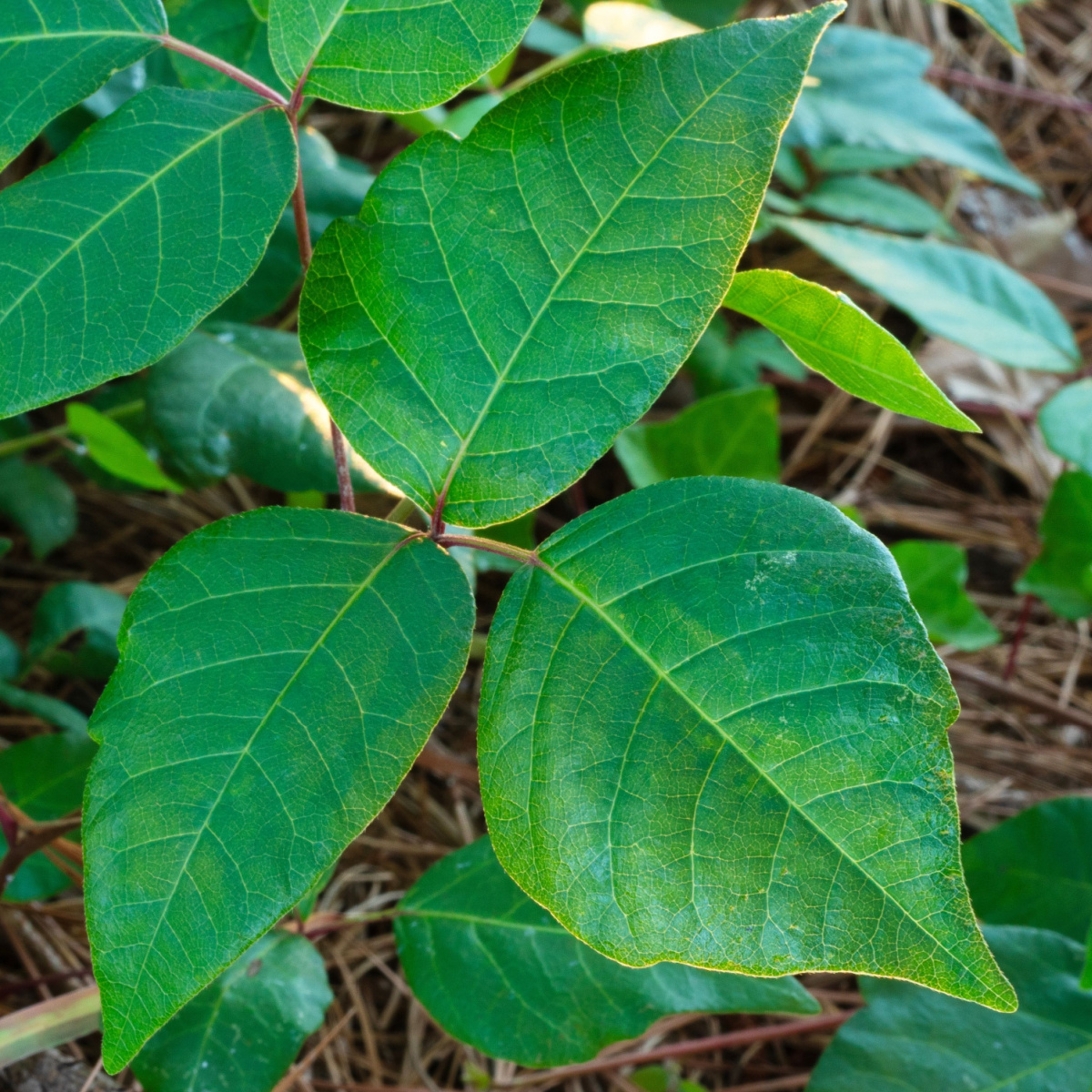
Quite honestly, if she even gets near a plant – it seems to find a way to get on her skin. So much so that it is a regular routine for me to wash any of our farm vehicles that head into the woods to make sure none of the resin is anywhere on them – or she ends up with the dreaded rash. And any clothes I have been wearing head straight to the washing machine by themselves!
Obviously, it’s hard to eliminate poison ivy in a large wooded setting. But when it comes to having it in our flowerbeds or anywhere in our yard, we have used one simple trick to get rid of it for good. And is it ever effective!
How To Kill Poison Ivy Plants
The Best Way To Kill Poison Ivy Plants – Using Horticultural Vinegar
One thing is for sure, for those that are allergic, they can be in agony from the itching and rash for weeks on end. And it can happen fast. In fact, for some, it can appear in as little as four hours, while others may not have symptoms show up for nearly two days.
Unfortunately, you can get poison not just from the leaves, but the entire plant. The resin that causes the painful rash can transfer by contact from the stems, branches and leaves above the ground, and even from its roots below ground. Which is exactly why eliminating the entire plant is a must.
As it turns out, one of the best and most natural ways of all to eliminate poison ivy is with horticultural vinegar. It is actually the very same vinegar we use to get rid of thistles as well. See our article: How To Kill Thistles For Good
Why Horticultural / Industrial Vinegar Is The Way To Go
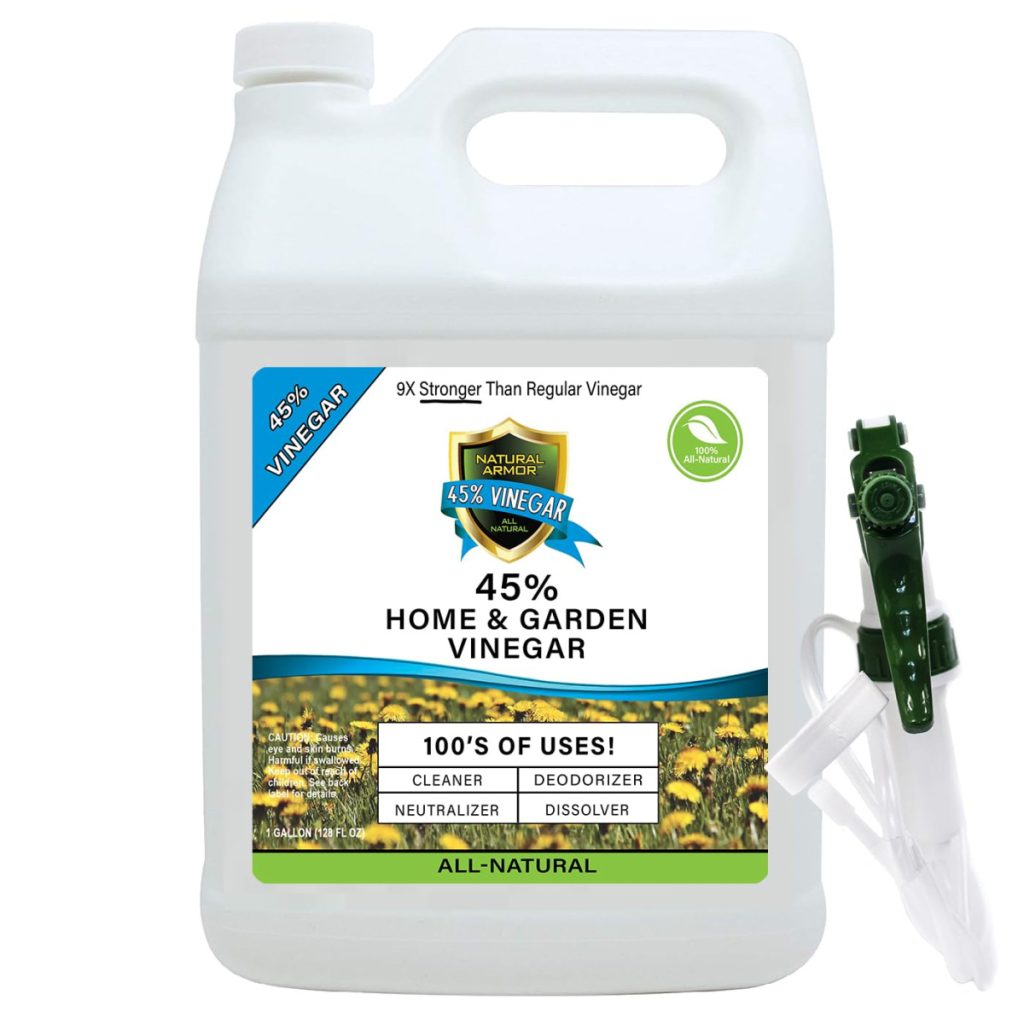
Horticultural vinegar has a much higher concentration of acid than regular kitchen vinegar. Kitchen vinegar can usually be found between 4% and 5% acidity. Horticultural vinegar, on the other hand, can be upwards of 30 to 45% acidity. Affiliate Link: Natural Armor 45% Vinegar Industrial Strength Concentrate
That higher acidity strength is exactly what works to kill poison ivy. The best thing of all is that it couldn’t be more easy to use. All you need to do is safely put the vinegar in a spray bottle, and use at full strength!
With its higher acidity, you should always wear protective eye and hand protection with horticultural (industrial) vinegar. It is still an acid and can cause burns to the skin and eyes when it comes in contact. But does it ever work like a charm against poison ivy!
Spray the leaves liberally with the solution and watch it work. Spraying during the heat of the day and in direct sunlight will increase its effectiveness even more. You will want to be careful when spraying around other plants to only hit the leaves of the ivy.
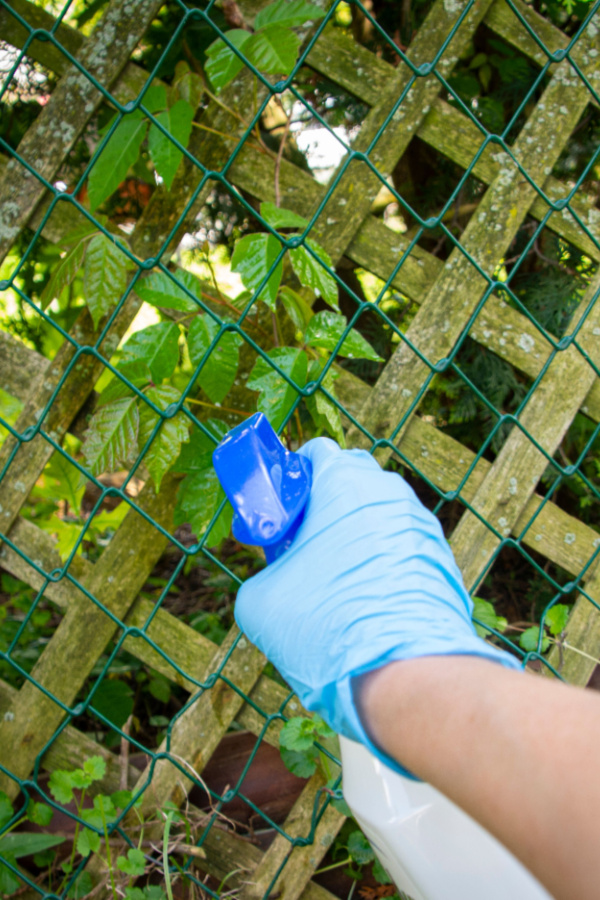
Vinegar is non-specific, meaning the acid will kill any plant that it comes in contact with. It will usually take a couple of applications a few days apart to completely kill poison ivy down to the roots.
It is our number one go to method and it has totally eliminated poison ivy in our garden and flowerbeds. So much so that we always keep a spray bottle with it at the ready to take care of new plants – and thistles while we are at it!
How To Eliminate Ivy With Salt Water
Another simple homemade spray that will work to kill poison ivy is salt water. This is really effective on smaller poison ivy plants and can be a quick and easy solution, especially if you prefer not to use the more acidic vinegar.
If we have a little start that appears in our garden or flowerbeds (courtesy of birds carrying it in!), this is our go to method to kill the poison ivy plants quickly.
To make, mix 2 cups of salt with 1/2 gallon of water. You can add a few drops of dish soap into the solution as well. This helps the spray cling to the ivy leaves instead of just dripping off. As for the salt – any type will do – ground salt, rock salt or even table salt will work.
To use, place in a hand sprayer and apply liberally to the ivy leaves. Just as with vinegar, the salt solution will harm any plant life it comes in contact with. Be careful to only spray the leaves of the ivy and not the foliage of surrounding plants.
Listen In To Our Latest Podcast Below!


The salt solution may take a few extra applications to completely kill the ivy. Spray every 3 to 4 days until the foliage is completely dead to be sure to kill to the roots. Again, spraying in the heat of the day and with full sunlight helps to increase the salt solutions effectiveness.
We are often asked can you mix the salt and vinegar to make an extra potent solution? Honestly, the vinegar is more than enough for large plants – and the salt solution is perfect for smaller ones. There really is no need to mix the two.
Here’s to using a simple and effective solution to kill the poison ivy plants in your yard – and to keeping everyone safe from an annoying and painful rash! Happy Gardening – Jim & Mary.
Old World Garden Farms
Jim and Mary Competti have been writing gardening, DIY and recipe articles and books for over 15 years from their 46 acre Ohio farm. The two are frequent speakers on all things gardening and love to travel in their spare time.
As always, feel free to email us at thefarm@owgarden.com with comments, questions, or to simply say hello! You can sign up for our free email list in the subscribe now box in the middle of this article. Follow us on Facebook here : OWG Facebook. This article may contain affiliate links.