
Did you know that you can use oats as a cover crop this fall for your garden and raised beds – and never have to worry about tilling them in next spring?
When it comes to protecting and improving garden soil, few things can make as big of an impact as planting a cover crop in the fall. For years we sowed annual rye on our farm to blanket our raised beds and garden plots through winter, and it worked beautifully. But in the last few seasons, we’ve switched to using oats as our go-to cover crop – and it has truly been an even better fit for our no-till approach.
Both rye and oats offer an incredible way to safeguard your soil from erosion, loosen compacted ground, and add valuable organic matter back into the earth. But for us – rye has now become the go to choice – even for our raised beds – and here’s a look at why!
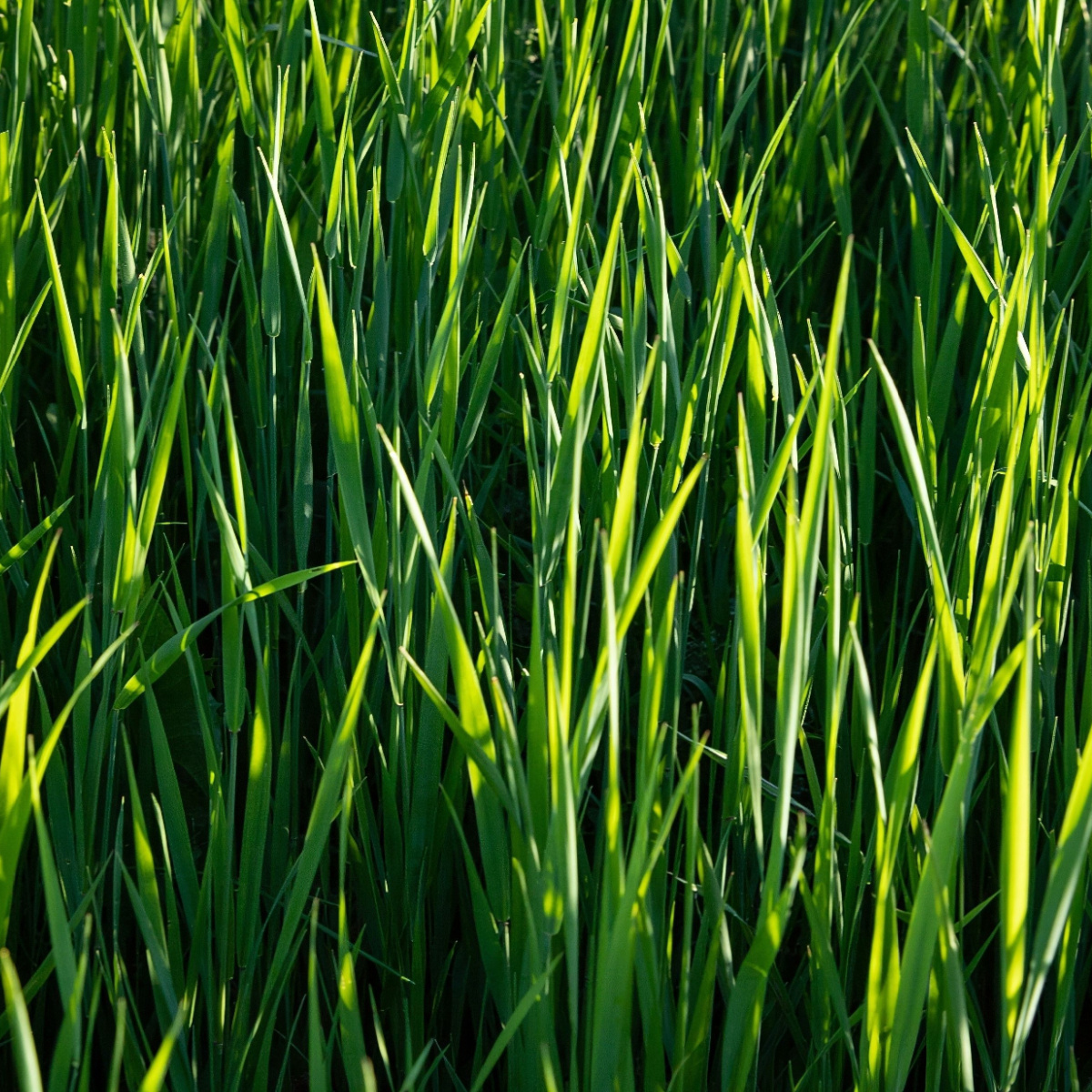
How To Use Oats As The Perfect No-Til Garden Cover Crop
Why Cover Crops Matter
It’s easy to think of your soil as something that rests when your vegetable garden is finished for the season. But the truth is, bare soil suffers in the winter. Wind, rain, snow, and freeze-thaw cycles erode topsoil, leach away nutrients, and compact the ground.
A cover crop acts as a living blanket, shielding the soil while also quietly improving it. A good cover crop should germinate quickly in cool fall weather, sending down roots that keep the ground covered and loose. And when those roots die back, they leave behind channels in the soil that make it easier for spring crops to thrive.
Cover crops also suppress weeds. If you’ve ever had chickweed or other cool-weather weeds pop up in your beds, you know how frustrating it can be to start the spring already behind. But by planting a cover crop, you fill that space before weeds can take hold.
Why We Started With Rye
When we first began experimenting with cover crops, annual rye was our seed of choice. Rye is widely available, very hardy, and quick to establish. Sown in early fall, it comes up thick and creates a dense mat of growth that protects soil all winter long. Even under snow, rye continues to provide erosion control, keeping wind and water from washing precious topsoil away.
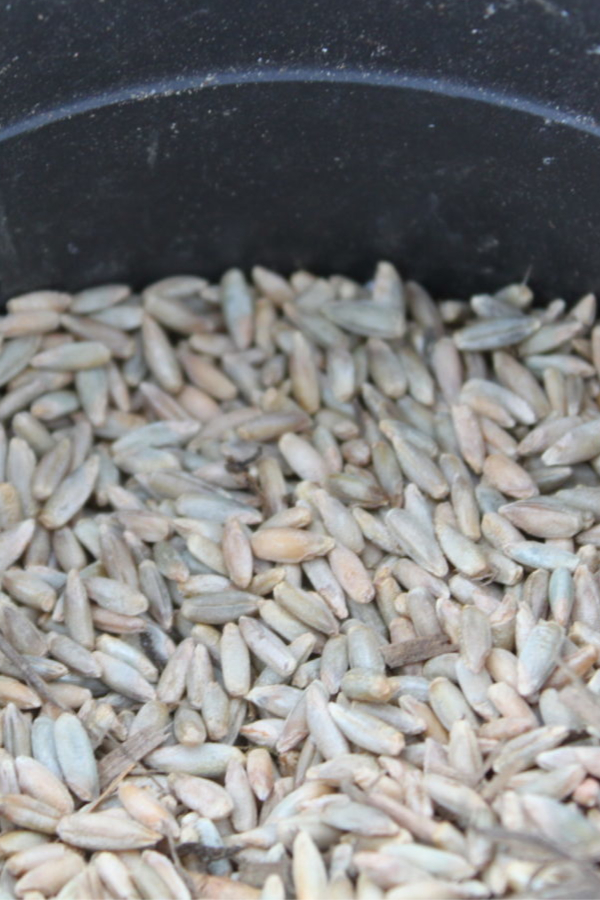
The root system is one of rye’s biggest strengths. Rye roots penetrate deeply, helping to break up compacted layers beneath the surface. For gardeners who struggle with clay or hard pan soil, this is a great benefit. The roots not only loosen soil but also capture and store nutrients that might otherwise leach out with winter rains.
As good as rye is – there is also one drawback for some gardeners – taking care of it in the spring. Rye comes back to life as it warms, and you need to mow it off every few days to finally kill it. And for many, that meant waiting a little longer to plant spring crops. But oats solves that problem. And for even less cost than cereal rye!
The Switch To Oats As The Perfect Garden Cover Crop
Rye was excellent, but as we grew more committed to no-till gardening, oats became an even better fit. Unlike rye, oats are less hardy in the coldest parts of winter. Once a few hard freezes hit, the oat plants naturally die back. At first that might sound like a drawback, but in practice, it’s a huge advantage. Affiliate Link: Oat Seed For Cover Crops
When spring arrives, rye has to be cut continually to kill it off. Oats, on the other hand, are already finished. What remains is a thick, straw-like mat of dead stems that lay across the soil surface. That mat is perfect for no-till gardening. Instead of turning the soil or removing the residue, we simply mow and mulch off what’s left. And then plant right through it!
This has made our spring garden prep incredibly easy. There’s no tilling, no pulling, no backbreaking cleanup. We just drop seeds or transplants directly into the soil. And the decomposing oat plants feed the earth as they break down. The mat of residue also acts like a natural mulch, holding in moisture and keeping new weeds from sprouting.
The Cost Factor
One of the best parts of using oats is how economical it is. A 50-pound bag of rye or oats can be purchased here for under $20. That single bag is enough to cover every raised bed, row, and even a few larger garden spaces on our farm.
When you compare that to the cost of buying bags of mulch, compost, or fertilizer, the savings are significant. Instead of hauling in amendments every spring, our cover crops quietly enrich the soil for pennies per square foot. Over the course of a season, that adds up to healthier plants and higher yields.
How We Sow Oats In The Fall
The process to sow oats couldn’t be easier. In early fall, usually around mid-September to early October, we sow oats across every raised bed and open garden row. Timing is important. You want the oats to have enough time to germinate and establish before the ground freezes, but not so early that summer crops are still in place.
We begin by raking the soil surface smooth and then broadcasting the seed by hand. Because oats are inexpensive, we don’t worry too much about sowing thickly. In fact, the denser the better, since the thick growth helps protect the soil even more.
After scattering the seed, we rake lightly again to ensure good seed-to-soil contact. Within a week, tiny green shoots begin to appear. In just a couple of weeks, the oats create a lush, green carpet that holds strong until the first big cold snaps of winter.
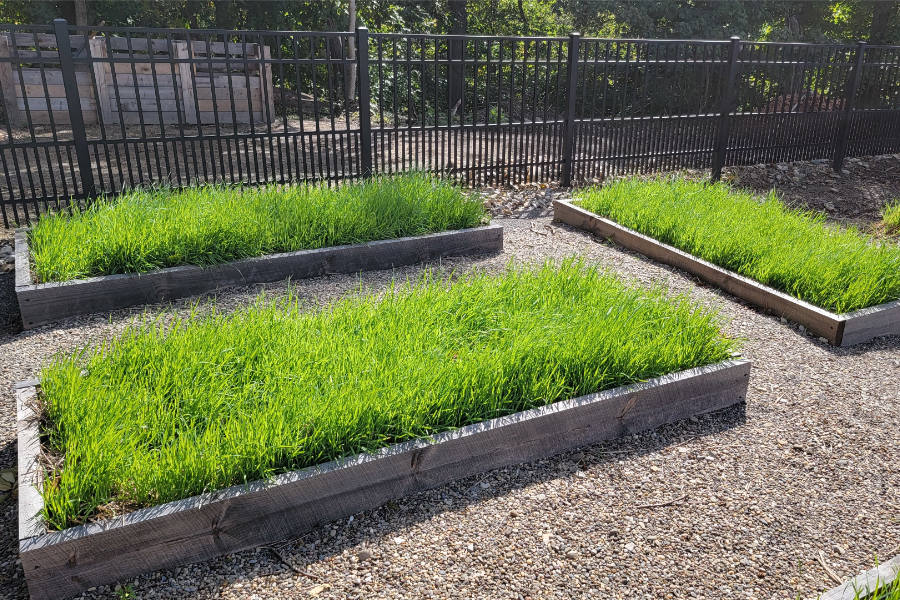
Once the temperatures consistently drop below freezing, the plants die off naturally, leaving behind that invaluable mulch layer.
What Happens In Spring With Oats As A Garden Cover Crop
By the time spring planting rolls around, the oats are already brown and laying flat. We don’t disturb the soil or till it under. Instead, we mow off any remaining stalks with a string trimmer or push mower, leaving the residue right on the surface.
This is where the magic of no-till gardening really shines. As we plant directly into the soil, the decaying oat plants slowly decompose, releasing nutrients into the earth. That steady breakdown feeds the next crop without any additional fertilizer. It also continues to improve soil texture, building a loose, crumbly structure that makes it easier for roots to grow deep.
In addition, because the residue acts as a mulch, we find we have to water less often. Moisture stays in the soil longer, and weeds struggle to compete with the oat straw covering the ground. It’s a win-win situation that saves us both time and effort.
Feeding The Soil
The most important long-term benefit of using rye or oats as a cover crop is the way they feed the soil. Every time you harvest vegetables, you’re removing nutrients from the ground. If you don’t replenish them, your soil gets weaker year after year. Cover crops close that loop.
As the oat plants break down in spring, they release organic matter and nutrients right where they’re needed. The decaying roots improve soil structure, while the decomposed leaves and stems add humus that increases fertility. Over time, this builds a healthier ecosystem underground, teeming with beneficial microbes and earthworms that further enrich the soil.
Here is to using oats as a cover crop in your garden this fall – and to easy planting in the spring! Happy Gardening – Jim & Mary.
Old World Garden Farm
Jim and Mary Competti have been writing gardening, DIY and recipe articles and books for over 15 years from their 46 acre Ohio farm. The two are frequent speakers on all things gardening and love to travel in their spare time.
As always, feel free to email us at thefarm@owgarden.com with comments, questions, or to simply say hello! You can sign up for our free email list in the subscribe now box in the middle of this article. Follow us on Facebook here : OWG Facebook. This article may contain affiliate links.