
There are some pretty big myths about using on demand floor heat for a house or cabin – and today – we hope to put an end to them with some real word experiences from the systems we have installed in the cabins, homes and other structures on our farm.
If you’ve spent any time dreaming about the ideal way to heat a home, you’ve probably heard plenty of opinions and concerns about radiant floor heat. We certainly did some 10 years ago when we started our very first build using the system.
On our farm here at Old World Garden, we’ve now built four complete houses and an event center using on demand radiant floor heat. And for us, we’re more convinced than ever it’s the best way to heat a home. Especially after the brutal last few weeks here that have seen negative temperatures and snowstorms unlike any we’ve had in decades!
Today we’re going to unpack three of the biggest myths that people believe about on demand radiant floor heat. And even better, in plain language, explain why this system is truly one of the most comfortable, efficient, and cost-effective ways to heat a house!
3 Big Myths About On Demand Floor Heat
Myth #1: “Radiant Floor Heat Is Only For Warming Floors – It Really Can’t Heat A Whole House”
Probably the most common thing we hear goes something like this: “it’s nice to have warm floors… but it can’t heat a whole house.”
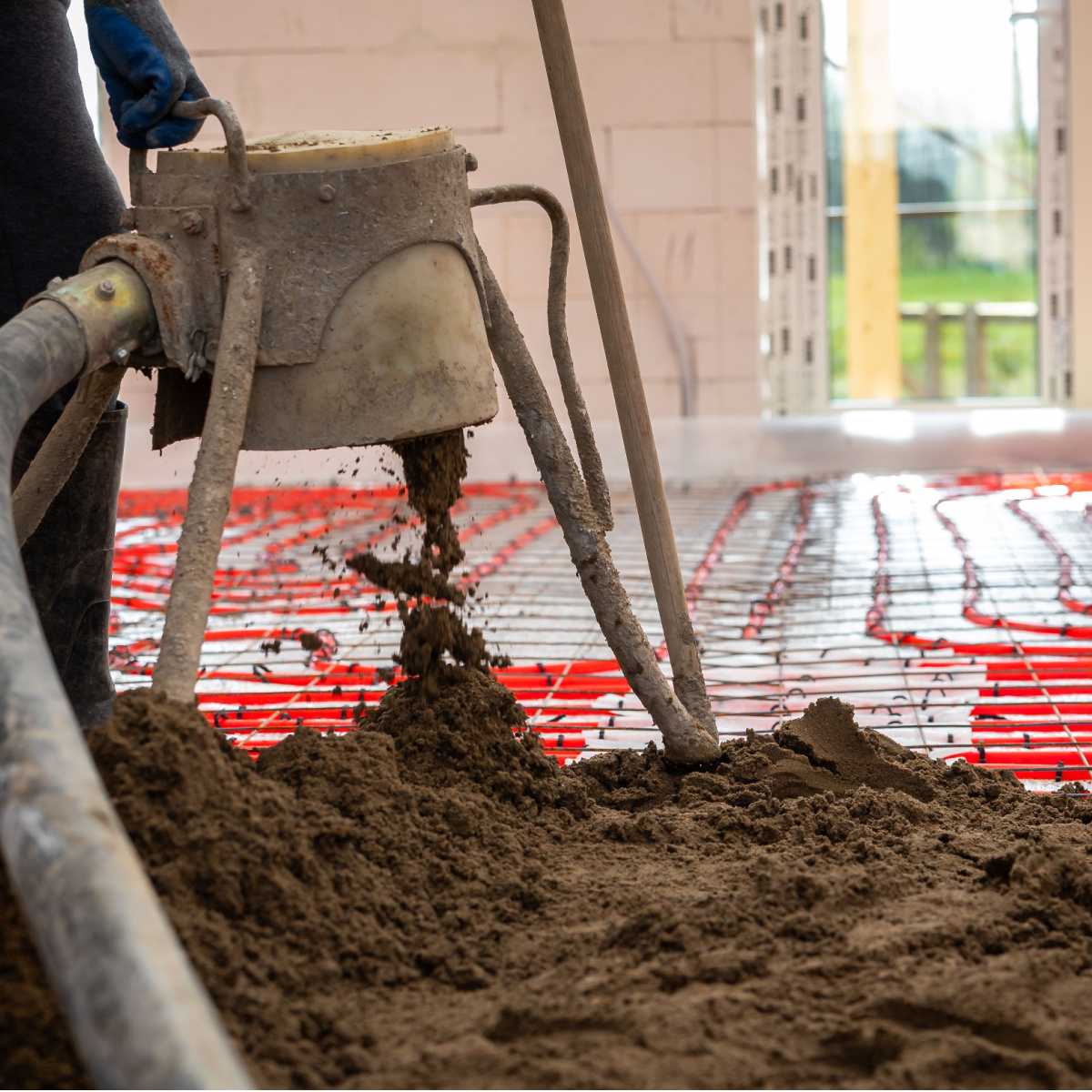
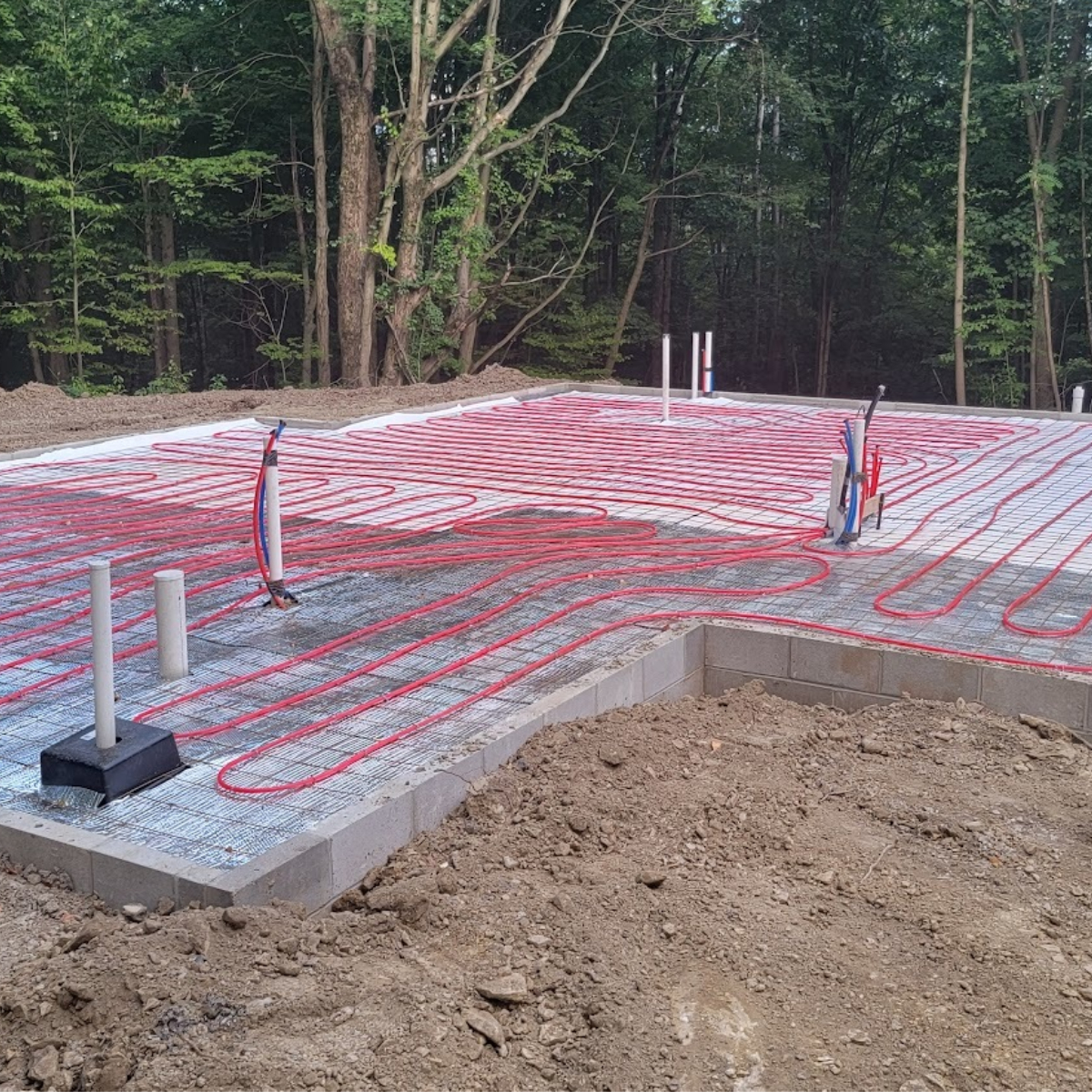
With 100% certainty, nothing could be further from the reality we live with at the farm. Here’s the truth: radiant floor heat absolutely can heat your entire home. The system we use – an on demand radiant floor heat – circulates hot water through a network of tubing embedded right in the concrete slab of the house.
These tubes heat the floor, and from there the warmth radiates up through the entire space. Because heat naturally rises, the warmth moves throughout the whole structure rather than just staying at the floor level.
We’ve used this setup in houses with second stories and with large open living spaces. We even put it in our event center – and we’ve never had heat shortage issues. Even on the coldest days of winter! In fact, one of the things we love most is how steady and evenly distributed the heat is. It’s nice to always have warm feet and cozy rooms – without cold, drafty corners or noisy furnace blasts.
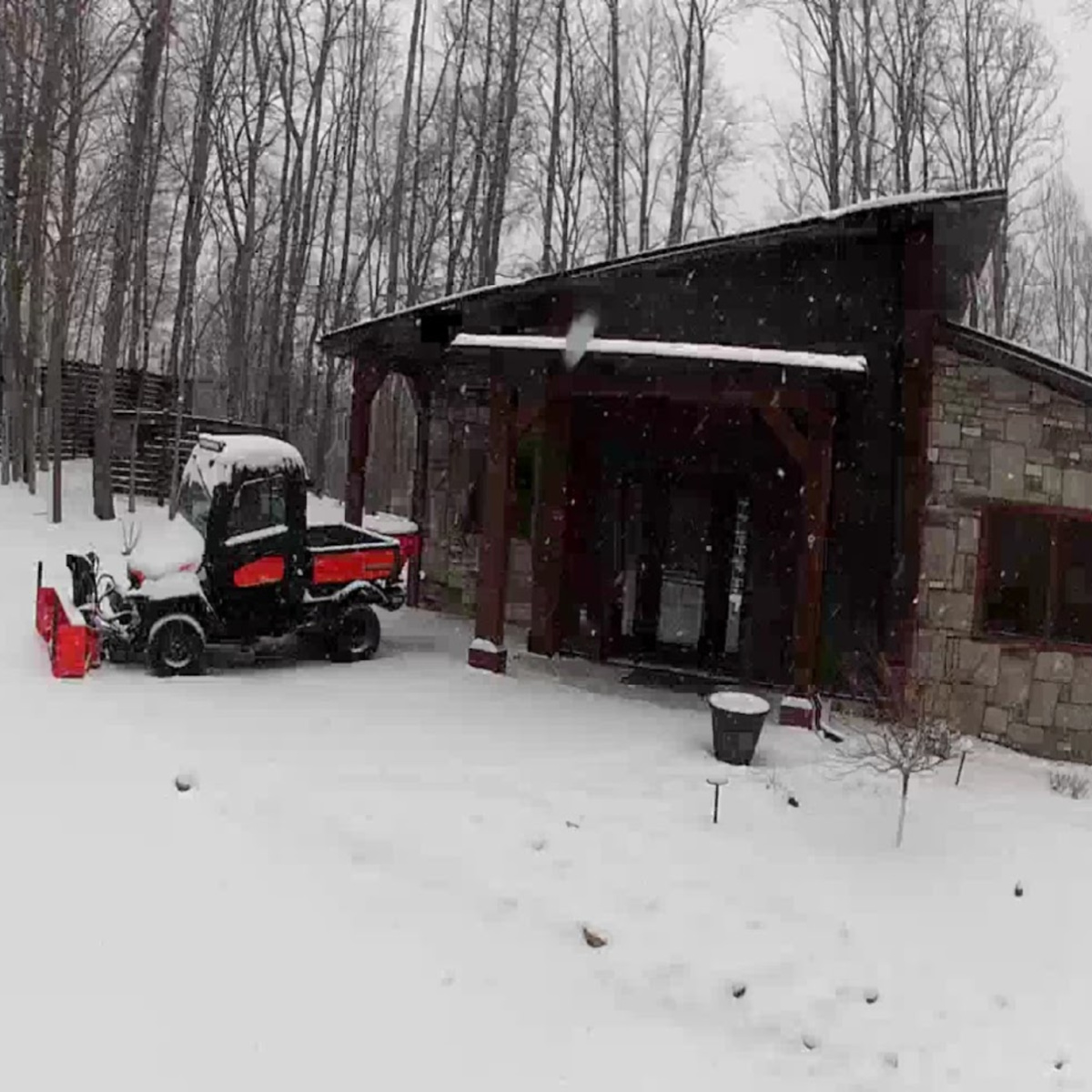
Some people think radiant floor heat only warms the floor. But it really is the main heating system for all of our cabins, house and buildings. Also see: How On Demand Radiant Floor Heat Works.
Myth #2: “Radiant Floor Heating Is More Expensive Than Other Systems”
This is by far one of the biggest myths. It’s also ironically one of the easiest to debunk once you look at the real numbers over real years.
First off, it is far cheaper to install than traditional furnace/hvac systems. There are no pipes and vents to install in walls. There is no bulky furnace to purchase. Just for starters, all the way back to our very first barndominium build, the total cost of the tubing and heating unit with installation was less than what we would have spent on just a furnace!
With the on demand system, you have these incredible benefits:
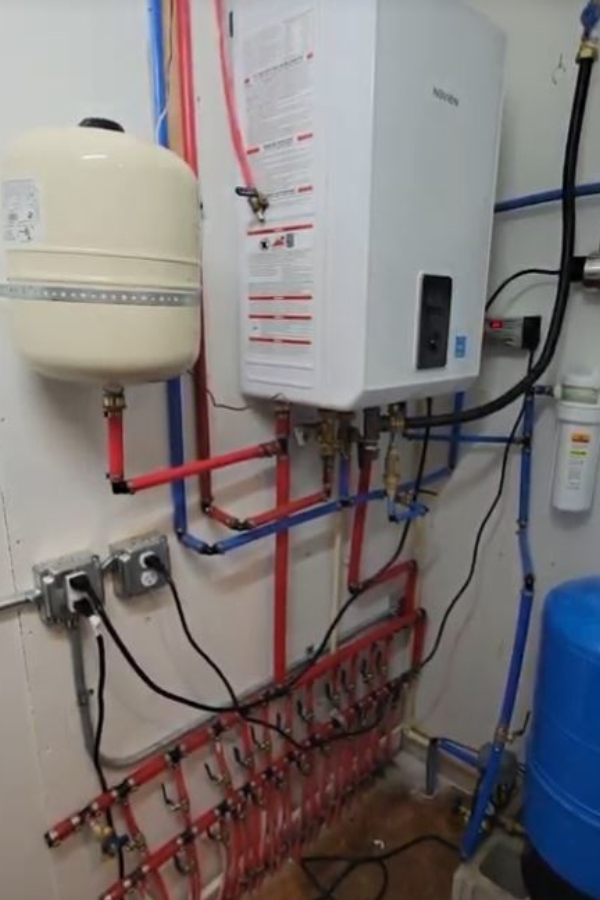
- There’s no separate hot water tank. The on demand unit heats water only when you need it.
- No furnace or ductwork is required at all.
- The space the unit takes up is small and quiet. Very quiet!
But the savings don’t stop at installation. On demand radiant floor heat only heats water when it’s needed. There’s no tank sitting there burning fuel all day just to keep hot water in reserve – and that’s where much of the long-term saving comes from.
Over the course of a winter, our heating bills have consistently been extremely reasonable, especially compared to what we would be paying to run a furnace constantly. For example, to heat our 2200 square foot barndominium house and the heated 40 x 36 garage floor, it runs about $125 a month in the middle of the coldest month of winter.
Myth #3: “Radiant Floor Heat Is Slow To Heat & Recover”
Another misconception is that radiant heat takes forever to warm up, or that it’s difficult to design, install, or control.
In reality – especially with on demand radiant systems – the technology is both straightforward and incredibly efficient. It’s actually an elegant, simple, on-demand process that’s easy to control and maintain.
There are no filters to change. There’s no blower to clean. There’s no stale ductwork pushing dust and allergens around the house. And because the heated surface is the floor itself, you get an even temperature with no cold spots and no loud furnace cycles interrupting your day.
Yes, it’s different from traditional forced-air heat, and yes — people unfamiliar with radiant systems sometimes assume it can’t respond to temperature changes quickly. But consider this: heat rising from the floor slowly and naturally creates a comfortable temperature throughout the home without the spikes and drops that are common with air-based systems.
What some people call “slow,” we call steady, quiet, and comfortable. And as we’ve built more houses with it — now four complete homes and an event center — we’ve refined the process and learned how to zone, control, and operate the system for each new build
Why On Demand Floor Heat Is the Best Way to Heat a House
On demand works. And in so many ways. We even use an on demand single faucet system at our pond pavilion building to give us hot water using an electric hook-up. And does it ever work too! Affiliate Link: InSinkErator HOT250 Instant Hot Water Dispenser System, Single-Handle Faucet.
After years of building houses, pouring slabs, and installing these systems in everything from guest cabins to our main event center, we’ve come to one conclusion: There’s simply nothing that compares when it comes to comfort, efficiency, long-term cost, and day-to-day livability.
We’ve lived with, heated with, and trust on demand radiant floor heat. And if you ask us, it’s the best way to heat a house you’ll ever find. Hopefully – we have helped dispel a few of the common myths about on demand radiant floor heat! – Jim & Mary.
Old World Garden Farm
Jim and Mary Competti have been writing gardening, DIY and recipe articles and books for over 15 years from their 46 acre Ohio farm. The two are frequent speakers on all things gardening and love to travel in their spare time.
As always, feel free to email us at thefarm@owgarden.com with comments, questions, or to simply say hello! You can sign up for our free email list in the subscribe now box in the middle of this article. Follow us on Facebook here : OWG Facebook. This article may contain affiliate links.