
Did you know that fall is one of the most important times of all to give your peony bushes a little attention? From cutting them back to dividing and transplanting overgrown plants, what you do with your peonies in autumn can make a huge difference in just how healthy – and how full of blooms – they are next spring!
Although their foliage usually stays green throughout much of the summer, the plants soon take a backseat to all of the annuals and perennials blooming around them. And by the time fall arrives, it’s easy to overlook peonies altogether as you begin cleaning up your flowerbeds and preparing for winter.
But fall is actually a critical time for peony care. A few simple tasks before winter can help keep plants healthy, prevent disease, control overgrown bushes and even give you the opportunity to create more peonies for free. Even better, the care you give your plants now can help set the stage for bigger, brighter and more beautiful blooms next spring!
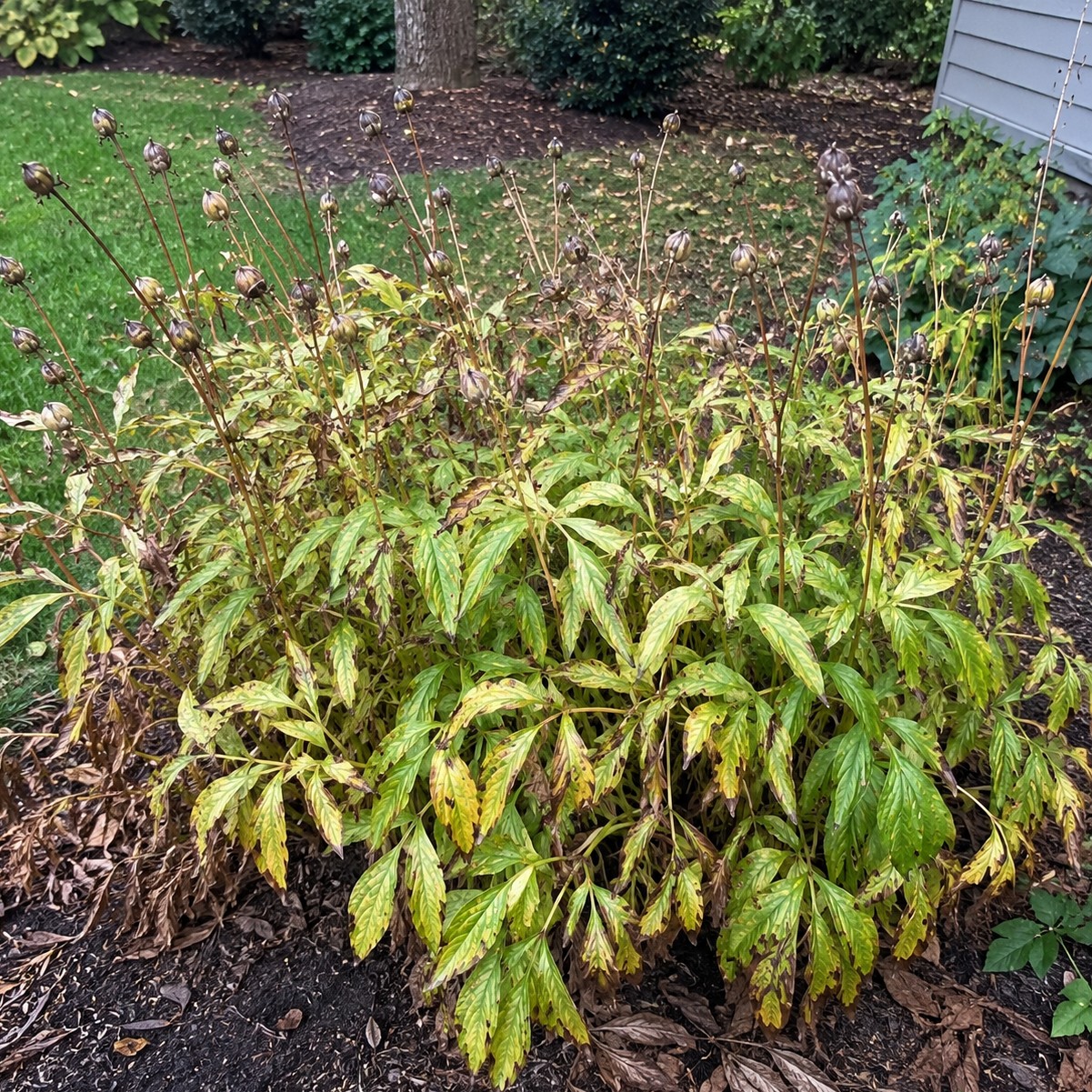
What To Do With Peony Bushes In The Fall
Pruning Back Peony Bushes In The Fall
Fall care of a peony bush all starts with cutting it back. Whether you plan on digging up and dividing your peony bushes this fall or not, it’s always vital to their health to cut them back before the harsh winter arrives.
Why? Because, unfortunately, if you allow foliage to remain, it opens the door to all kinds of issues for the bush. Peony bushes are highly prone to mildew, blight and other diseases. And leaving the foliage up through the cool, wet fall season is simply asking for trouble.
In addition to disease, allowing the foliage to remain makes it an insect magnet. It allows the plant to become a host for all kinds of insects and small animals to overwinter. Even worse, many of the insects then use the cover to lay eggs to hatch and come back next year.
Knowing When To Prune Peonies
But the real key to success when pruning back the foliage is to know when to cut it back. Although peonies will start to show some signs of wear and tear in late summer and early fall, it’s important to let the foliage completely die off before pruning.
This is because the plants continue to absorb energy as the leaves slowly die off. Cutting them back too early will keep the plant from storing energy in its roots for blooming next spring. And that can result in far fewer blooms for the bush – or no blooms at all in some cases!

So when do you know it’s time to cut peonies back? The general rule of thumb is to wait until all of the leaves have turned from green to a pale yellow or red. Once the green has faded away, the plant can no longer absorb energy through photosynthesis – and it’s safe to cut back the stems and leaves.
To prune back, simply take a sharp pair of shears and cut back to within a few inches of the ground. As long as the limbs and leaves show no sign of disease, they are a great addition to your compost pile.
If your peonies don’t need to be divided, all that is left is to give them a protective layer of mulch. A three to four inch layering of mulch around the base of your bush helps keep weeds out and moisture in for the roots. It also helps to keep your bushes from constantly freezing and thawing throughout the winter weather, which can damage or even freeze peonies out if it happens enough.
How To Divide & Transplant Overgrown Bushes In The Fall
If your peony bushes are a bit overgrown, fall is also the best time to dig them up and divide them. It’s important to note that peonies do not have to be divided, but doing so every four to five years can help them and you in several ways.
For starters, smaller bushes are easier to care for. Not only are they more manageable but the large flowers have an easier time staying upright. Smaller bushes also have the advantage of being less likely to succumb to mildew and mold.
Listen In To Our Latest Podcast Below…


Dividing in the fall is actually fairly easy and straightforward. Peony roots are fairly shallow at about 6 to 8 inches deep. To dig up, simply dig around the outside of the circumference of the plant to that depth. Then, take your shovel under the roots and carefully lift the plant out of the ground.
Next, set the plant on the ground on its side. You can gently wipe away the soil to expose the tuber of the plant. Quite often, you can separate the tubers by hand. If not, a garden knife or small saw can cut through thicker tuber roots quickly. Affiliate Link: Hori Hori Garden Knife
When dividing, it’s always best to keep new plant sizes similar. By keeping new plant tubers to around four to six inches, you will end up with peony bushes around two feet in diameter. Once you have your divisions, it’s time to transplant!
Transplanting
The first key to success with peony bushes in the fall when transplanting is to get the new tubers in the ground the same day you dig your bushes up. Allowing the tubers to dry out can spell disaster for new plants.
To transplant, start by digging down ten to twelve inches to create your planting hole. Next, fill the bottom of the planting hole with equal amounts of compost and soil. Place the tubers in the hole so the top of the plant is barely coming through the soil.
Finish by mulching over the top with a few inches of straw or hardwood mulch. This will help protect the new planting for the upcoming winter. If the temperatures are warm enough, you may see a bit of growth pop up as the plants set. This will not harm the plant and it will go dormant as cooler weather arrives.
All that is left is to wait until spring to fertilize your new peony bushes! For that, be sure to check out our article: How To Fertilize Peonies Before Spring – Get Big Blooms This Year!
Here is to taking care of your peony bushes this fall – and to bigger and better flowering next year! Happy Gardening – Jim & Mary.
The Farm @ Old World Garden
Jim and Mary Competti have been writing gardening, DIY and recipe articles and books for over 16 years from their 46 acre Ohio farm. The two are frequent speakers on all things gardening and love to travel in their spare time.
As always, feel free to email us at thefarm@owgarden.com with comments, questions, or to simply say hello! You can sign up for our free email list in the subscribe now box in the middle of this article. Follow us on Facebook here : OWG Facebook. This article may contain affiliate links.