
Wondering what flowers you need to deadhead in late summer – and which you can leave alone? As it turns out, knowing which flowers to remove and which to leave alone can make a huge difference for both your plants and your landscape!
Deadheading is simply the process of removing old, fading blooms from a plant. For many annuals and perennials, it is one of the easiest ways to keep plants looking tidy and, even more importantly, encourage them to produce another round of flowers.
But here’s the catch – not every flower should be deadheaded in late summer. In fact, removing the spent flowers from certain plants can eliminate valuable seed heads that feed birds throughout fall and winter. It can also prevent plants from reseeding naturally or remove beautiful dried blooms that provide winter interest.
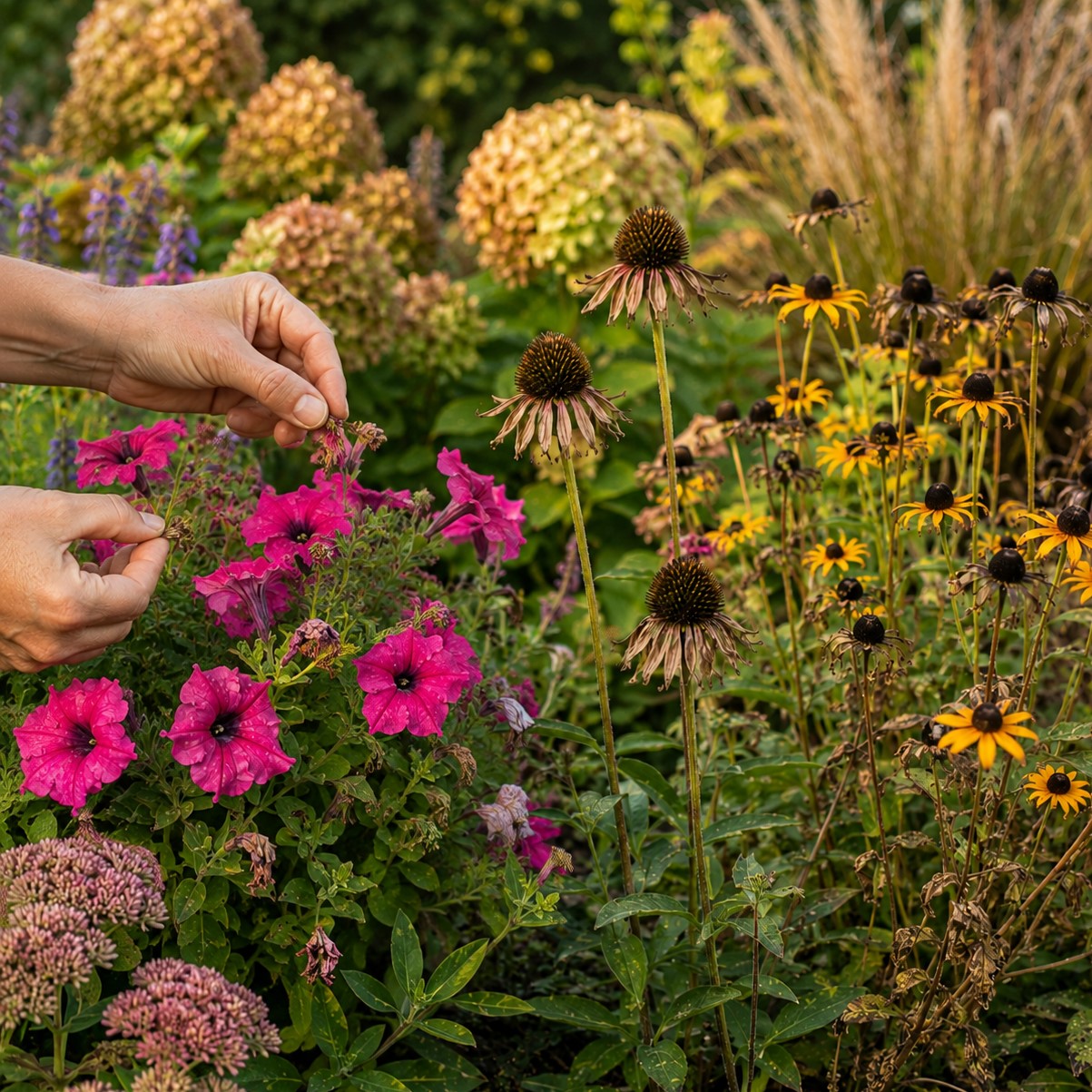
So before grabbing your pruning shears and cutting away every fading flower you see, it’s important to know which plants benefit from late-summer deadheading – and which ones are better left alone. Here is a look at five flowers you need to keep deadheading in late summer – and a few you should let remain!
5 Flowers You Need To Continue To Deadhead In Late Summer
#1 Petunias
Petunias can be incredible bloomers from late spring right up until the first frost – but only if you keep them from spending their energy producing seeds.
By late summer, petunias often become leggy and have far fewer blooms than they did earlier in the season. Regular deadheading can quickly help turn that around. Remove faded flowers along with the small seed pod directly underneath each bloom. Simply pulling off the colorful petals isn’t enough because the plant can still develop seeds from the remaining pod.
For severely overgrown petunias, late summer is also a good time for a light trim. Cutting long stems back by about one-quarter can encourage fresh branching and additional flowers.
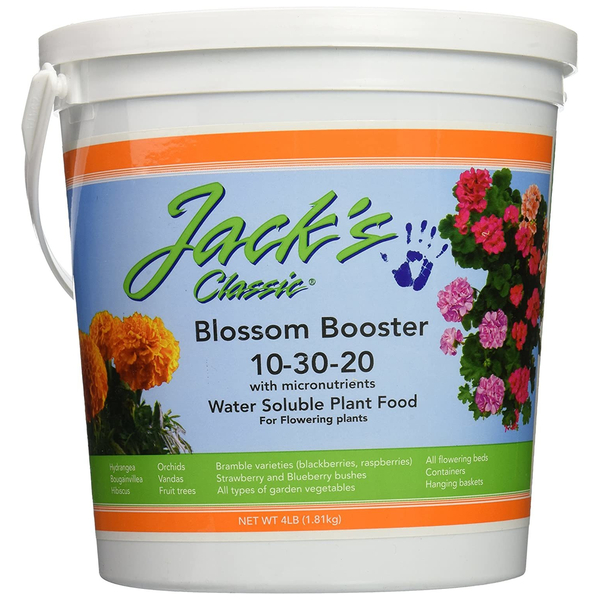
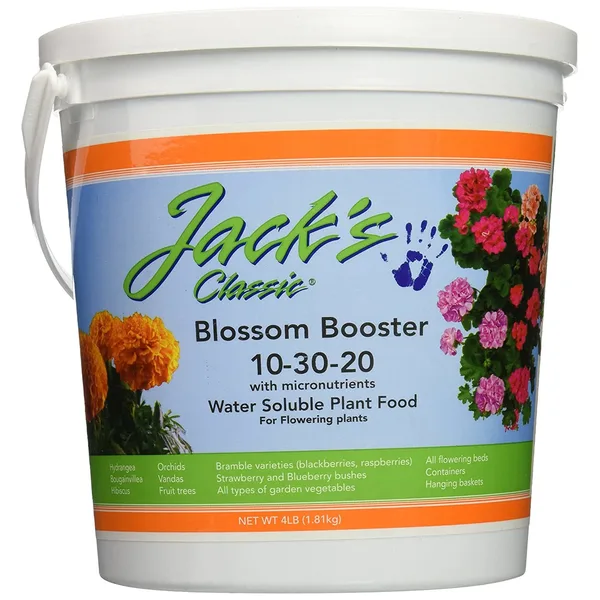
And whatever you do – keep fertilizing. A light boost of liquid power every seven days will keep them blooming big all the way to your first hard frost! Affiliate Link: JR Peters Inc Jack’s Classic 10-30-20 Blossom Booster Water-Soluble Fertilizer
#2 Keeping Marigolds In Bloom
If there is one annual flower that responds amazingly well to deadheading, it is the marigold. Marigolds bloom heavily all summer, but as their flowers begin turning brown and dry, plants start putting more and more energy into seed production.
Removing those old blooms keeps the plant focused on producing flowers. Simply pinch or snip off spent flower heads just above the next set of leaves. Check plants every few days because marigolds can produce new flowers quickly once old blooms are removed.
There is one exception: if you want to save marigold seeds for planting next year, allow a few of your healthiest flowers to remain and completely dry on the plant. You can deadhead the rest while saving only a handful for seed. That gives you more flowers now and free plants for next year!
#3 Keep Deadheading Your Geranium Flowers!
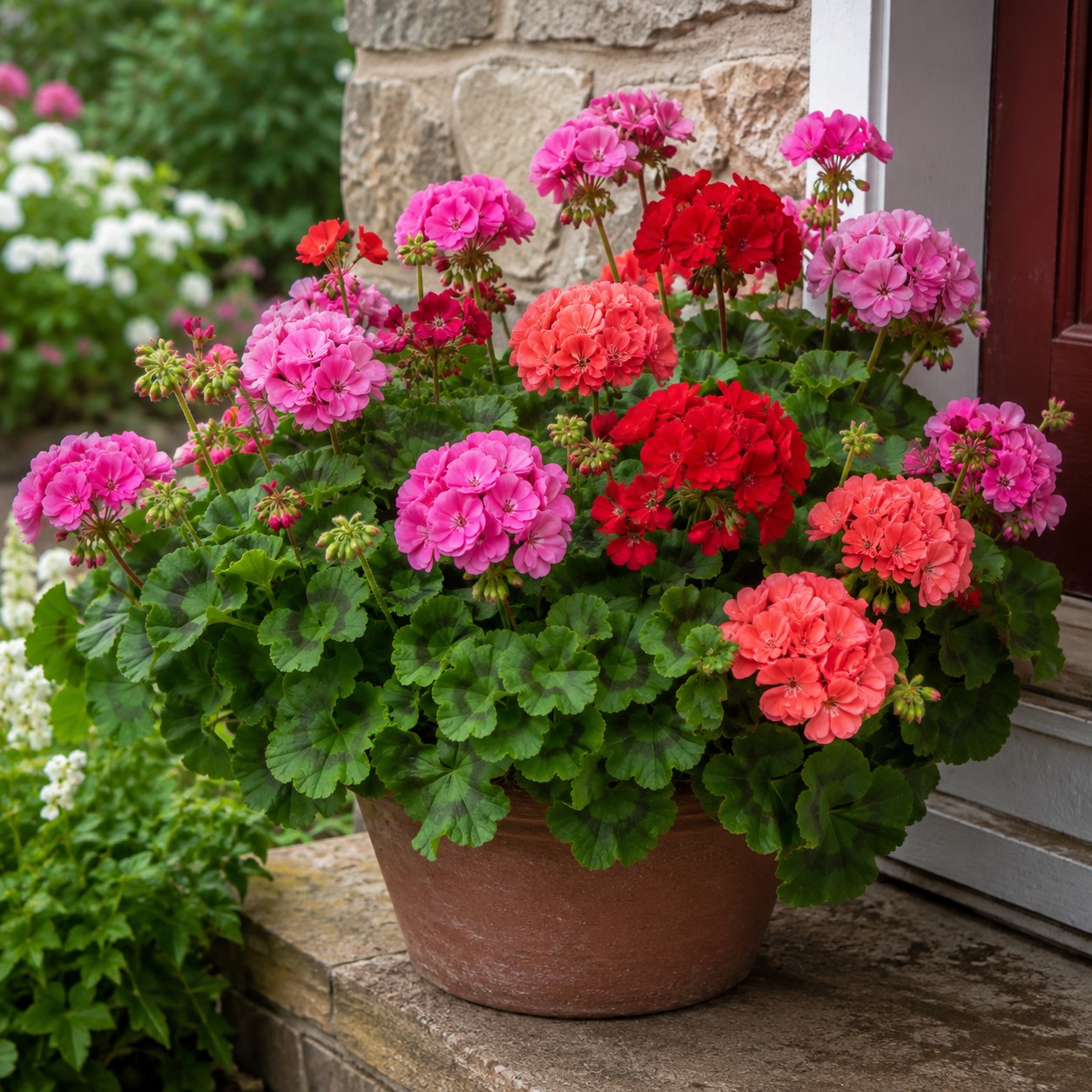
Geraniums can begin looking tired by late summer, especially after months of hot weather. Fortunately, removing their old flower heads is one of the easiest ways to rejuvenate them.
When a geranium flower cluster begins fading, don’t remove only the individual flowers. Follow the entire flower stem back to where it joins the main plant and snap or cut it away. This keeps the plant neat and prevents it from wasting energy on seed production.
With regular watering and a light feeding, geraniums can recover beautifully as temperatures begin cooling in late summer and early fall. In fact, many geraniums look better in September than they did during the intense heat of July!
#4 Salvia
Many perennial and annual salvias will reward you with another round of flowers when their fading bloom spikes are removed.
Once a flower spike has turned brown and most of its blooms are gone, cut the stem back to a healthy set of leaves or a side branch. This keeps the plant from putting unnecessary energy into seed production and encourages new flower spikes to emerge.
The second round of flowers may not be quite as large as the first, but even a smaller flush can provide welcome late-season color. Stop aggressive deadheading as fall progresses and frost approaches. At that point, allow the plant to begin slowing down naturally.
#5 Dahlias
Late summer is when dahlias really begin to shine – and regular deadheading can help keep their spectacular flowers coming until frost. The trick is knowing the difference between a spent dahlia bloom and a new flower bud.
New dahlia buds are usually rounded and firm. Spent flowers become pointed or cone-shaped as the petals disappear and the flower head begins developing seeds. Cut spent blooms back to the nearest healthy set of leaves or branching point rather than simply removing the flower head.
Listen In To Our Latest Podcast Below


2 Flowers You Shouldn’t Keep Deadheading In Late Summer
#1 Sedum
Late-blooming sedums such as Autumn Joy should almost always be left standing through late summer and fall.
Their flower heads begin as clusters of tiny blooms and gradually deepen in color as the season progresses. Even after the flowers dry, the large seed heads remain attractive. In fact, dried sedum flowers can provide beautiful structure in the winter landscape, especially when covered with frost or a light layer of snow.
The seed heads can also provide food and shelter for wildlife. Rather than deadheading sedum in late summer, leave the plant intact and allow it to complete its natural cycle.
You can cut the old stems back in late winter or early spring just before fresh growth begins emerging from the base.
#2 Ornamental Grasses
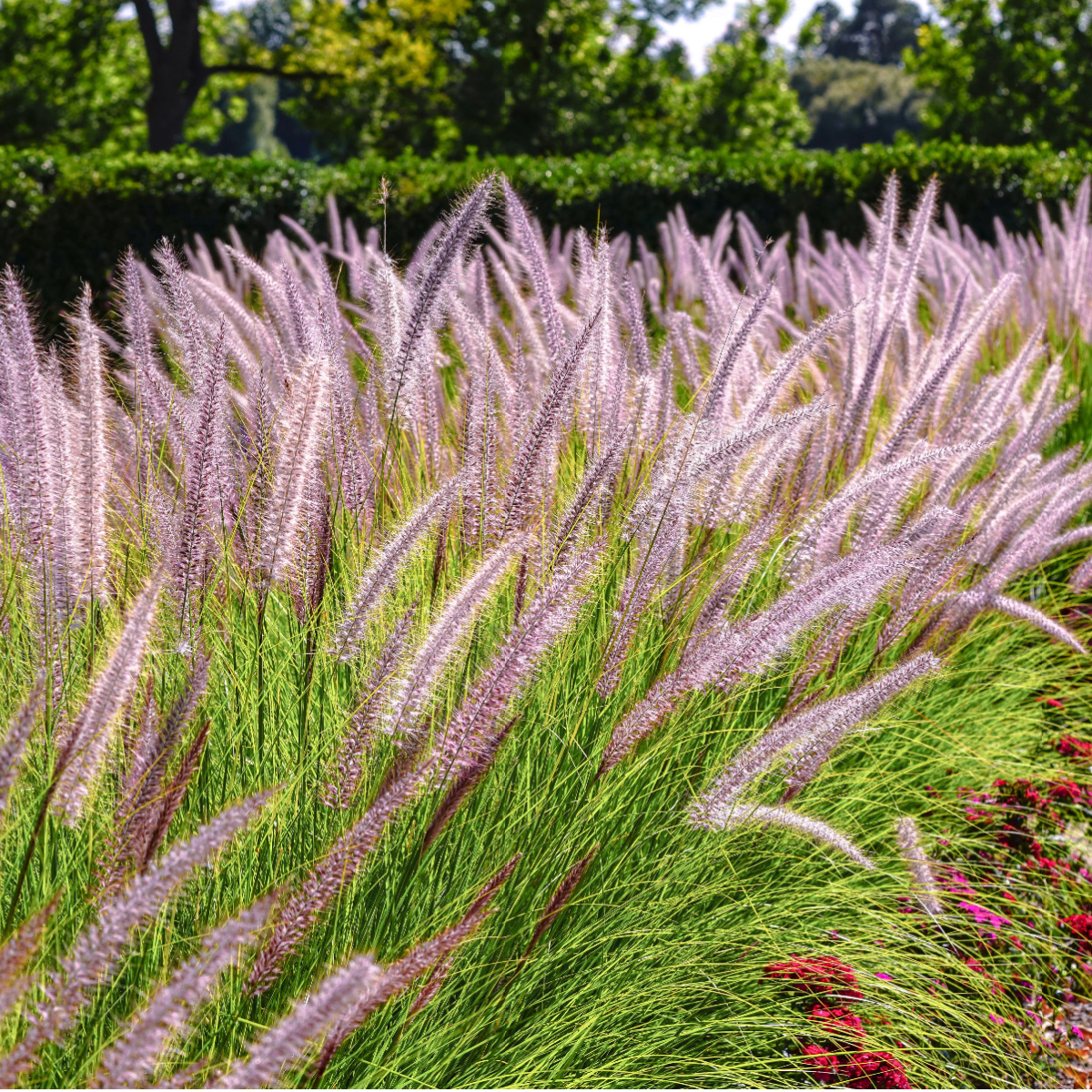
Although ornamental grasses aren’t technically grown for traditional flowers, their late-summer flower plumes and seed heads are exactly what you don’t want to remove.
By August and September, many ornamental grasses begin producing beautiful plumes that rise above their foliage. Those plumes mature into seed heads that can remain attractive throughout fall and winter. They move in the wind, catch frost and snow and provide height and texture when most perennial flowers have disappeared.
The foliage also provides winter protection for the plant’s crown. Avoid cutting ornamental grasses back in late summer or fall. Instead, allow them to remain through winter and cut them back in late winter or very early spring before new growth begins.
The Secret To Late-Summer Deadheading Success
The key to deadheading in late summer is knowing what you want from each plant. Instead of automatically cutting every flower that begins to fade, take a moment to consider what that old bloom can still provide.
Sometimes cutting it off will give you another round of beautiful flowers. But other times, the best thing you can do for your plants – and the wildlife that depends on them – is simply leave the fading blooms alone! Happy Gardening – Jim & Mary.
The Farm @ Old World Garden
Jim and Mary Competti have been writing gardening, DIY and recipe articles and books for over 16 years from their 46 acre Ohio farm. The two are frequent speakers on all things gardening and love to travel in their spare time.
As always, feel free to email us at thefarm@owgarden.com with comments, questions, or to simply say hello! You can sign up for our free email list in the subscribe now box in the middle of this article. Follow us on Facebook here : OWG Facebook. This article may contain affiliate links.