How To Get Rid Of Crabgrass In October – And Keep It From Coming Back!
If crabgrass spent the summer spreading through your lawn, October can give you the perfect chance to get rid of crabgrass for good!
Those sprawling clumps are beginning to fade, making them easier to spot – and exposing exactly where your lawn needs a little help. Instead of simply watching the crabgrass turn brown and disappear, you can use this opportunity to remove the clumps and repair the spaces they leave behind.
That second step is the real secret to success. Removing crabgrass improves the appearance of your lawn, but filling the openings with desirable grass helps make it harder for next year’s crabgrass to take hold. A little work now can help break the cycle of watching the same patches return every summer!

How To Get Rid Of Crabgrass In October
Why Crabgrass Starts Dying In October
Crabgrass is a summer annual. It sprouts from seed, grows rapidly during warm weather and produces seeds before dying as cold weather arrives. Unlike perennial lawn grass, the same crabgrass plant does not survive winter and return next spring.
As fall temperatures drop, crabgrass often develops reddish-purple or brown coloring. A killing frost finishes off the plants, leaving behind flattened patches of dead stems and leaves. The timing varies with your climate. Some lawns show fading crabgrass early in October, while plants in warmer locations may remain green longer. But once the cold arrives, their growing season is ending.
Unfortunately, the seeds they produced can remain behind. That means winter kills the plants without necessarily solving next year’s problem. This is why October cleanup should focus on more than removing ugly foliage. It is also your opportunity to identify weak areas and begin building a lawn that gives crabgrass fewer places to grow.
Why Fading Crabgrass Is Easier To Spot
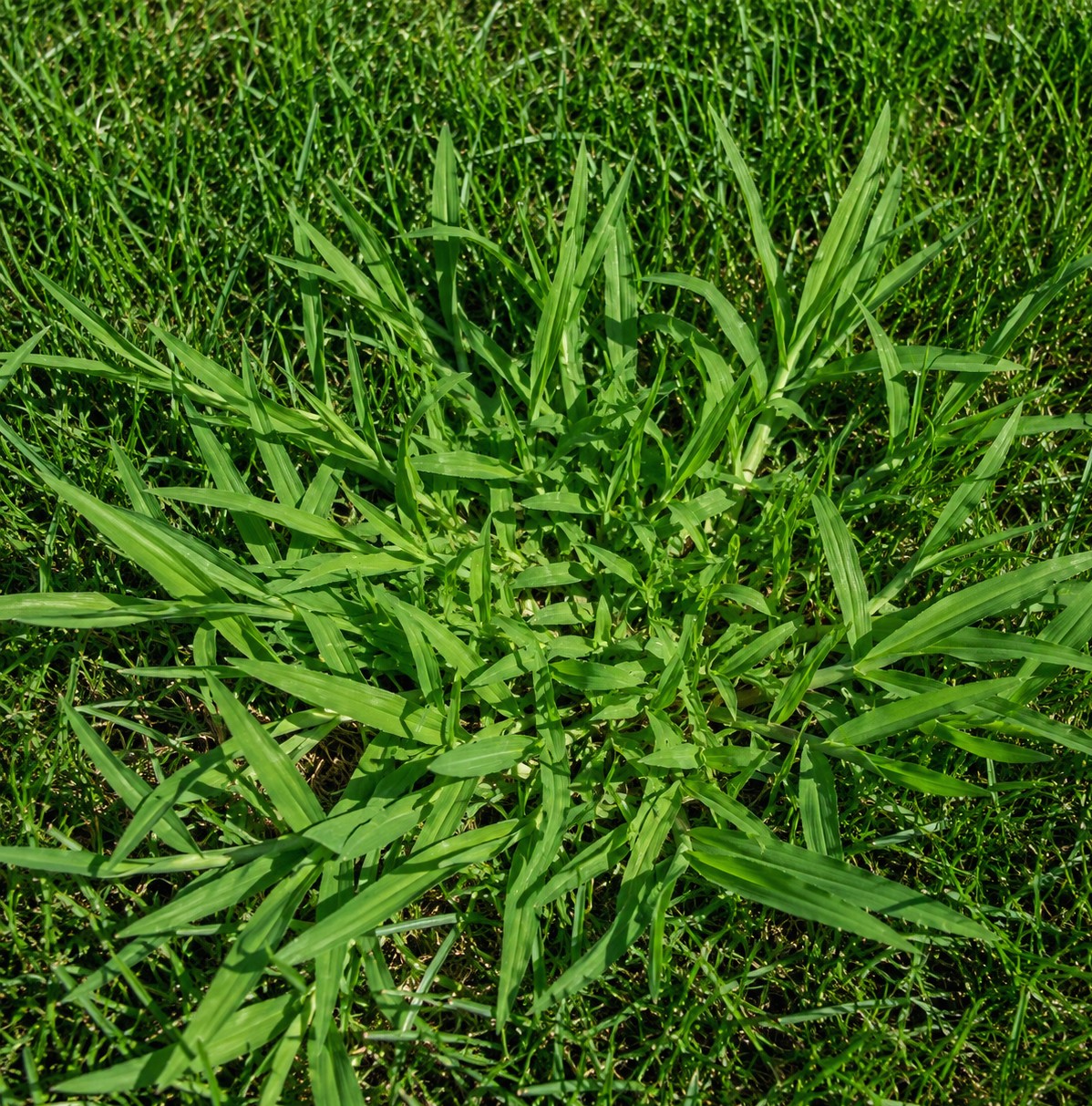
During summer, crabgrass can blend into the lawn, especially when everything is growing quickly. But in fall, its changing color often makes individual clumps stand out against green cool-season grass.

Look for low, spreading plants with coarse blades and stems that radiate outward from a central point. Instead of growing upright like much of the surrounding turf, crabgrass sprawls across the soil. Its finger-like seed heads can also help identify it. These rise above the foliage and provide another clue when you are examining a suspicious patch.
Walk the lawn slowly and pay particular attention to driveway edges, sunny bare spots and areas worn thin by foot traffic. Crabgrass commonly takes advantage of openings where desirable grass is struggling.
Dig Out The Clumps Without Tearing Up The Lawn
For scattered patches, a hand weeder, sturdy trowel or small digging fork can make getting rid of crabgrass in October easy work. Work when the soil is slightly moist so you can loosen the roots without pulling up large chunks of surrounding lawn.
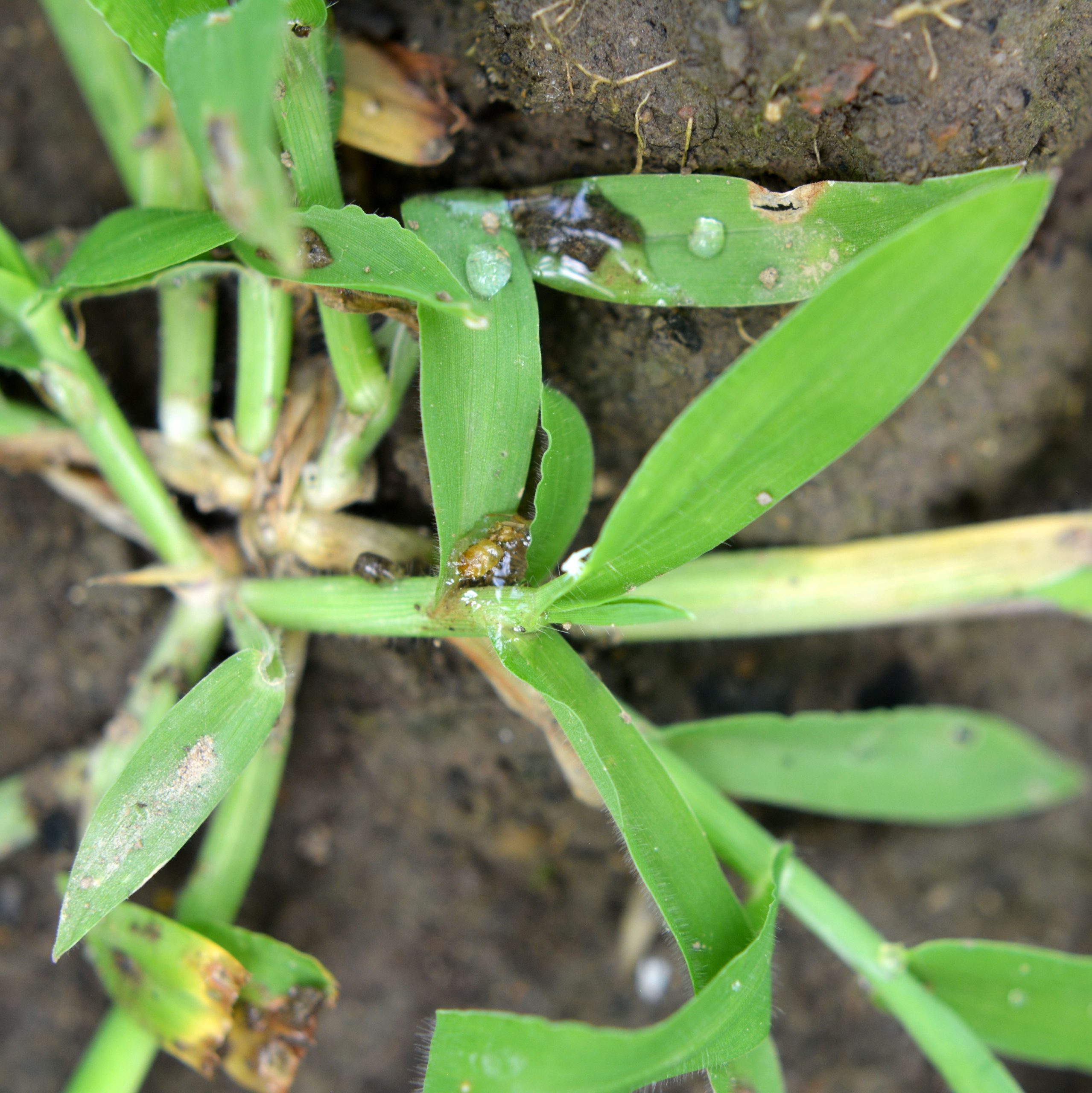
Slide the tool beneath the center of the clump and lift gently. Follow any spreading stems that have rooted where they touch the ground, removing those sections as well. Avoid simply grabbing the dry leaves and tugging. Brittle foliage can break away while the crown and tangled stems remain in place.
The goal is to clear enough debris for reseeding while preserving healthy grass nearby. You do not need to excavate a deep hole or remove every fine root from a plant that has already died. If the clump has mature seed heads, handle it carefully and place it directly into a collection container.
For larger areas of dead crabgrass, raking away the matted growth may be more practical than digging out every individual plant.

The Biggest Mistake – Leaving The Spots Bare
Once crabgrass is removed, it can leave a surprisingly large opening. During summer, its spreading foliage may have hidden just how little desirable grass was growing underneath.
Leaving that opening unrepaired gives weeds another opportunity. The patch may look cleaner, but it still has the same weakness that helped crabgrass establish in the first place. A dense lawn helps suppress crabgrass by shading the soil and competing for growing space, water and nutrients. Reseeding bare areas is one way to strengthen that defense.
Reseed Early Enough For Grass To Establish
For cool-season lawns, late summer and early fall are generally the best seeding period. October is a later repair opportunity, and success depends on your location, grass type and the weather ahead. Tackle the work as early in October as possible. Seed needs time to germinate, develop roots and become established before sustained winter cold.
Perennial ryegrass generally germinates faster than Kentucky bluegrass, but choose a quality seed mix suited to your existing lawn and growing conditions. Fast sprouting alone does not make a grass the right choice. Affiliate Link: Pennington Smart Sun and Shade Grass Seed Mix
If cold weather is already closing in, do not assume a few mild afternoons provide enough time. Newly sprouted grass can be vulnerable when winter arrives before it establishes.

Where the fall window has passed, dormant seeding later in winter or a spring repair may be more appropriate. Dormant seeding means waiting until conditions are cold enough to keep seed from germinating prematurely. The important thing is matching the repair to your climate rather than treating all of October as equally suitable. See our article: How To Winter Seed A Lawn – The Secret To Thick, Lush Grass Next Spring & Summer!
Prepare The Bare Spots Before Spreading Seed
After you get rid of crabgrass in October, it's important to then rake away the remaining mat of dead leaves and stems. Grass seed needs contact with soil, and scattering it over a thick layer of debris greatly reduces the chance of success. Lightly scratch the soil surface with a rake. If digging left a depression, add enough suitable topsoil to bring the patch level with the surrounding lawn.
Break up clods and create a reasonably smooth surface. Avoid leaving deep, loose pockets that will settle into low spots later. Spread seed at the package’s recommended rate. More is not automatically better – excessive seed can produce crowded seedlings that compete with one another.
Lightly rake the seed into the surface and press it gently into place. Keep it close to the surface rather than burying it deeply. Where needed, a light covering of clean straw or a seed-safe mulch can help hold moisture. Apply it loosely enough that light and emerging grass can pass through.
Water The Seed – Even In Cool Weather
One of the easiest ways to lose a newly seeded patch is to let it dry out during germination. Cooler October weather helps reduce moisture loss, but sunshine, wind and dry soil can still interrupt the process.
Keep the seeded surface consistently moist with gentle watering. The amount and frequency will depend on rainfall and your soil, so check the patches instead of following a rigid schedule. Avoid soaking them hard enough to move seed or create puddles. Once seedlings are growing, gradually water less often and more deeply to encourage root development.
Keep heavy foot traffic off the repairs and remove fallen leaves before they smother the new grass. Here is to getting rid of crabgrass in October - and having a great lawn next spring and summer! Happy gardening, Jim & Mary.
The Farm @ Old World Garden
Jim and Mary Competti have been writing gardening, DIY and recipe articles and books for over 16 years from their 46 acre Ohio farm. The two are frequent speakers on all things gardening and love to travel in their spare time.
As always, feel free to email us at thefarm@owgarden.com with comments, questions, or to simply say hello! You can sign up for our free email list in the subscribe now box in the middle of this article. Follow us on Facebook here : OWG Facebook. This article may contain affiliate links.