5 Perennials You Can Leave Standing In November – And All Winter Long!
Wondering what perennials you need to cut back - and which ones you can leave standing in November and through winter?
When the first hard frost turns the flowerbeds brown, it’s tempting to grab the pruners and cut everything back. But some of the plants that look finished in November still have plenty to offer through winter.
Ornamental grasses catch the frost and give a bare flowerbed some height. Liriope can hold onto its green leaves well into the cold season. And if you’ve ever watched a goldfinch balance on an old coneflower head, you know there’s a good reason to leave a few seed heads standing.
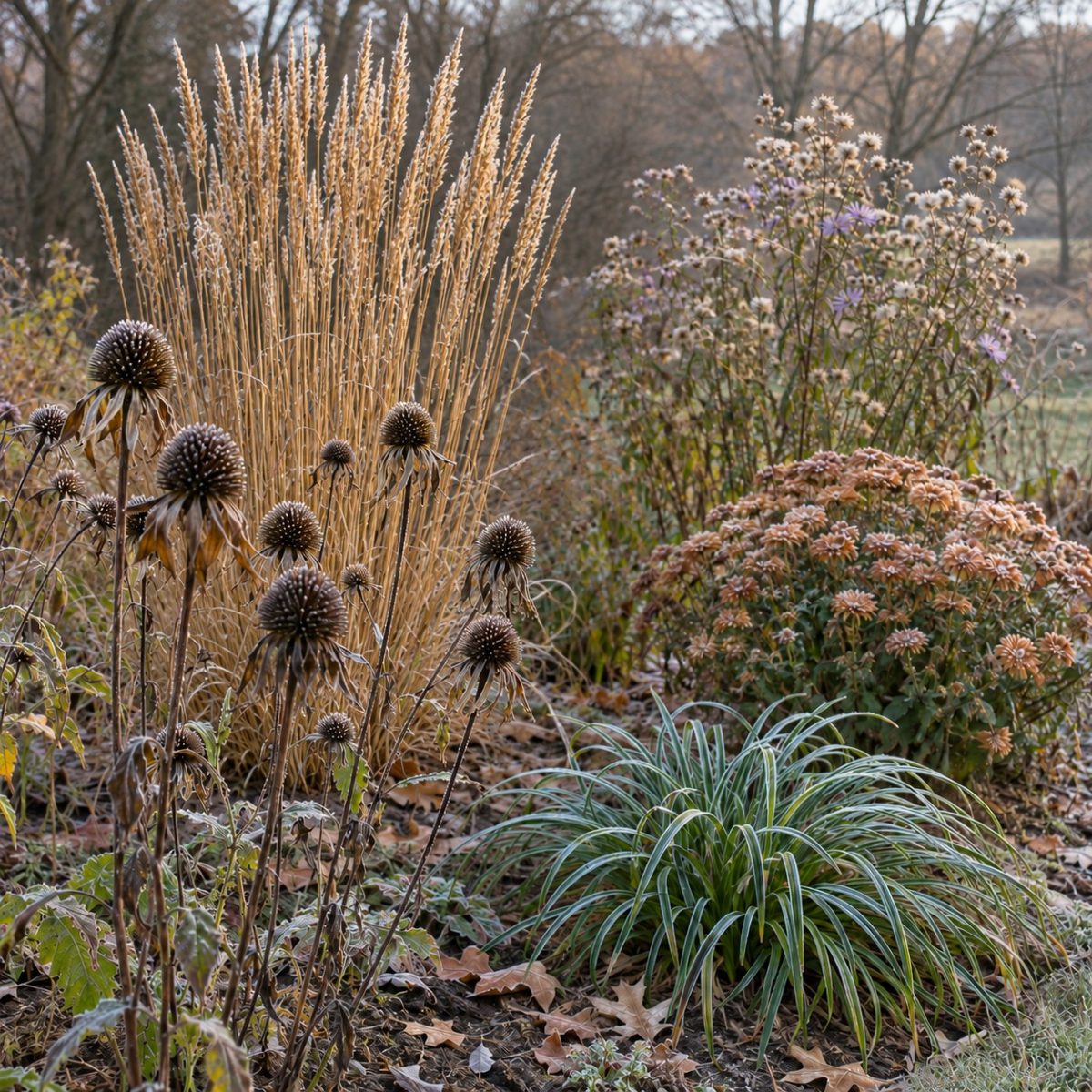
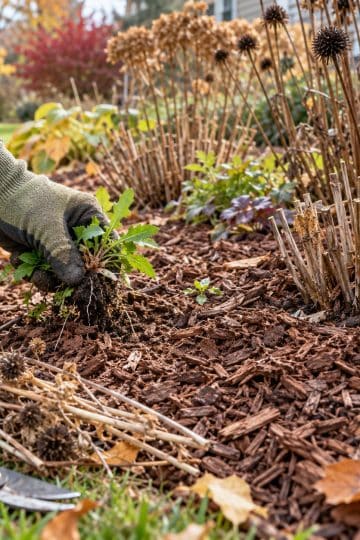
The key is to look at the condition of the plant before deciding what to cut. Healthy stems and seed heads can stay. If a plant had a serious disease problem during the growing season, removing the affected stems and fallen leaves makes sense. And if anything flops across a walkway or smothers a neighboring plant, go ahead and trim that part now.
5 Perennials You Can Leave Standing In November
1. Ornamental Grasses
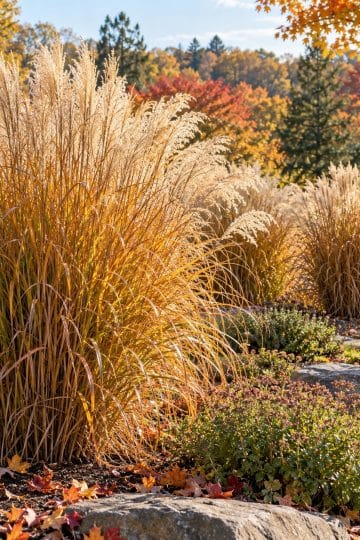
Ornamental grasses are some of the best plants to leave standing in winter. The golden blades and feathery plumes of grasses such as switchgrass and little bluestem look especially good on a frosty morning. And when snow covers everything else in the bed, those upright clumps are often the only thing left to give it height.
There’s a wildlife benefit, too. Dense clumps offer shelter close to the ground, and grasses that hold onto their seeds can provide food for birds. If a heavy snowfall bends a few stems onto a path, clip those individually and leave the rest of the clump in place.
For deciduous ornamental grasses, late winter or very early spring is the time to cut back the old growth. Do it before the new blades push up through the clump. Once old and new blades are mixed together, it’s easy to clip the fresh tips, and those blunt ends can stay visible as the grass grows.
2. Liriope
Liriope, often called lilyturf, is worth leaving alone in November for a different reason. Its arching leaves can stay green well into winter, especially in a sheltered spot. Along a walkway, beneath a tree or at the front of a flowerbed, it gives you a low strip of color after taller perennials have faded.
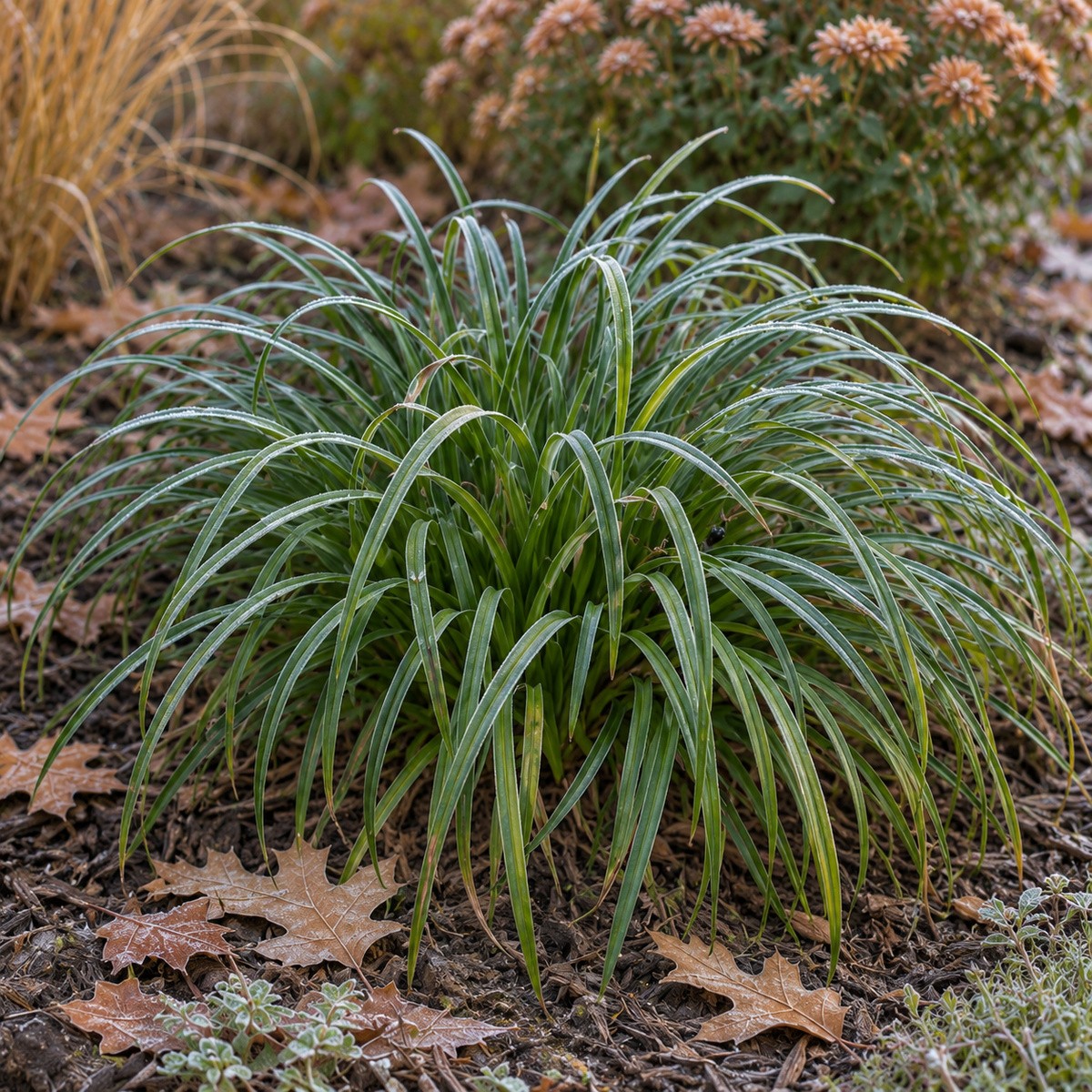
How it looks by spring depends on the weather and where it’s planted. A clump exposed to cold wind may develop brown tips and flattened leaves, while one near the house may still look tidy. Give both a chance to make it through winter before deciding how much to trim.
In late winter or early spring, look down into the center of the clump. If the old foliage is badly browned and the new shoots haven’t started to emerge, trim the old leaves back to a few inches above the ground. If you can already see fresh green tips, work around them with hand pruners. And if most of the clump is still green and attractive, simply pull or snip out the damaged leaves.
3. Hardy Garden Mums
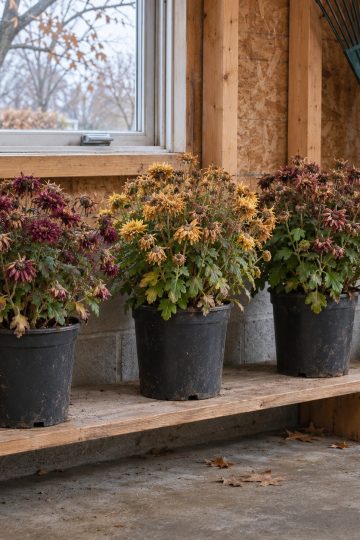
Garden mums are one of those perennials that you really need to leave standing in November and through winter - just to help it survive!
Winter protection matters most for mums that went into the ground late and had little time to establish roots. Once the ground cools and starts to freeze, tuck a loose layer of shredded leaves or straw around the base. A loose mulch settles around the plant without forming the wet mat that whole leaves sometimes create.
Come spring, look for little green shoots around the base of the old stems. Once you can see where the new growth is coming from, clip away the brittle stems and ease back any mulch that’s covering the shoots.
Listen In To Our Garden Podcast Below!

This advice is for hardy garden mums planted in the ground. If yours is still in a pot on the porch, the root ball is much more exposed to freezing. Move the pot to a sheltered, unheated spot and check the soil occasionally so it doesn’t dry out completely. See our article: How To Save Your Potted Mums In November – Why To Avoid Planting Outdoors!
4. WHy You Need To Leave Perennials Like Asters Standing In NOvEmber
Asters are often among the last flowers blooming in fall. By November, those purple, pink or white blooms may have turned into clusters of fluffy seed heads. Leave healthy plants standing and you’ll give seed-eating birds another place to forage. Some insects also spend the winter in or around old stems and plant debris.
There are two good reasons to be selective with asters. If a clump had a bad case of powdery mildew or another disease, remove the affected stems and fallen leaves. And if you’ve spent the last few springs pulling aster seedlings out of the gravel or from between your other perennials, clip the seed heads before they scatter. You can leave the healthy stems standing for winter.
When new growth starts to appear at the base in spring, cut the old stems back just above it. Asters can have a lot of fine stems packed together, so take a handful at a time. It’s easier to see what you’re cutting, especially on a clump that has spread beyond where you remember planting it.
5. Coneflowers
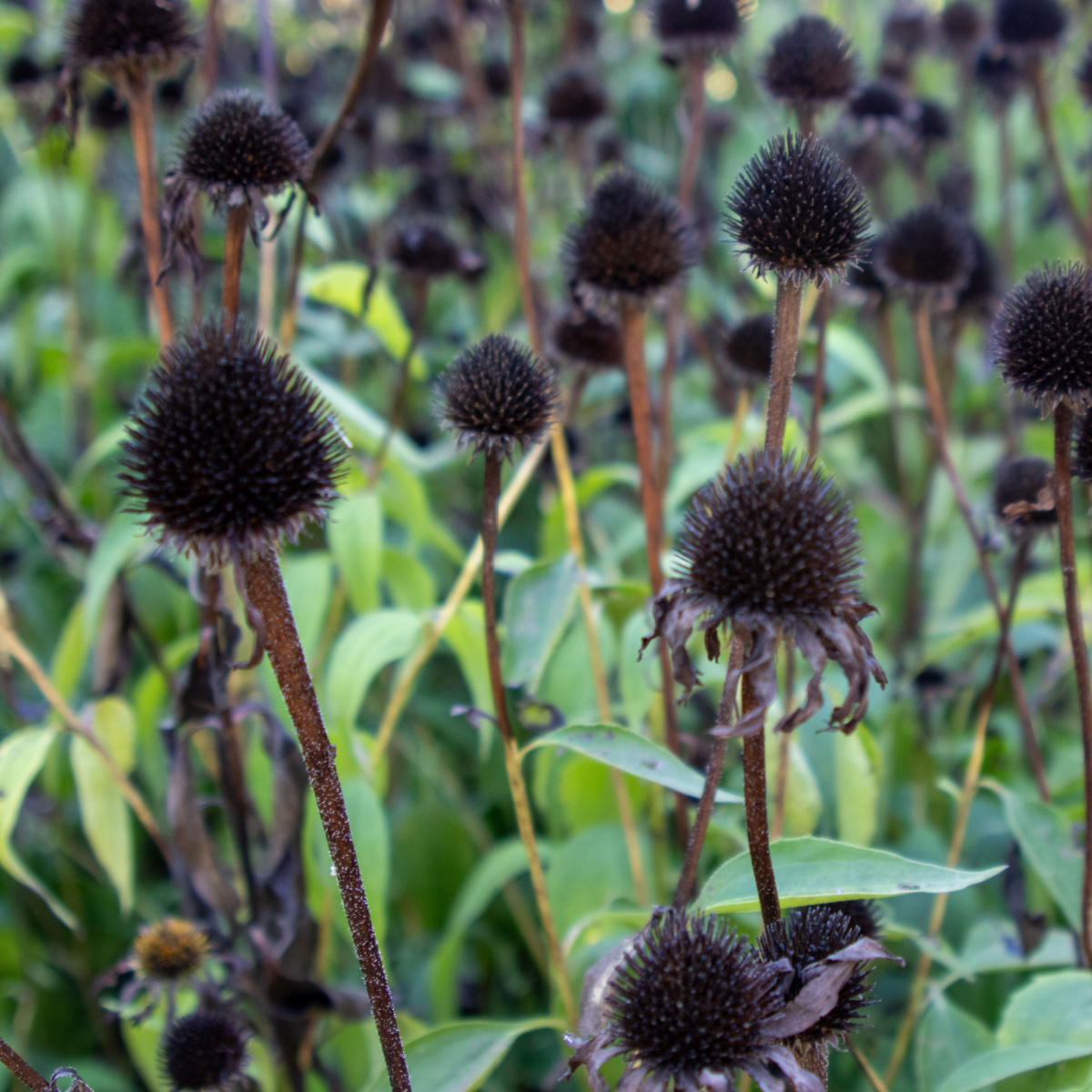
Of all five plants on this list, coneflowers are best to leave as a food source. The petals may be long gone by November, but the raised centers can still hold seeds. Goldfinches will perch right on top of a cone and pick it apart, and the stiff stems keep those seeds within reach even when snow covers the ground.
The dark cones also look good beside the lighter plumes of ornamental grasses. If your coneflowers have spread into a spot where you’d rather keep seedlings down, clip the seed heads and lay them out somewhere on a bench or even near your bird feeders.
Here is to having a little more winter interest and helping birds survive - all by leaving a few perennials up in November and through winter! Happy Gardening - Jim & Mary.
The Farm @ Old World Garden
Jim and Mary Competti have been writing gardening, DIY and recipe articles and books for over 16 years from their 46 acre Ohio farm. The two are frequent speakers on all things gardening and love to travel in their spare time.
As always, feel free to email us at thefarm@owgarden.com with comments, questions, or to simply say hello! You can sign up for our free email list in the subscribe now box in the middle of this article. Follow us on Facebook here : OWG Facebook. This article may contain affiliate links.
More Fall Gardening
- How To Save Your Potted Mums In November – Why To Avoid Planting Outdoors!
- The 2 Most Important Things To Do To Your Flowerbeds In November – Before Winter Arrives!
- 3 Big Things You Can Do In Late Fall To Help Your Tomato Plants Grow Better Next Year!
- The One Thing To Never Do To Ornamental Grass In Late October!