
There is nothing more disheartening that watching your beautiful tomatoes suddenly start splitting and cracking while ripening on the vine.
It can be so frustrating to see beautiful, ripe tomatoes go from perfection to almost ruined overnight. Not only does it make the fruit look rather unattractive, but it can also open the fruit up to a whole host of issues.
When tomatoes split, the skin actually breaks open and the flesh below is exposed. This causes the fruit to lose moisture as well as invite hungry pests to take a bite. Besides garden pests, the exposed flesh is also the perfect breeding ground for bacteria and mold to take hold. When this occurs, unfortunately, it results in fruit that is completely unusable.
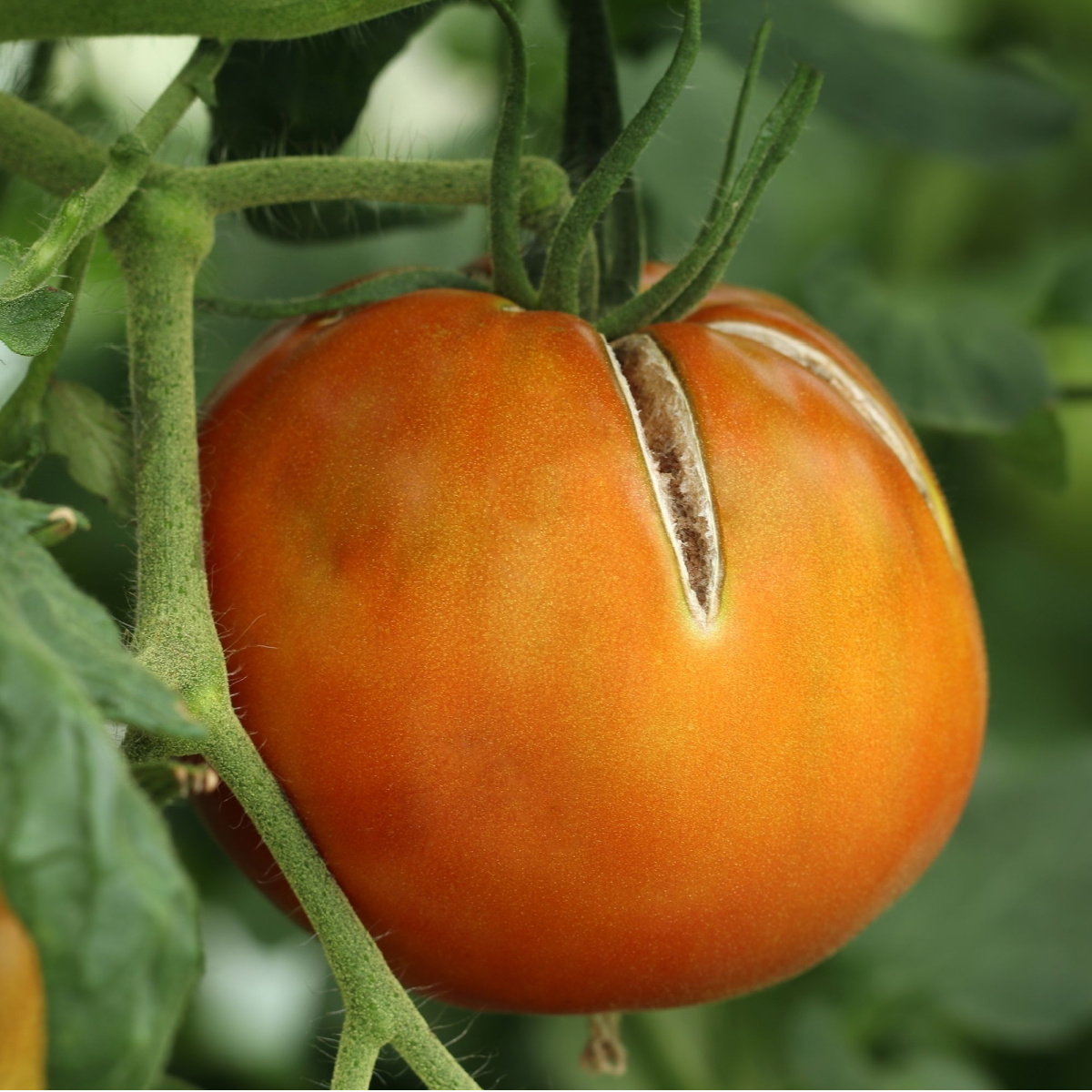
In addition to losing tomatoes, the tomato plant also spends precious resources and energy on trying to fix the split skin as opposed to using it to create new blooms and tomatoes.
The problem of splitting is not uncommon for tomato growers, but the good news is there are some easy ways of helping to prevent it from happening. With that in mind, here is a look at what causes splitting to occur – and how to keep your crop safe from damage.
Why Are My Tomatoes Splitting & Cracking?
If you have ever grown tomatoes before, you’ve likely come across splitting tomatoes. You can recognize it by the open slit that runs from the top to the bottom of the fruit. It almost looks like someone walked by with a sharp knife and took a little slice at it, piercing the skin.
One of the more common tomato varieties that you see splitting down the side are cherry tomatoes. You might also see cracks that run along the top of the tomato fruit as well. This type of cracking is almost always associated with Beefsteaks and other larger heirloom varieties.
One thing is for sure – all varieties can become “victims” of splitting if the conditions are right!
What Causes Splitting & Cracking Of Tomatoes
You might assume that splitting is a result of lacking nutrients, but it actually has nothing to do with how much food or energy a plant is receiving. Splitting and cracking are also not caused by pests or insects either.
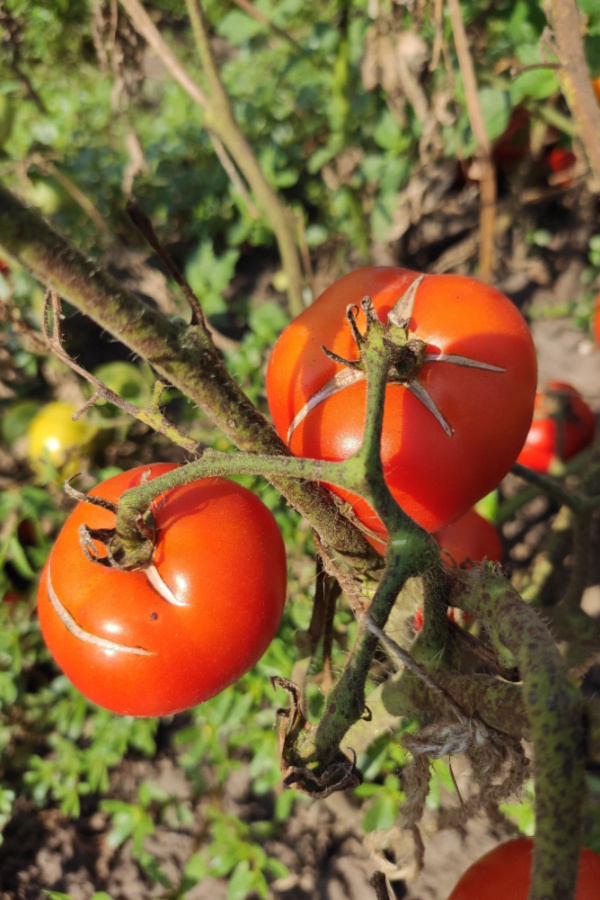
The actual reason why tomatoes split is because of a sudden increase in moisture. This can occur in a couple of different ways. First, your garden might receive a lot of rainfall from a recent rainstorm after not having received any for an extended period of time.
If plants suddenly receive a large amount of water all at once, they will try to fill out fruit as much as possible – and as fast as possible. This sudden increase in moisture causes the skin to break open in order to give the fruit more space to expand and grow.
Also, inconsistent watering can also cause a sudden increase in moisture as well that results in splitting. If plants are not watered for a few weeks and suddenly are watered heavily, splitting can occur.
How To Keep Your Tomatoes From Damage
The good news is that there are some great ways to control splitting from occurring – and the first is to harvest your tomatoes early!


Harvest Tomatoes Early
We’ve talked before about why it’s so important to harvest your tomatoes early. Not only for the health of the plant itself but for the success of your overall harvest. And once again, when trying to avoid splitting, picking early is the best solution! See: The Best Way To Ripen Tomatoes – And It’s Not On The Vine!
Most often, splitting and cracking occur on tomatoes that are almost or fully ripened. At this stage, their skin doesn’t grow as quickly as the rest of the tomato. But if you harvest that fruit early before they get to that stage, your chances of them splitting are greatly reduced.
As soon as your tomato starts to show a hint of its final mature color, you can remove it from the plant. The fruit no longer needs to be on the vine in order to ripen. The process has already started and will continue whether it is still attached or not. And it helps with more than just splitting.
Harvesting your tomatoes early also helps to prevent “fruit overload.” This occurs when plants are weighed down by multiple maturing fruit. The more tomatoes you have on the plant, the less likely it will produce new blooms, thus stalling your harvest.
Fruit overload can also cause plants to become damaged by heavy rainfalls or strong winds. This is especially the case for larger indeterminate tomato varieties that can grow to massive heights and are often top-heavy.
So for the health of your plant and the continuation of your harvest, it’s best to get those tomatoes off the vine as soon as possible.
Watering Regularly
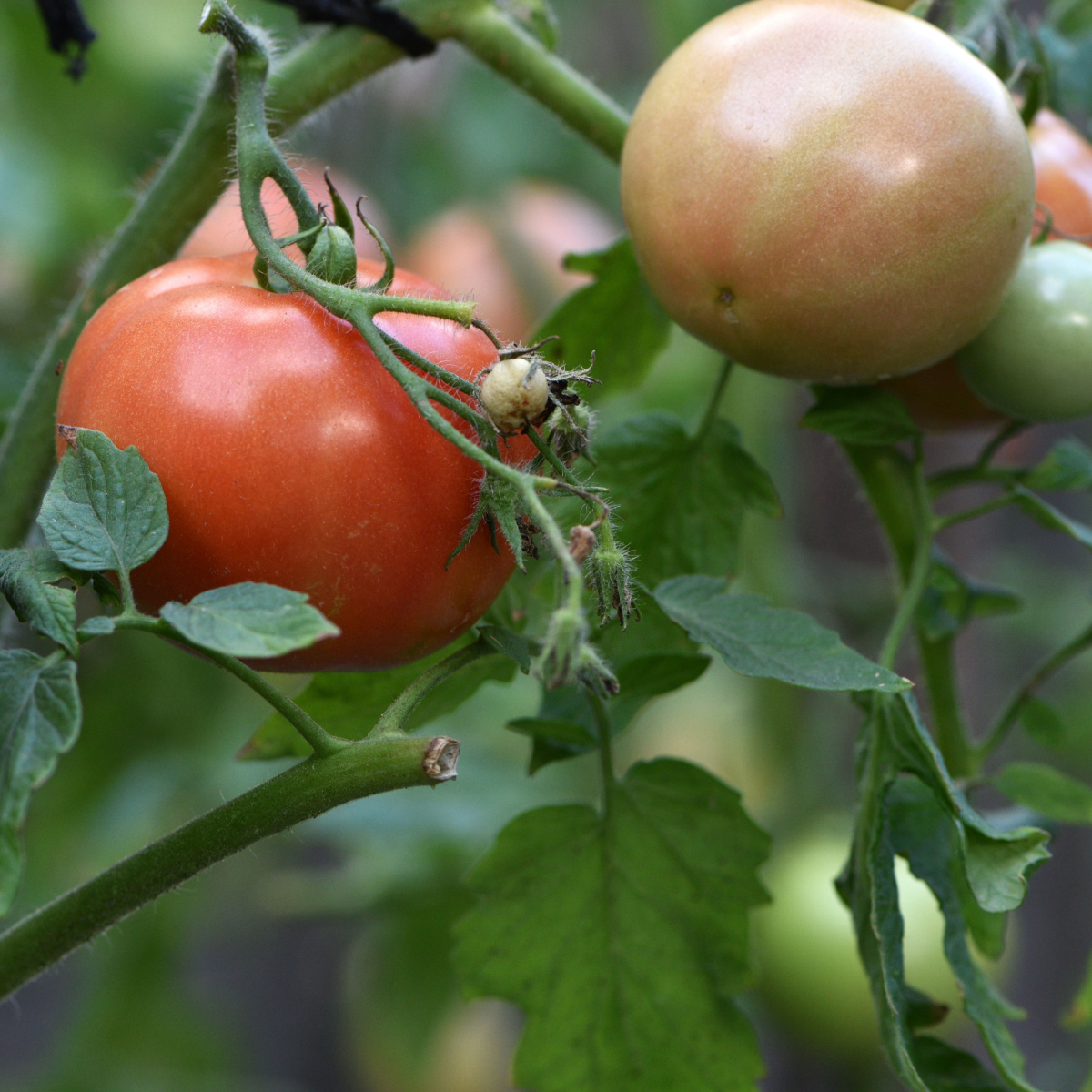
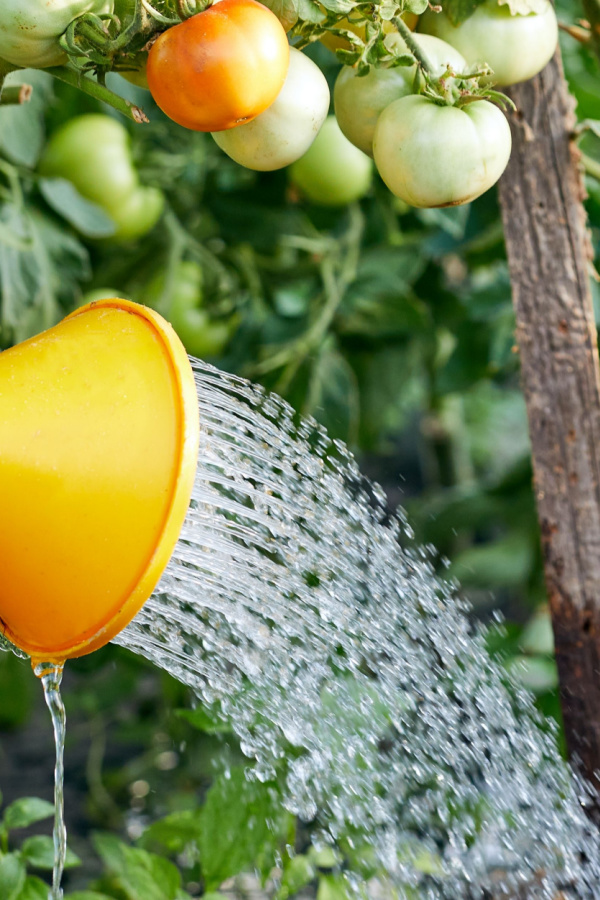
Another way to help keep your tomatoes from splitting and cracking is to keep your plants on a consistent watering schedule. This avoids plants going for long periods without moisture and then receiving a lot of water all at once.
While you can’t control the amount of rainfall you receive, you can control how much and how often you hand water your plants. Tomatoes require around an inch to an inch and a half of water each week for peak performance.
If you do not expect to receive any rain during the week, you need to water your plants by hand. But instead of giving plants a little bit of water each day – and causing you to spend way too much time in the garden – try watering plants deeply once or twice a week.
Watering deeply will help encourage plants to grow their roots down deep into the soil. This helps to anchor top-heavy plants as well as allow plants to reach more nutrients and resources within the soil.
The best way to check to see the moisture level of the soil is to use an inexpensive moisture meter. Don’t just go off of the look of the soil’s surface alone. The top couple of inches might seem dry and cracking, but there may be an abundance of water just below. (Affiliate Product Link: Soil Moisture Meter)
You can also use your finger or a long wooden skewer to check the moisture level. However, these methods can cause inconsistent results and are open to interpretation.
Last But Not Least – Mulch Like Never Before
If you’ve been following us for any amount of time, then you know just how much importance we put on using mulch in your garden. And for good reason!
Not only does mulching help to reduce the amount of weeds that occur with bare soil, but it also helps to keep soil in place, reducing soil erosion. It also helps to discourage soil-borne diseases from getting on plants.
And yes – mulch can also play a huge role in keeping tomatoes from splitting and cracking! The mulch works in two simple ways. First, it helps to regulate soil temperatures. Second, it helps to retain the moisture that is within the soil.
Water evaporation occurs quickly on bare soil. Especially in hot climates or in drought-like situations. When soil is evenly moist and at consistent temperatures, it has a much less chance of soaking up too much water from heavy rains or excess water.
For mulch to be effective, apply at least a four-inch thick layer around the root zone of your plants. Six inches is even better. Shredded leaves, straw, or grass clippings are all excellent choices.
Here is to keeping your tomatoes from splitting and cracking this year – and enjoying them more than ever! For even more tips on growing great tomatoes, see our article: How To Help Tomato Plants In Late Summer – 3 Quick Ways To Help Dying Tomato Plants! Happy Gardening – Jim & Mary.
Old World Garden Farms
Jim and Mary Competti have been writing gardening, DIY and recipe articles and books for over 16 years from their 46 acre Ohio farm. The two are frequent speakers on all things gardening and love to travel in their spare time.
As always, feel free to email us at thefarm@owgarden.com with comments, questions, or to simply say hello! You can sign up for our free email list in the subscribe now box in the middle of this article. Follow us on Facebook here : OWG Facebook. This article may contain affiliate links.