
Are your zucchini plants suddenly dying right before your eyes in the middle of summer – for seemingly no reason at all?
Zucchini plants often start the growing season with strong growth and heavy production. But by the time mid-summer rolls around, the once healthy plants often begin to wilt, turn yellow, or stop producing altogether.
This leaves many gardeners wondering what went wrong – and more importantly, what they can do to still harvest a big crop before fall arrives. But don’t worry – if your zucchini plants are struggling right now, you’re not alone. The good news is, with a little planning and the right approach, you can still get more zucchini this year than you ever thought possible!
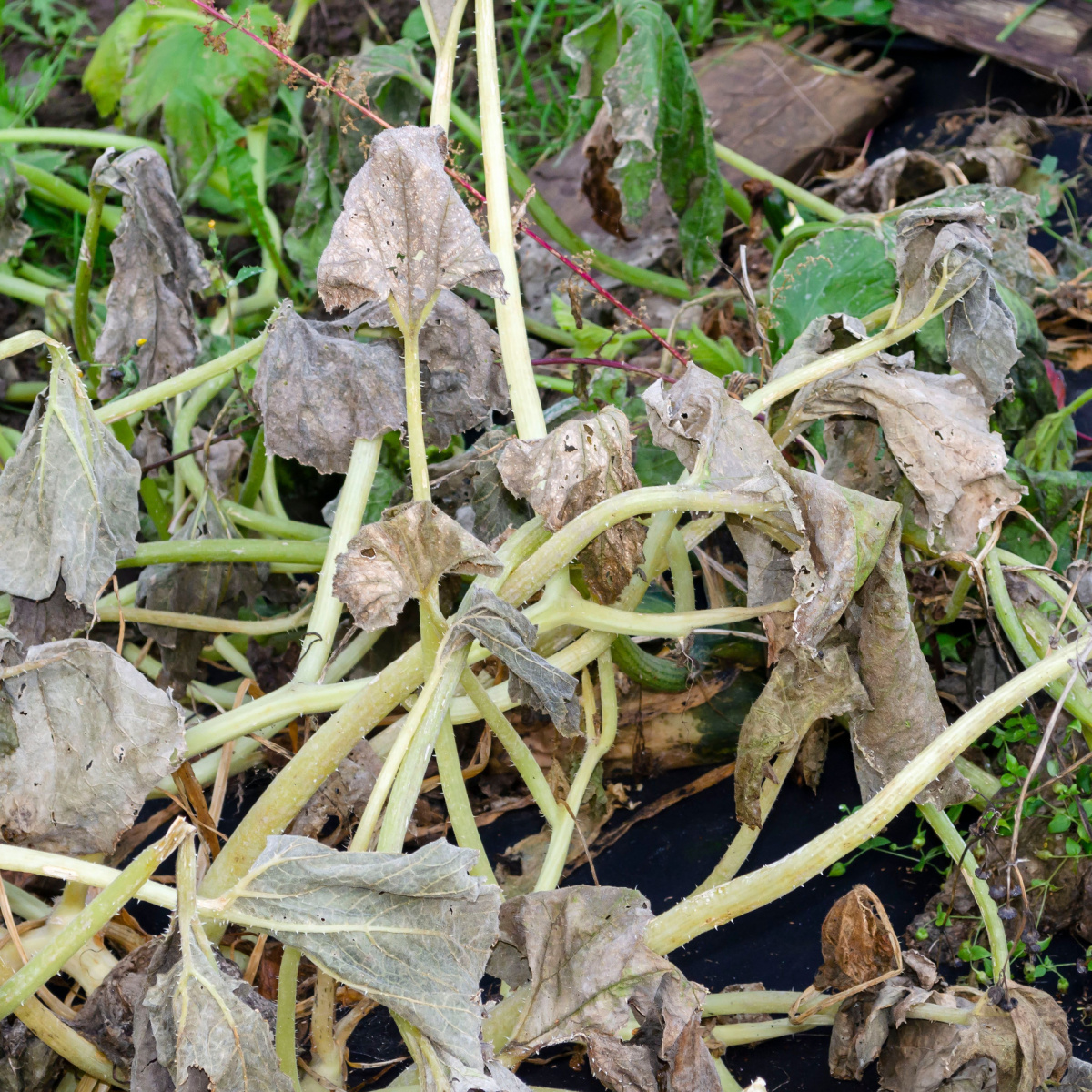
Why Are My Zucchini Plants Dying In The Summer?
3 Reasons Zucchini Plants Fail In Summer
Zucchini are fast-growing plants, and that rapid early growth can actually be part of the problem. They often use up most of their energy early in the growing season. It can leave them exhausted by the time the hottest part of summer hits.
In many cases, this isn’t a result of something you did wrong, but rather just how zucchini plants naturally behave when grown in one long continuous stretch.
Another big reason zucchini plants tend to die off in the middle of summer is due to fungal diseases like powdery mildew. This white, powdery coating often appears on the leaves during warm, humid weather. When it spreads, it blocks sunlight from reaching the leaves, weakens the plant, and eventually causes the leaves to die.
As more of the plant is affected, it becomes harder for it to support fruit production, and before long, the entire plant begins to collapse.
Last but not least, pests also plays a big role. Insects like squash bugs and cucumber beetles can be a real problem for zucchini plants. These pests don’t just eat the leaves and stems. They also carry diseases like bacterial wilt. And it can kill a healthy-looking plant almost overnight.

If your zucchini seemed perfectly fine one day and then wilted completely the next, pests or disease were likely involved. Unfortunately, mid-summer is the peak of pest activity. And that adds even more stress to already tired plants.
What To Do When Zucchini Plants Start To Die
When all of these factors combine – burnout, disease and pests – it can feel like there’s no way to save your zucchini plants. And usually, that’s actually true. But instead of focusing all of your time and energy trying to bring those tired plants back to life, there’s a much better option – replanting!
You can replant fresh zucchini in the middle of summer and enjoy a second harvest that’s just as big, if not bigger, than the first. (You can also do this with cucumbers – How To Replant Cucumbers With Seeds In The Summer – And Why It Works So Well!)
Starting a second round of zucchini plants is one of the easiest and most effective ways to get more from your garden. When planted later in the season, zucchini plants grow fast. Even better, they avoid many of the problems that come with early-season planting.
For one, young, fresh plants planted in late July or early August don’t have to deal with the same level of pest pressure. Many insect populations, including squash bugs and beetles, begin to fade. This gives new plants a better chance to grow without being attacked.
Fresh soil also helps. When you remove your old zucchini plants and prepare the area for a second crop, you have the chance to enrich the soil again with compost and worm castings. This new round of nutrients gives your second crop the boost it needs to grow fast and strong.
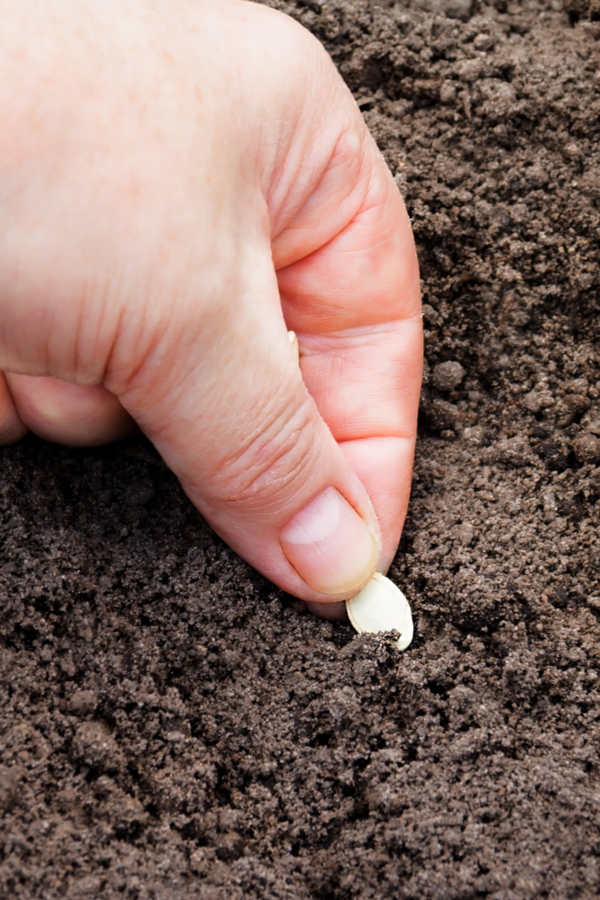
Planting Zucchini Seeds
Zucchini planted in summer soil tends to germinate quickly and grow rapidly. Because the soil is already warm, you don’t need to start seeds indoors or use transplants. Direct sowing is the best method. The seeds sprout quickly, often within a few days. And the plants establish themselves just as fast.
To get started, begin by removing your old dying zucchini plants and all vines. Clear away all of the foliage, roots, and any fallen leaves or debris. This step is important because it helps prevent the spread of disease to your new plants.
Once the area is cleared, take time to amend the soil. Mix in a few inches of compost. It’s also a great idea to add worm castings or an all-purpose organic fertilizer to boost soil nutrition. Use a hoe or shovel to create small mounds or raised rows about a foot apart. These mounds will warm up faster, allow better drainage, and give the roots space to grow.
When it comes time to plant, soak your zucchini seeds in water for about 6 to 8 hours. This softens the seed coat and helps them sprout more quickly. After soaking, plant two to three seeds in each mound about one inch deep. Affiliate Link: Black Beauty Zucchini Seeds
Water the area lightly. Within a few days, the seedlings should start to emerge. Once they grow their first couple sets of leaves, thin the plants to one strong seedling per mound.


Growing A Second Crop
Caring for your new zucchini plants in late summer is much the same as with your spring crop. Be sure to water consistently, especially during dry spells. The roots need moisture to establish and support fruit development.
Adding a light layer of straw is also important. It helps retain soil moisture and reduce weed competition. Because late summer and early fall can still bring bouts of powdery mildew, keep an eye on airflow around your plants. Avoid watering from above and instead water at the base of the plant. These will all help to keep your zucchini plants from dying off again.
Feeding your second crop is also important. If you already added compost or fertilizer when planting, your young plants will have a good start. But after a few weeks, it’s a good idea to give them a light boost of nutrients.
You can side-dress with compost or apply a diluted liquid fertilizer every 7 to 10 days to keep your zucchini blooming and producing. Jack’s Classic 12-15-30 Veggie Feed Water-Soluble Fertilizer
So if your zucchini plants are dying off this summer, don’t give up just yet. Instead of trying to revive worn-out vines, start fresh with a second planting. With warm soil, fewer pests, and improved soil nutrition, your new zucchini plants can take off quickly and produce a harvest that carries you well into the fall. Happy Gardening – Jim & Mary.
Old World Garden Farms
Jim and Mary Competti have been writing gardening, DIY and recipe articles and books for over 16 years from their 46 acre Ohio farm. The two are frequent speakers on all things gardening and love to travel in their spare time.
As always, feel free to email us at thefarm@owgarden.com with comments, questions, or to simply say hello! You can sign up for our free email list in the subscribe now box in the middle of this article. Follow us on Facebook here : OWG Facebook. This article may contain affiliate links.