
Looking for some of the best perennials to plant now in late summer to add lasting fall and color – and big color next year too?
Late summer is one of the best times of the year to add perennial plants to your flowerbeds. Not only can the right plants bring a fresh burst of color to beds that are beginning to fade, they can also help fill in bare spaces and create thicker, fuller flowerbeds for next year.
By August and early September, many spring and early summer flowering plants have finished blooming. Even annuals can begin to look a little tired after months of battling heat, sun and dry conditions. Unfortunately, that can leave flowerbeds looking a little thin and colorless just when you still want them looking their best. But that is exactly where late summer flowering perennials can save the day!
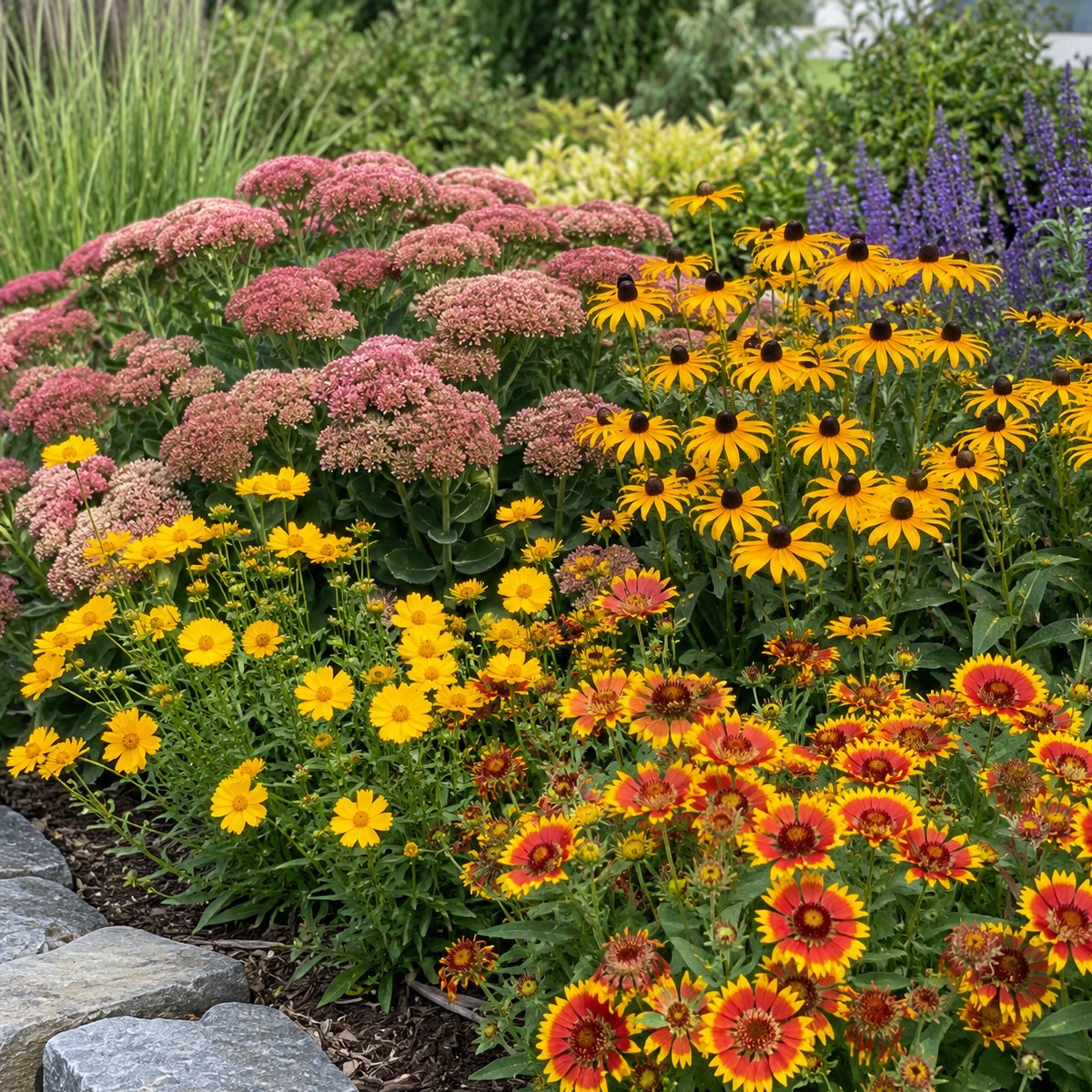
There are a surprising number of hardy perennial plants that begin blooming in mid to late summer. Even better, many continue flowering well into fall. By adding a few of these plants now, you can instantly give your beds more color – and set them up for an even better display next year.
Here is a look at eight of the best perennials to plant in late summer for big color!
8 Perennials To Plant In Late Summer
Sedum
When it comes to adding dependable late summer and fall color, it is hard to beat sedum. There are many varieties of sedum, but upright varieties such as Autumn Joy are especially valuable in flowerbeds. The plants form thick mounds of attractive foliage before producing large clusters of tiny flowers in late summer.
The blooms often begin as a soft pink before deepening to shades of rose, red, bronze and burgundy as fall approaches. Even better, the blooms are excellent for attracting bees, butterflies and other pollinators.
Sedum is extremely drought tolerant once established and performs best in full sun and well-draining soil. It is also a great choice for areas where other perennials struggle because of dry conditions.
Planting Blanketflower
Blanketflower is another perennial that can provide an incredible amount of color from summer right through fall.
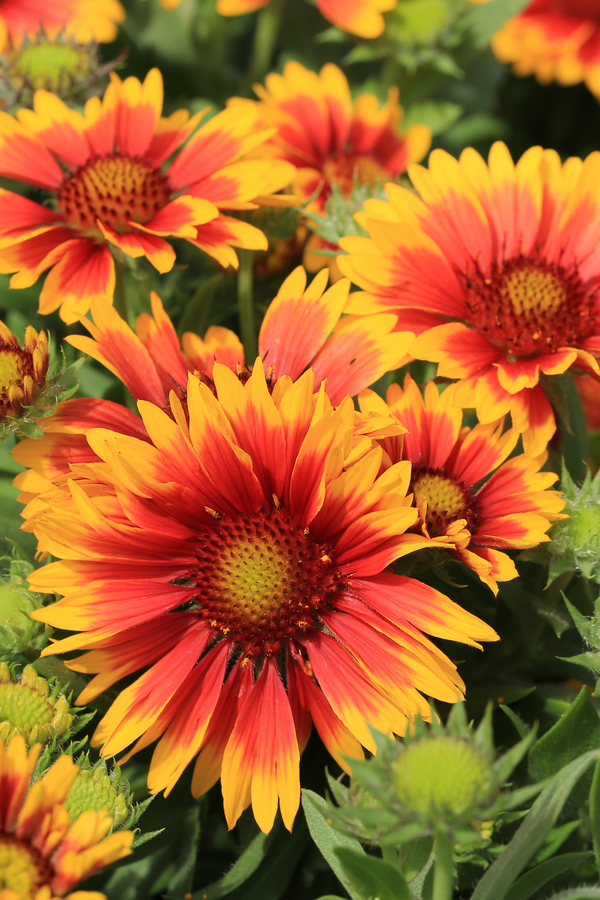
Its daisy-like flowers usually feature combinations of red, orange and yellow. The bright colors are perfect for waking up tired flowerbeds in late summer. One of the biggest advantages of blanketflower is its ability to handle heat and dry conditions. In fact, it often performs better in lean, well-draining soil than in rich, overly fertile soil.
Blanketflower grows best in full sun. Deadheading spent flowers can help encourage the plant to continue producing blooms late into the growing season.
Asters
If there is one perennial made for late summer and fall color, it is the aster. Asters typically begin blooming as many other perennial flowers are starting to fade. Depending on the variety, their daisy-like blooms can be purple, blue, pink, lavender or white.
The plants are also incredibly valuable to late-season pollinators. Bees and butterflies often flock to asters when fewer other nectar sources are available.
Asters prefer plenty of sunlight and reasonably well-draining soil. Depending on the variety, plants can range from compact border plants to much taller specimens that work wonderfully toward the back of a flowerbed.
Coreopsis
Coreopsis is a hardworking perennial that can bloom for months with very little care.
Also commonly known as tickseed, coreopsis produces masses of cheerful, daisy-like flowers. Yellow is perhaps the most familiar color, but varieties are also available in red, orange, pink and combinations of several colors.
Check out our latest podcast below!


Coreopsis loves full sun and handles heat and drought extremely well once established. It is also excellent for attracting pollinators. One of the best features of coreopsis is its ability to rebloom. Removing old flowers and lightly trimming plants after a heavy flowering cycle can encourage another round of blooms.
Plant it in late summer and it can add immediate color while establishing roots for an even stronger showing next year.
Black-Eyed Susan
Few perennials create more classic summer color than black-eyed Susans. Their golden-yellow petals surrounding dark brown or nearly black centers make them easy to recognize. Even better, their flowering period often stretches from midsummer well into early fall.
Black-eyed Susans are tough plants. Once established, they can handle heat, periods of dry weather and less-than-perfect soil conditions. They perform best with plenty of sunlight and good drainage. Plants can also spread over time, making them excellent for filling large areas and thickening flowerbeds naturally.
Black-eyed Susans pair especially well with purple coneflowers, asters and ornamental grasses. The combination of yellow, purple and green can keep beds looking alive and colorful late into the season. See our article: What To Do With Black-Eyed Susans After They Bloom – And Why It Matters For Next Year!
Catnip
Catnip might not always be the first plant gardeners think of for ornamental flowerbeds, but flowering catnip can be a wonderful addition to the landscape. Affiliate Link: Clovers Garden Catnip Herb Plants – – Two (2) Live Plants
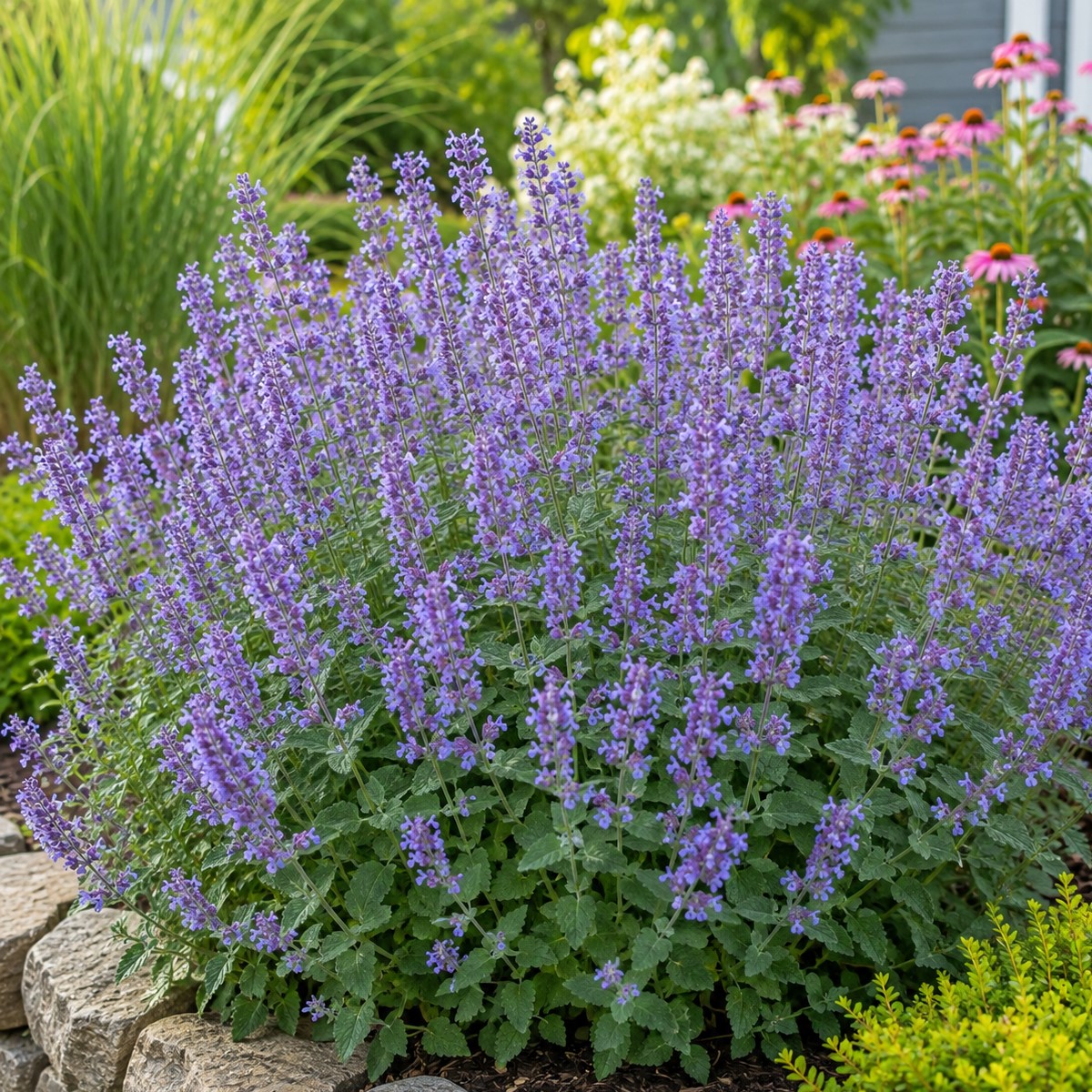
Catnip produces masses of small lavender, purple or bluish flowers above soft green foliage. The flowers are highly attractive to bees and other pollinators and can continue appearing for a long period.
It grows best in full sun and well-draining soil and becomes quite drought tolerant once established. In fact, overly rich or constantly wet soil can cause plants to become weak and floppy. Catnip can spread, so give it room to grow or trim plants back periodically to keep them under control. Cutting plants back after flowering can also encourage fresh growth and additional blooms.
Its soft foliage and cool-colored flowers make catnip a great companion for bright yellow coreopsis, black-eyed Susans and blanketflower.
Coneflower
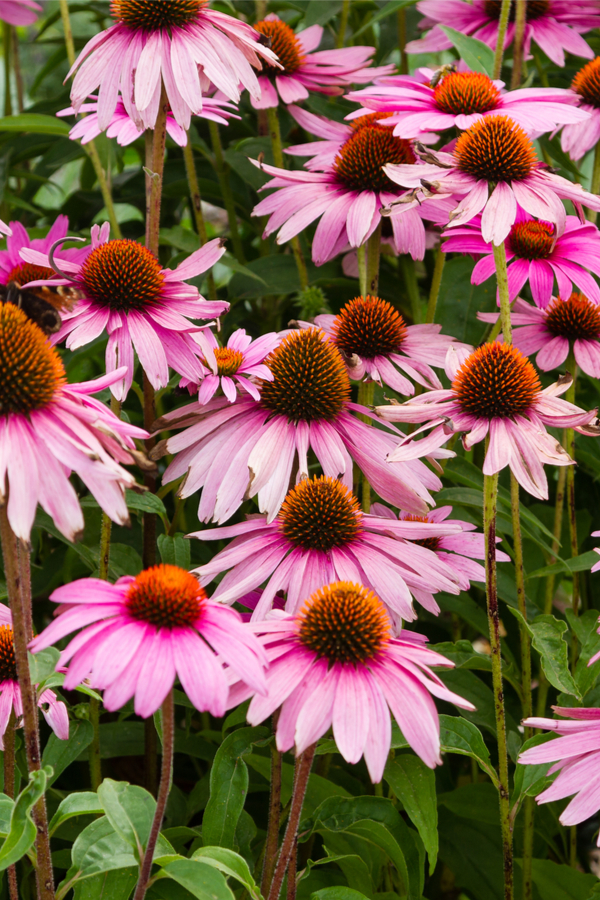
Coneflowers are another excellent perennial for bringing long-lasting color to flowerbeds. Although purple coneflower may be the best-known variety, coneflowers are now available in an incredible range of colors, including pink, white, orange, yellow and red.
Their large flowers stand high above sturdy stems and foliage, creating both height and color. They are also a favorite of bees and butterflies. Coneflowers prefer full sun and well-draining soil. Once established, they are quite drought tolerant and require little additional care.
Salvia
Last but certainly not least is salvia – one of the best perennials for adding both color and vertical interest to flowerbeds.
Perennial salvia produces tall spikes of flowers in shades of blue, purple, pink, red and white. Those upright blooms provide a completely different shape than daisy-like perennials such as coneflowers and black-eyed Susans. Affiliate Link: Salvia n. ‘Rose Marvel’ (Meadow Sage) Perennial, Size-#1 Container, Pink Spikes
Salvia loves sunlight and well-draining soil. Once established, many varieties are quite drought tolerant. They are also highly attractive to bees, butterflies and hummingbirds.
Tips For How To Plant Perennials In Late Summer
The biggest key when planting perennials in late summer is water. Even drought-tolerant perennials need consistent moisture while establishing their roots. Water new plants deeply when planting and continue checking the soil regularly for the first several weeks.
Avoid keeping the soil constantly soggy. Instead, water deeply enough to encourage roots to grow downward into the soil. Adding two to three inches of mulch around plants is also extremely helpful. Mulch keeps moisture in the soil, regulates soil temperature and helps prevent weeds from competing with new plants.
Here to adding some great perennial plants to your flowerbeds in late summer – and to lasting color all season! Happy Gardening – Jim & Mary
The Farm @ Old World Garden
Jim and Mary Competti have been writing gardening, DIY and recipe articles and books for over 16 years from their 46 acre Ohio farm. The two are frequent speakers on all things gardening and love to travel in their spare time.
As always, feel free to email us at thefarm@owgarden.com with comments, questions, or to simply say hello! You can sign up for our free email list in the subscribe now box in the middle of this article. Follow us on Facebook here : OWG Facebook. This article may contain affiliate links.