
Want to know the biggest secret to successfully saving marigold seeds from your plants to grow again next year?
Marigolds are one of the easiest annual flowers to grow from seed. Even better, they are also one of the easiest flowers for gardeners to collect and save seed from at the end of the growing season. Every single spent flower head can contain dozens of long, slender seeds that can become next year’s plants.
But when and how you collect those seeds can make a huge difference in how well they germinate next spring. And that’s exactly why if you want to save marigold seeds, you need to stop deadheading at least a few of your plants in late summer. Here’s a look at how to select, harvest, dry and store marigold seeds – and how to know when they are truly ready to collect!
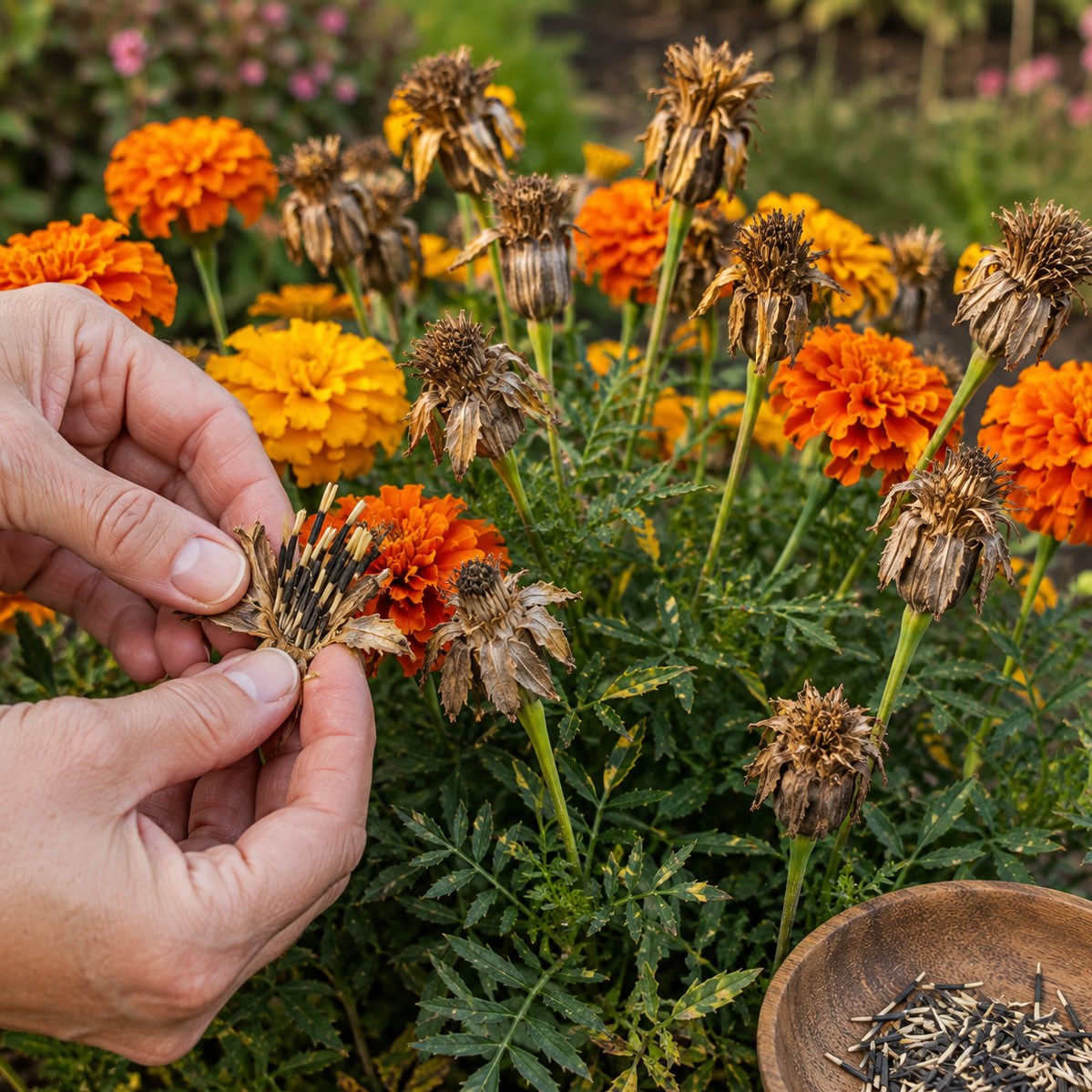
The Biggest Secret To Saving Marigold Seeds
Why You Should Stop Deadheading Marigolds You Want To Save
Deadheading is one of the best ways to keep marigolds flowering throughout the summer. By removing old blooms before they produce mature seed, the plant redirects its energy toward producing more flowers.But if your goal is to save seeds, you need to allow a few flowers to complete the exact process that deadheading prevents.
Once a marigold flower begins to fade, the plant starts developing and maturing seeds inside the flower head. If you pinch the bloom off too soon, those seeds may not have enough time to mature. Instead, choose several healthy blooms and leave them completely alone.
Allow the colorful petals to fade, turn brown and eventually dry. The flower head itself should become brown, papery and dry as well. It isn’t necessarily pretty – but that’s exactly what you want!
Choose Seeds From Your Best Marigold Plants
One of the advantages of saving your own seed is that you get to decide which plants you want to reproduce. Don’t simply collect seeds from the first dried marigold you happen to see.

Instead, look through your flowerbeds and choose plants that performed especially well. Select plants that were healthy, vigorous and produced plenty of flowers. You can also save seed based on traits you particularly enjoyed, such as flower size, color or plant height.
If one marigold remained compact and covered in flowers all summer while another became leggy and struggled, save seeds from the stronger plant. Over time, this simple selection process can help you continually save seeds from plants that perform well in your particular growing conditions.
A Quick Note About Hybrid Marigolds
There is one important thing to know before saving marigold seeds: not every seed will necessarily produce a plant identical to its parent.
Open-pollinated and heirloom marigolds are the most dependable choices for seed saving. When properly pollinated, their offspring are more likely to resemble the parent plants. Hybrid marigolds can certainly produce viable seeds, but plants grown from those seeds may have different characteristics.
Their flowers might be a different color, their plants may grow taller or shorter, or they might not bloom as heavily as the original hybrid. That doesn’t mean you can’t save seeds from hybrids. In fact, it can be fun to see what grows! Just don’t expect every seedling to look exactly like the marigold you collected it from.


Let Your Seeds Fully Dry On The Plant
This is the most important step of all when saving marigold seeds. For the strongest, most mature seeds, allow the flower head to dry naturally while it remains attached to the plant.
After a marigold flower fades, its petals will shrivel and turn brown. Over time, the green base of the flower will also begin drying and changing color. Don’t rush this process.
A flower that looks dead on top can still contain seeds that are finishing their development inside. Removing the flower too early can result in immature seeds with poor germination. Wait until the entire flower head feels dry and papery.
When it is ready, the head will usually be brown or tan and feel brittle when squeezed between your fingers. In dry weather, some mature heads may even begin opening on their own. At that point, the seeds inside should be ready for harvest.
How To Remove Seeds From The Flower
Now comes the fun part! Take a completely dried marigold flower head and gently pull away the remaining dried petals and outer covering. Inside you will find a bundle of long, narrow seeds.
Marigold seeds have a very distinctive appearance. They are slender and usually dark brown or black along most of their length with a lighter tan or cream-colored tip. One flower head can contain dozens of seeds.
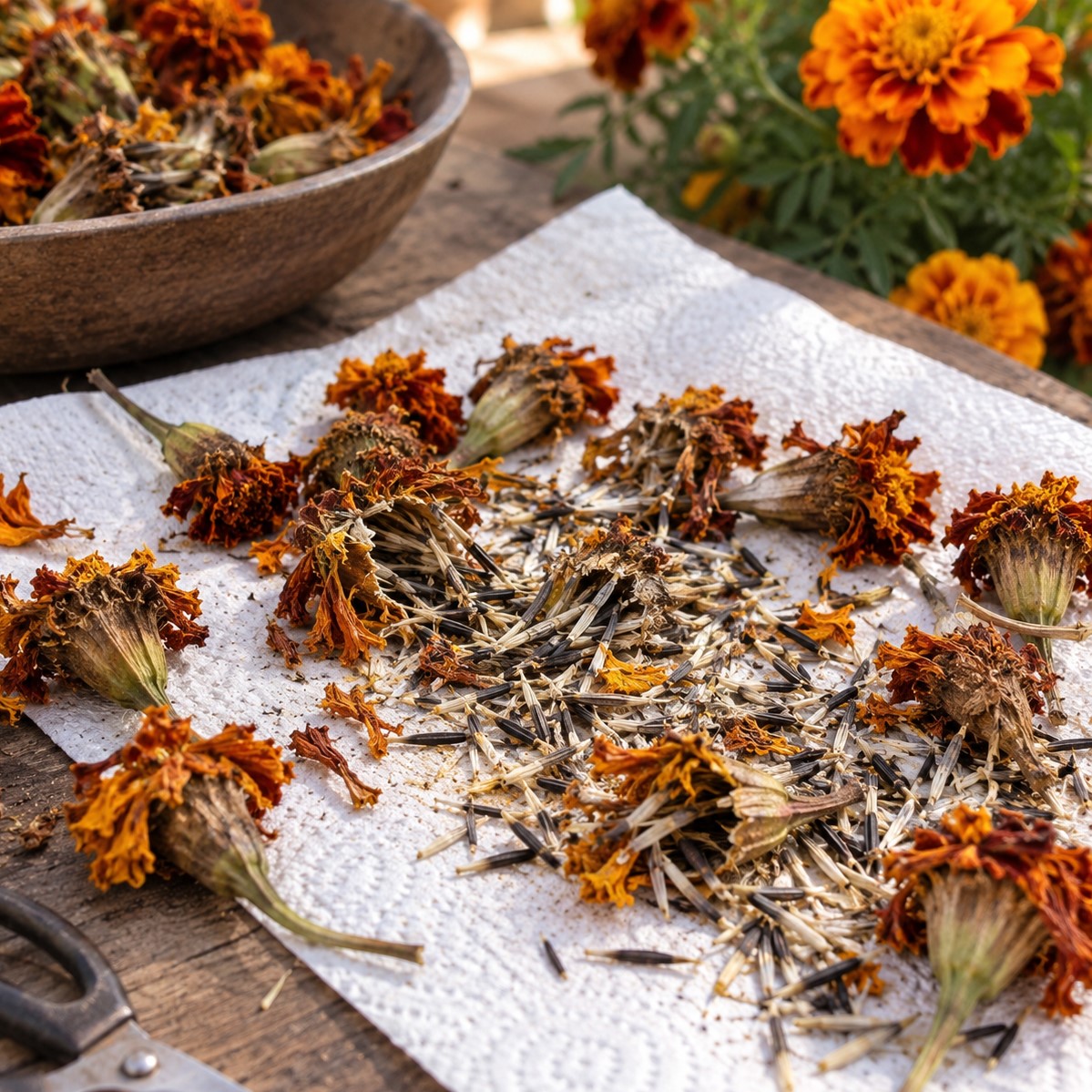
Gently pull the seeds free with your fingers and spread them out on a plate, paper towel or sheet of paper. Remove as much of the dried flower material, petals and chaff as possible. It doesn’t have to be perfect, but storing clean seed makes planting easier next spring.
Dry Your Seeds Again Before Storing
Even though the flower heads dried outdoors, it’s a good idea to give the harvested seeds additional drying time indoors before storing them. Spread the seeds in a single layer on a paper plate, piece of cardboard or sheet of paper.
Keep them in a dry location out of direct sunlight with good air circulation. Avoid putting freshly collected seeds immediately into a sealed plastic bag or airtight container. If even a small amount of moisture remains, it can become trapped inside and lead to mold or rot.
Allow the seeds to air dry for several days. If conditions were humid when you harvested the flowers, giving them a week or more is even better. Once they are completely dry, they are ready for storage.
How Long Will Marigold Seeds Last?
When stored properly, marigold seeds can remain viable for several years. However, germination rates generally decline as seeds age. For the strongest germination, using seeds within the next year or two is ideal. Fortunately, because marigolds produce so many seeds, there is little reason not to collect a fresh supply every year.
Instead of buying packets of marigolds every spring, start saving a few of your own seeds this late summer. With a simple envelope and a little patience, this year’s fading flowers can become next year’s beautiful blooms – all for free!
The Farm @ Old World Garden
Jim and Mary Competti have been writing gardening, DIY and recipe articles and books for over 16 years from their 46 acre Ohio farm. The two are frequent speakers on all things gardening and love to travel in their spare time.
As always, feel free to email us at thefarm@owgarden.com with comments, questions, or to simply say hello! You can sign up for our free email list in the subscribe now box in the middle of this article. Follow us on Facebook here : OWG Facebook. This article may contain affiliate links.