5 Leaves You Should Never Use In Your Garden Or Compost Pile!
Did you know there are some leaves from certain trees that you should never use in your garden or compost pile?
Fallen leaves can be one of the best free resources for improving your garden. They help protect bare soil, add organic matter and eventually release nutrients that future plants can use. But before you start gathering every leaf in the yard, it pays to know exactly what you are collecting.
Although most leaves are excellent for mulching and composting, a few deserve special handling. Some contain compounds that make them a poor choice for fresh garden mulch. Others break down slowly or carry diseases that can survive in an ordinary backyard compost pile.
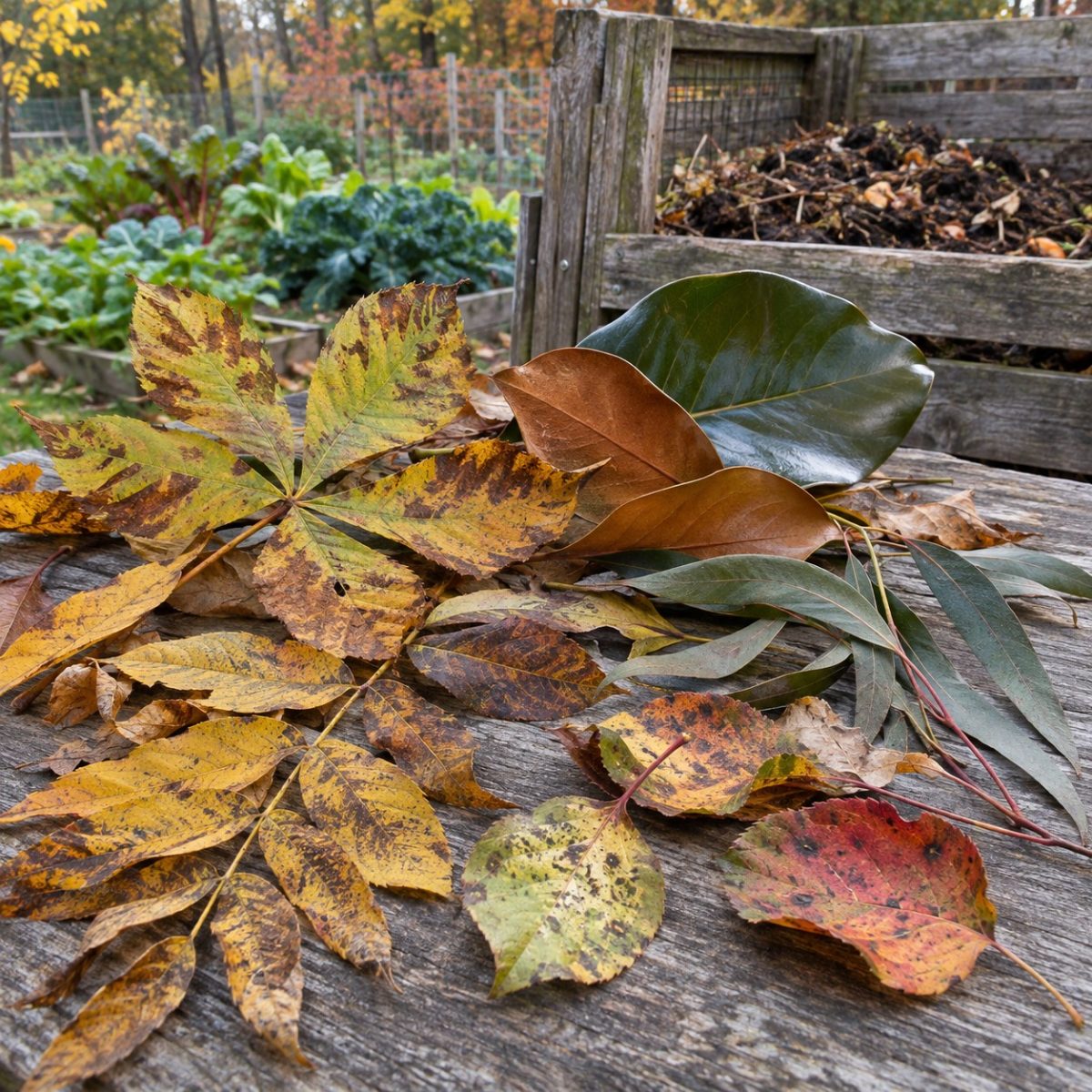
For gardeners who want dependable mulch and compost without extra sorting, waiting or monitoring, the following five types are worth keeping separate from the leaves you plan to use right away.
5 Leaves To Never Use In A Garden Or Compost Pile
1. Buckeye Leaves — Especially Leaves With Blotch
Buckeye trees are familiar sights throughout Ohio and surrounding states. Their large, fingerlike leaflets create plenty of material to rake up, often earlier in the season than many other shade trees.
But buckeye foliage needs a closer look before it goes into your garden or compost pile. One of the biggest concerns is leaf blotch. This fungal disease creates irregular brown areas on the leaves, sometimes surrounded by yellow borders. Badly affected leaves may curl, look scorched or fall prematurely.
The fungus can overwinter on fallen foliage. Leaving infected leaves beneath the tree, spreading them around the garden or placing them in a cool compost pile can preserve a source of infection for the following season.
Buckeyes also contain compounds that are poisonous when eaten. Keep leaves, nuts and other fallen material away from livestock and pets that might chew them. That ingestion hazard does not establish that healthy buckeye leaves poison finished compost, but it is a good reason to manage where the material collects.

2. Black Walnut Leaves — Why It's Best TO Never Use These Leaves In A Garden Or compost Pile
Black walnut is one of the first trees gardeners hear about when discussing leaves to avoid.
The concern is juglone, a naturally occurring compound associated with black walnut trees. Some garden plants, including tomatoes, can be sensitive to exposure. Roots, hulls and other tree material also matter, so the issue goes beyond the leaves alone.
For the home gardener, the easiest precaution is to avoid spreading fresh black walnut leaves around sensitive vegetables or digging them directly into planting beds.
Fresh leaf mulch and finished compost are different materials. During composting, exposure to air, moisture and microorganisms helps break down the compounds that cause concern.
That means black walnut leaves are not permanently unusable. However, adding a large load to a slow, cold pile and spreading the partly decomposed material in spring is different from thoroughly composting it.
For a simple vegetable-garden compost pile, using other leaves avoids the extra uncertainty. Keep walnut hulls and woody debris separate as well.
3. Magnolia Leaves — Too Tough To Use Whole In A Fast Compost Pile
Magnolia leaves belong on this list for a very different reason: their structure. The thick, glossy leaves of evergreen southern magnolias have a tough, waxy surface that slows decomposition. They can remain recognizable long after softer leaves in the same pile have broken down.
Listen To Our Garden Podcast

Whole, leathery leaves are inconvenient in a compost pile you want ready quickly. You may end up with finished-looking compost filled with large, stubborn leaf pieces.
They can also overlap when spread in a thick garden layer. Instead of creating a loose mulch, they may form a dense covering that is awkward to plant through and difficult to wet evenly.
Magnolia leaves are not inherently poisonous to your garden. The solution is preparation and patience. But if your goal is quick compost or easy winter mulch for vegetable beds, save whole magnolia leaves for a different use. See our article: How To Compost Leaves Fast!
4. Eucalyptus Leaves
Eucalyptus leaves are another material to keep separate from your everyday garden leaves, especially if you collect bagged leaves from other properties.
Their natural oils and other compounds can make fresh eucalyptus litter a questionable choice around germinating seeds and young plants. The tough foliage can also take time to break down.
For those reasons, avoid spreading a thick layer of fresh eucalyptus leaves over vegetable beds you will soon plant. They are also an unnecessary complication in a small compost pile intended to produce material quickly.

But, as with black walnut, fresh leaves and fully decomposed compost should not be treated as identical.
Eucalyptus leaves can be composted with appropriate handling. Shredding, mixing them with other ingredients and allowing thorough decomposition are more useful approaches than assuming they remain harmful forever.
5. Diseased Fruit-Tree Leaves — Keep Infection Out Of A Cool Pile
The fifth type is a category rather than a single tree: fruit-tree leaves carrying a known disease.
Apple and crabapple leaves affected by apple scab are a good example. Infected fallen foliage can help the disease survive winter and contribute to infections the following spring.
Moving those leaves to a corner of the garden does not necessarily solve the problem. Neither does putting them into a compost pile that remains cool.
Most backyard piles have uneven conditions. The middle may become warm while the outside remains cool and dry. Unless the material is managed so that all portions receive suitable composting conditions, disease organisms may survive.
For an everyday pile that receives occasional kitchen scraps and a little turning, keeping known diseased foliage out is the simpler choice.

Choose Leaves That Make Garden Cleanup Easier
For everyday garden mulch and compost, healthy maple, birch and similar thinner leaves are easy materials to work with. Shredding helps them settle into a loose covering and gives decomposers more surface area to attack.
In the compost pile, mix leaves with nitrogen-rich ingredients such as vegetable scraps, coffee grounds or suitable grass clippings. Moisten dry material and turn the pile periodically to introduce air.
Avoid packing any kind of leaf into a thick, compressed layer. Even excellent composting leaves break down poorly when they become dry pockets or soggy mats. Happy Gardening - Jim & Mary.
The Farm @ Old World Garden
Jim and Mary Competti have been writing gardening, DIY and recipe articles and books for over 16 years from their 46 acre Ohio farm. The two are frequent speakers on all things gardening and love to travel in their spare time.
As always, feel free to email us at thefarm@owgarden.com with comments, questions, or to simply say hello! You can sign up for our free email list in the subscribe now box in the middle of this article. Follow us on Facebook here : OWG Facebook. This article may contain affiliate links.
More Composting
- The Best & Easiest Way To Make Homemade Compost Tea – A Simple Fertilizer Plants Love
- The Biggest Mistake Gardeners Make With A Fall Compost Pile - And How To Avoid It!
- 3 Simple Secrets To Create The Perfect Spring Compost Pile!
- The Truth About Coffee Grounds & Plants - How To Use Spent Grounds To Grow Better!