
If you are looking for an easy, all-natural way to give your flowers, vegetables, herbs, shrubs and even trees a powerful boost, it’s hard to beat homemade compost tea. Even better, you can make it with just two simple ingredients, a bucket, and a few minutes of effort each day.
Compost tea has long been one of our favorite homemade fertilizers because it is inexpensive, incredibly effective, and amazingly simple to make. In fact, if you already have a compost pile and access to fresh water, you can create as much as you need without spending a single penny.
What makes compost tea so special is that it feeds plants in more than one way. When poured around the base of plants, the nutrients soak into the soil where they are absorbed by the roots. At the same time, when the leaves become coated with the tea, plants are able to take in nutrients through their foliage as well.
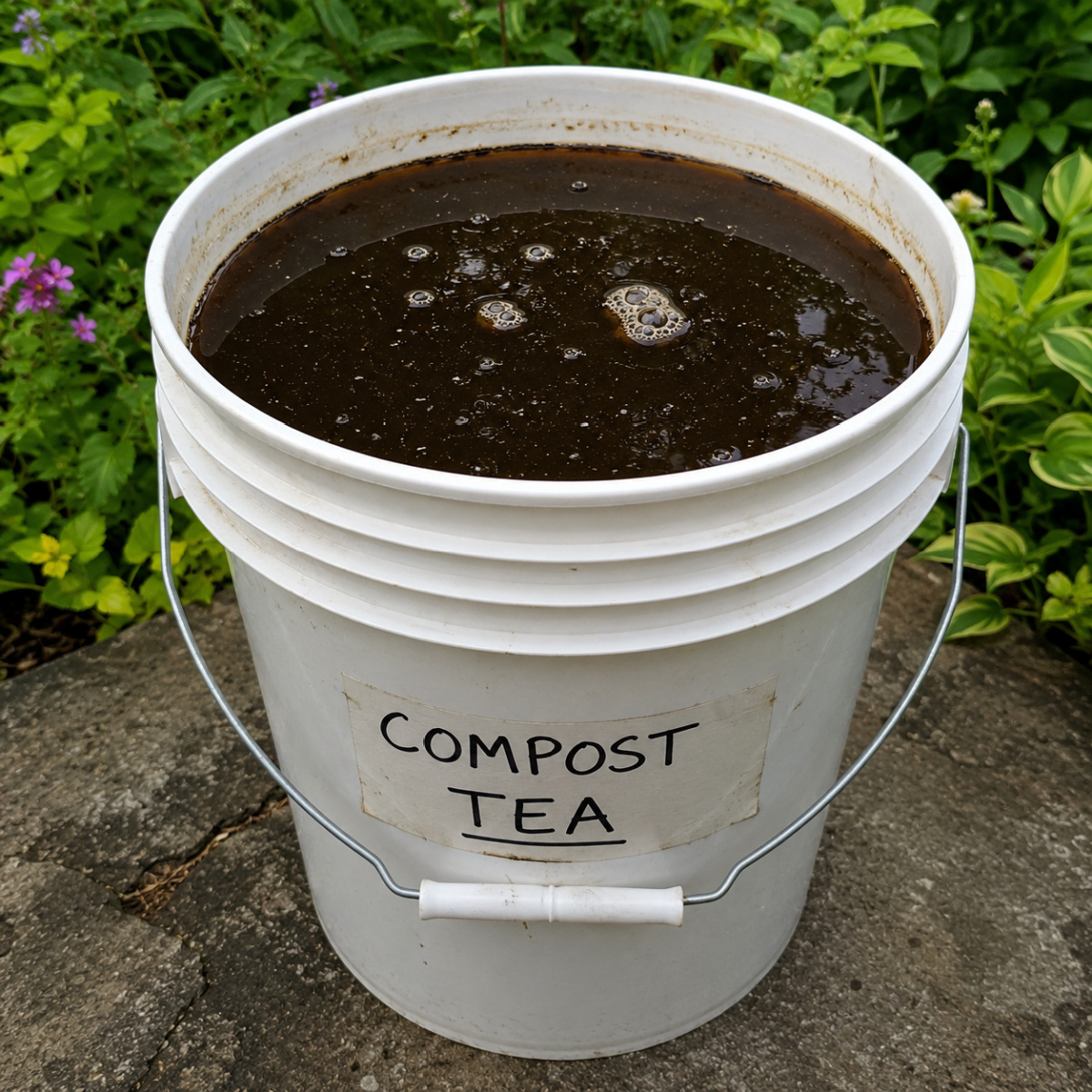
That combination allows plants to receive a quick and balanced source of natural nutrition. Whether you are growing tomatoes, peppers, annual flowers, hanging baskets or landscape plants, compost tea can help keep them healthy and productive throughout the growing season.
The Best & Easiest Way To Make Homemade Compost Tea
Why Compost Tea Works So Well
The secret behind compost tea is the compost itself. Finished compost is packed with nutrients that plants need to grow strong roots, produce lush foliage, and create flowers and fruit. As organic materials slowly decompose, they break down into a rich, dark, earthy material often referred to by gardeners as “Black Gold.”
Inside that finished compost is an incredible mix of nutrients. Nitrogen, phosphorus and potassium are all present, along with calcium, magnesium, sulfate and many other important elements plants rely on throughout the season.
That rich blend of nutrients is exactly why compost is so valuable when added to planting holes, garden beds, containers and flower beds. But something amazing happens when compost is soaked in water.
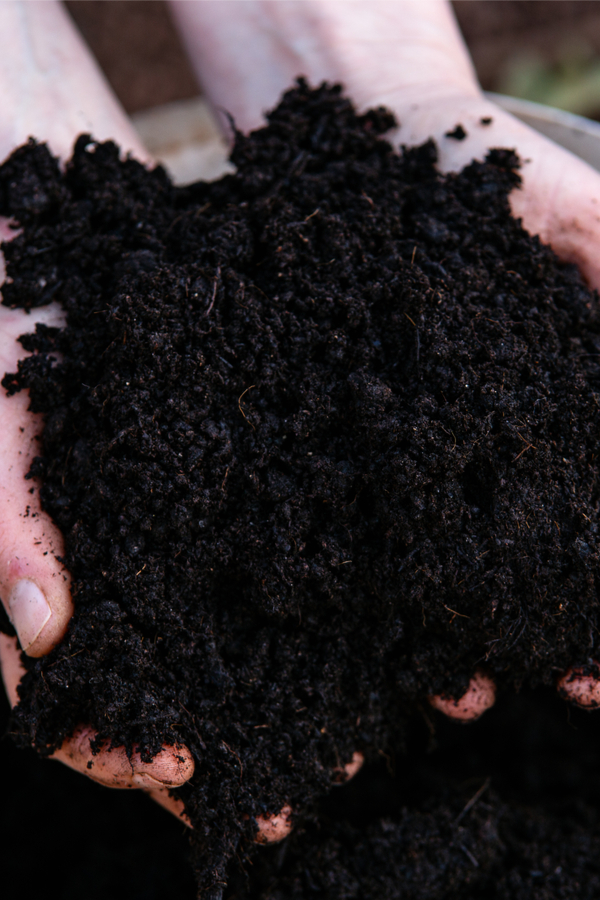
As the compost sits, those nutrients slowly move into the water. The result is a liquid fertilizer filled with balanced, easy-to-absorb nutrition that plants can use almost immediately.
Making Compost Tea Couldn’t Be Easier
One of the best parts about making compost tea is that it doesn’t require expensive equipment. There are countless methods available online, many of which call for elaborate aerating systems and specialized pumps. While those systems certainly can be used, they simply are not necessary to create an effective homemade fertilizer.
We have been making compost tea for well over twelve years using nothing more than a bucket, water, compost, a stirring stick and a simple strainer. Year after year, it continues to produce outstanding results throughout our gardens and landscape.
One of the biggest misconceptions about compost tea is that it requires complicated brewing equipment. The truth is, making a powerful batch is remarkably straightforward.
For our method, all you need is:
- A clean 5-gallon bucket
- Finished compost
- Fresh water
- A sturdy stick for stirring
- A mesh strainer or screen
The Simple Steps To Success
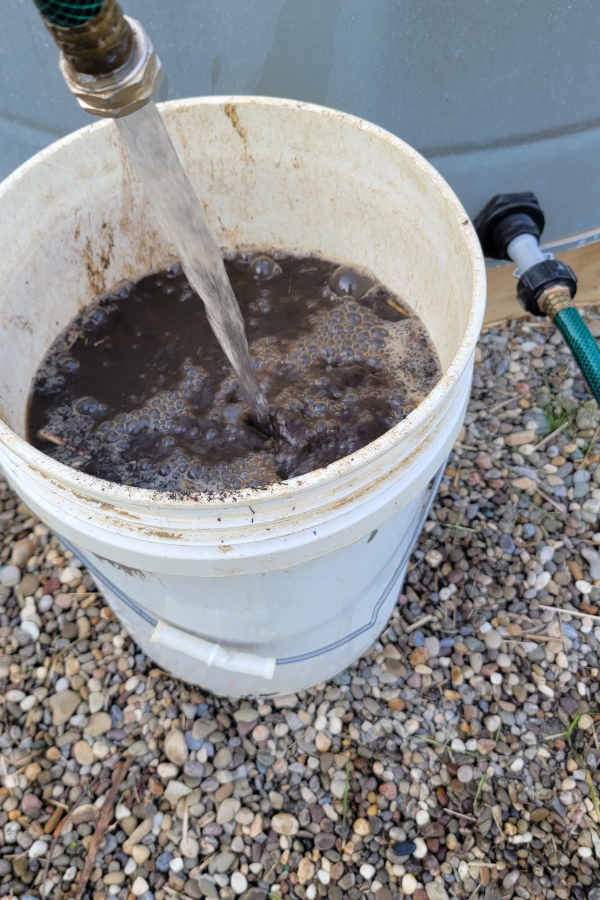
Begin by filling a clean five-gallon bucket about one-third full with compost. The quality of your compost makes a difference. Fully finished compost works best because the nutrients have completely broken down and dissolve into the water much more readily.
If you don’t have your own compost pile, commercially bagged compost will work as well. Just be sure it is pure, fully aged compost without additional ingredients mixed into it. Using mature compost gives you the richest supply of nutrients and creates a stronger finished tea.
Choosing The Right Water
Once the compost is in the bucket, fill the remainder of the bucket with water until it is within about an inch of the top. The type of water you use is important.
Well water is an excellent choice. Distilled water also works very well. Rainwater is another outstanding option if you collect it. We have used rainwater from our collection tanks for years and have always been pleased with the results.
Treated municipal water, however, is not the best choice. Chlorine and other treatment chemicals can interfere with the natural balance of nutrients in the compost tea. Water that has passed through a water softener should also be avoided for the same reason.
Listen To Our Latest Podcast Below


Stirring Is The Secret With Homemade Compost Tea
After combining the compost and water, stir the mixture thoroughly for several minutes. This initial stirring begins releasing nutrients from the compost into the water. It works much like dipping a tea bag into hot water. The more movement you create, the more nutrients are encouraged to enter the liquid.
Once the mixture has been stirred, simply let it sit. Over the next five days, stir the bucket once or twice each day. Every time you stir, more nutrients continue to work their way into the water. Simply Soak & Wait
Although some gardeners choose to install pumps or bubbling systems to keep the water moving, we have tested both methods many times over the years. After comparing the results, we have never noticed one batch performing better than another.
Because of that, we continue to use the simple soaking and stirring method. It is easier, less messy, and consistently creates an excellent fertilizer.
We have compared aerated batches to those made using nothing more than regular stirring, and both produced equally effective fertilizer. For us, the simpler approach has always made the most sense. After five full days, your compost tea is ready.

Strain & Save
Once the brewing period is complete, strain the liquid through a mesh screen or kitchen strainer. The remaining compost shouldn’t be thrown away. Simply return it to your compost pile where it can continue breaking down and eventually be used again. The strained liquid is now your finished compost tea.
If you aren’t using it immediately, store it in a sealed container out of direct sunlight. Keeping the container covered helps preserve nutrients while reducing evaporation. Properly stored, compost tea can last for several months.
That said, ours rarely sits around very long because we use it throughout the growing season on nearly everything we grow.
The Best Time To Apply Homemade Compost Tea
Whenever you use compost tea, timing matters. Just as with watering, it is always best to apply it early in the morning or later in the evening.
Applying fertilizer during the hottest part of the day can allow the combination of moisture and intense sunlight to scorch plant foliage. Cooler morning or evening temperatures help plants absorb nutrients more effectively while avoiding unnecessary stress.
Whenever possible, allow both the soil and the leaves to receive a light coating of compost tea. This lets plants benefit from nutrient absorption through both their roots and their foliage.
Here’s to making your own compost tea this season and giving your plants the natural boost they deserve. Happy Gardening! Jim and Mary.
The Farm At Old World Garden
Jim and Mary Competti have been writing gardening, DIY and recipe articles and books for over 16 years from their 46 acre Ohio farm. The two are frequent speakers on all things gardening and love to travel in their spare time.
As always, feel free to email us at thefarm@owgarden.com with comments, questions, or to simply say hello! You can sign up for our free email list in the subscribe now box in the middle of this article. Follow us on Facebook here : OWG Facebook. This article may contain affiliate links.