
Looking for the secret to fertilizing your tomatoes so they stay healthy, grow strong, and most importantly – produce a bigger harvest of ripe, juicy tomatoes all summer long?
Tomato plants are heavy feeders that require a steady supply of nutrients to grow, bloom, and produce fruit. As they grow, they quickly use up the nutrients in the soil, often leaving themselves short on the energy needed to keep flowering and producing as summer arrives.
The good news is that the right fertilizer can easily replenish those nutrients and give your plants the boost they need to thrive. Even better, using the right fertilizer, at the right time, and in the right way can lead to healthier plants and a much larger harvest.
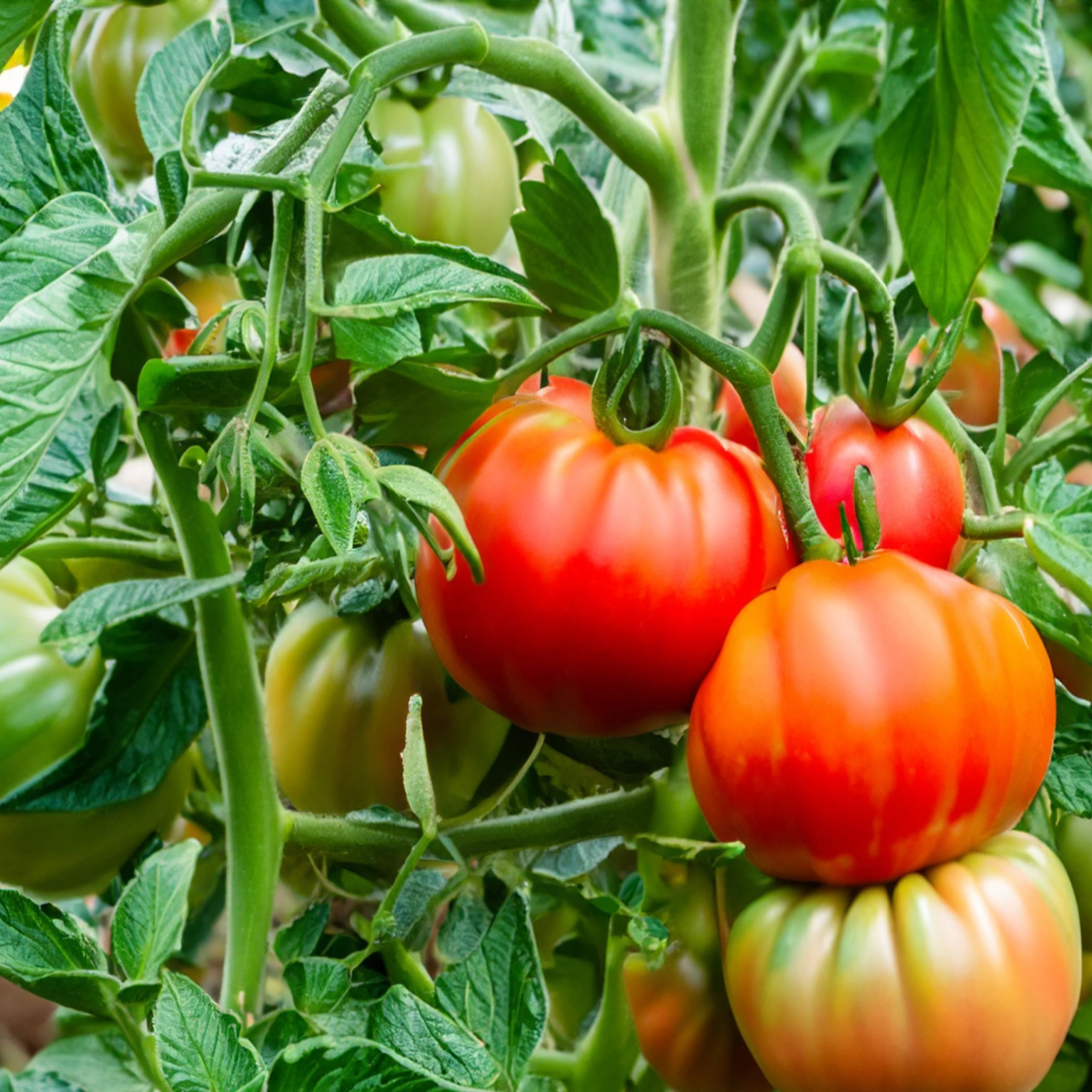
The Secret To Fertilizing Tomatoes
Why Liquid Fertilizers Work Best For Tomato Plants
So what is the best kind of fertilizer for tomato plants? And when and how should it be applied? Well that is exactly what today’s article is all about. And it all starts with knowing why liquid fertilizers are the way to go when it comes to powering tomato plants to your best harvest ever!
There are two main types of fertilizers – granular and liquid. They both certainly have their place in powering vegetable crops, but when it comes to tomato plants, the best choice of all is liquid. Why? Because liquid fertilizers work fast – and they can give tomato plant’s the exact energy they need right when they need it.
Granular fertilizers are known as a slow release fertilizer. When the small grains are placed around the base of plants, they slowly release their energy as they break down into the soil.
Granular fertilizers can feed for a long time, but they take longer to arrive. They can also be hard to regulate as far as how much power is getting to the plant and when. Once you put the granules down, how and where they leach to all depends on how they soak into the soil.

Because tomato plants are heavy feeders, they need a consistent dose of power. And they need that dose to have a fair amount of energy. As it turns out, liquid fertilizers are perfect for delivering exactly that!
The Secret Of Fertilizing With Liquid To Get More Tomatoes
Liquid fertilizers work fast. They not only absorb through the roots of a tomato plant, but also its foliage. When tomato plants are watered with a liquid fertilizer, the liquid is absorbed into the plant quickly as the water-based fertilizer soaks immediately down into the roots.
At the same time, the liquid fertilizer is also soaking into the foliage of the plant. And this provides it with fast energy as it does. There is no waiting for granules to break down. The feeding is instantaneous – and the plant can process and use the energy right away.
Last but not least, with liquid fertilizers, you can control exactly how strong of a nutrient mix you give to your plants with each dose – and as you will see in the next section – that is a huge plus for powering your plants perfectly to produce a bigger crop!
Listen To Our Podcast Below On Fertilizing Tomato Plants!
The Right Formula For Feeding Tomato Plants
Tomato plants require a long list of micro nutrients in smaller amounts. But when it comes to getting a dose of the big three powerhouse nutrients (nitrogen, phosphorous and potassium), the amount they get of each matters the most. Especially when it comes to getting your plants to produce more tomatoes!’
Tomato plants need nitrogen to grow healthy stems and foliage. But too much of it will cause plants to produce leaves instead of blossoms and fruit. That’s why high-nitrogen fertilizers are a poor choice for tomatoes.
For strong flowering and fruit production, tomatoes need much more phosphorus and potassium. Phosphorus is especially important because it encourages healthy root growth. It also improves nutrient and water uptake, and helps plants produce and ripen more fruit.
Potassium is just as valuable for keeping plants healthy and vigorous. It also helps tomatoes develop the natural sugars. Sugars that give them their rich, sweet flavor while aiding the ripening process on the vine.
For the best results, choose a liquid fertilizer with significantly more phosphorus and potassium than nitrogen. Ideally, look for one that contains at least twice as much phosphorus and potassium as nitrogen.
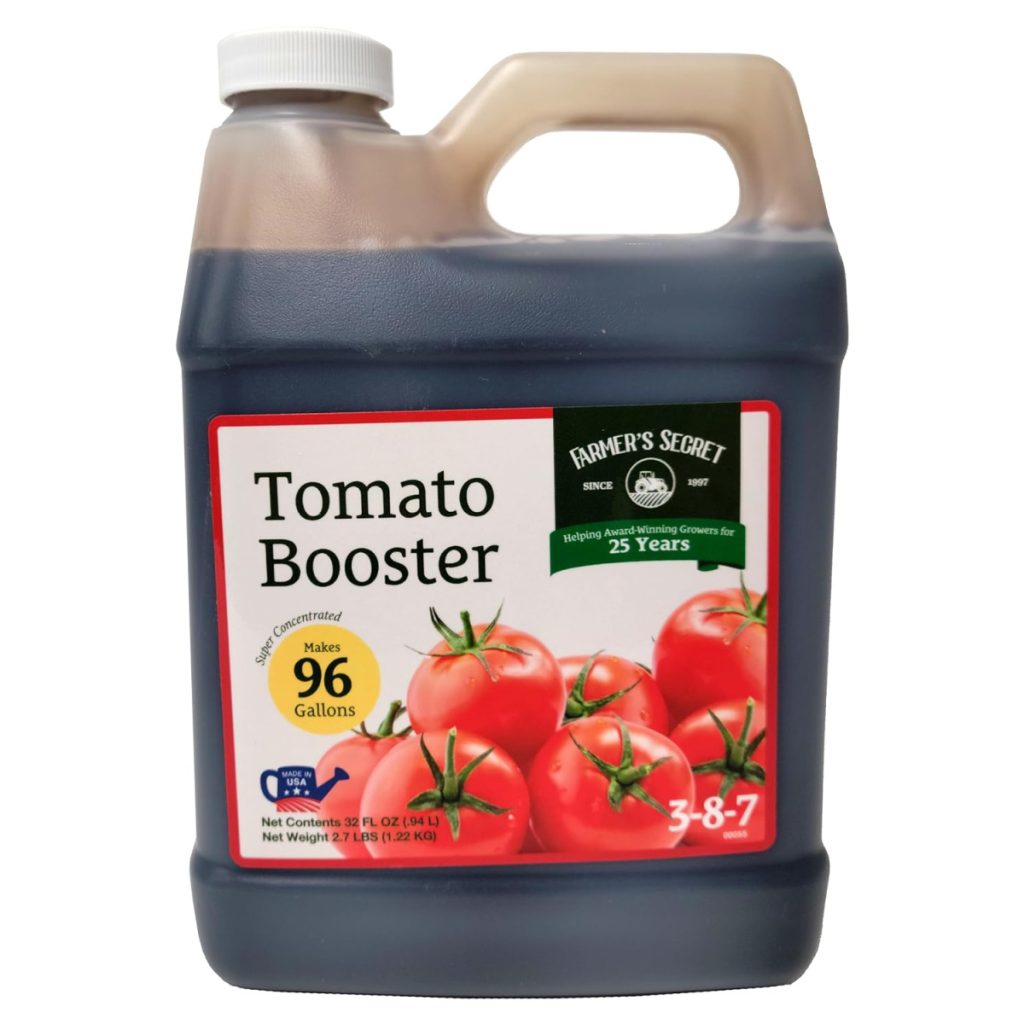
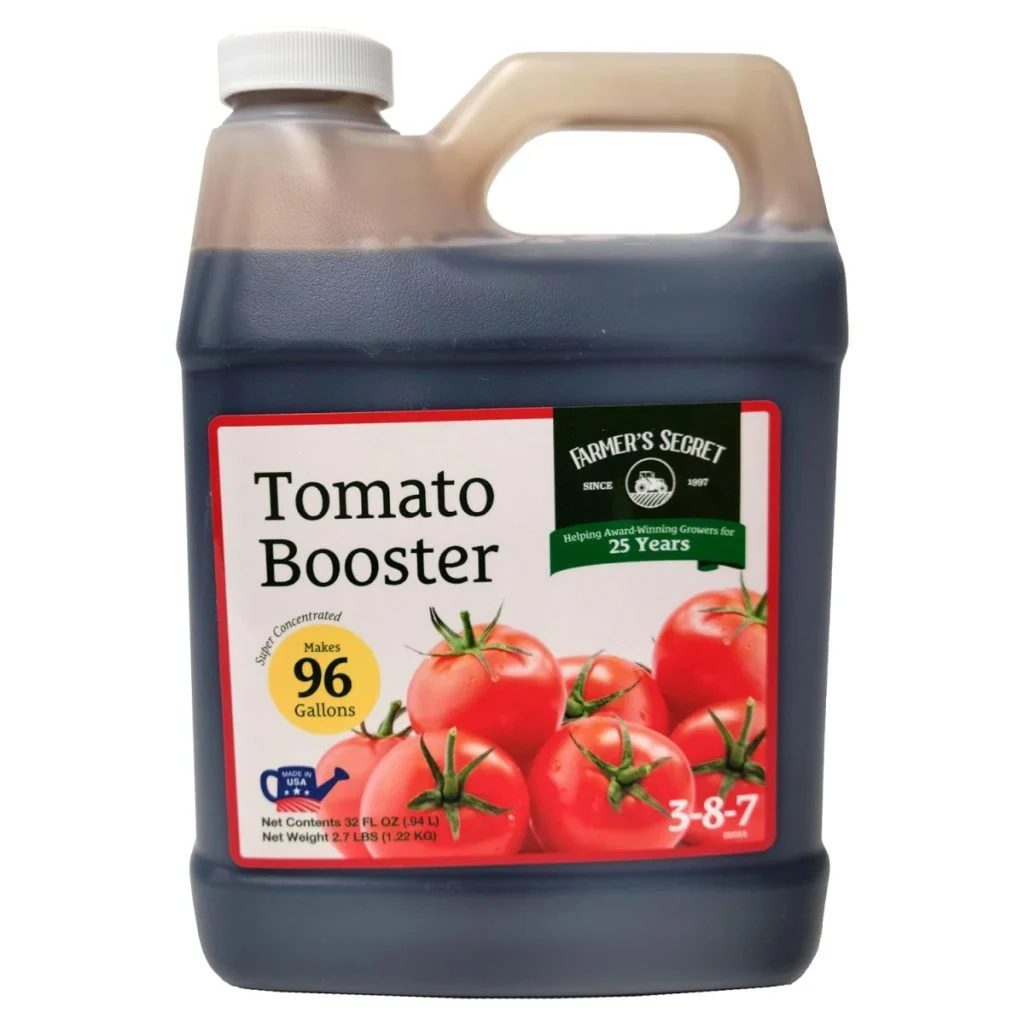
There are actually quite a few excellent liquid fertilizers that are specifically designed for tomatoes. In addition to having the right ratio of phosphorous and potassium to nitrogen, they also contain calcium and other important trace nutrients tomatoes need. Affiliate Product Link: Farmer’s Secret Tomato Booster Fertilizer (32oz) – Super Concentrated
The Final Secret – Fertilizing Tomatoes With The Right Dose
But here is the really important part: instead of giving them big doses of fertilizer once a month – it’s far better to give them lighter doses more often – as in every ten to fourteen days.
This keeps the feeding to your tomato plants consistent. And that consistent feeding will help them to always have what they need right when they need it. But most importantly, without the worry of overpowering them and hurting production.
Here is to feeding your tomato plants this year with the power of liquid fertilizer! Happy Gardening – Jim & Mary.
The Farm @ Old World Garden
Jim and Mary Competti have been writing gardening, DIY and recipe articles and books for over 16 years from their 46 acre Ohio farm. The two are frequent speakers on all things gardening and love to travel in their spare time.
As always, feel free to email us at thefarm@owgarden.com with comments, questions, or to simply say hello! You can sign up for our free email list in the subscribe now box in the middle of this article. Follow us on Facebook here : OWG Facebook. This article may contain affiliate links.