
Wondering if you need to cut back any of the perennials dying back in your flowerbeds this October?
By October, many of the perennials that filled your flowerbeds with color have started to look a little rough. Hosta leaves are turning yellow, daylily foliage is collapsing, and once beautiful flower stalks are now covered with dried blooms and fading leaves.
But those tired plants can still use a little attention before winter arrives. For certain perennials, cutting back dead foliage helps remove places where pests and plant diseases can spend the winter. It also keeps matted leaves from piling up around plant crowns and makes spring cleanup far easier.
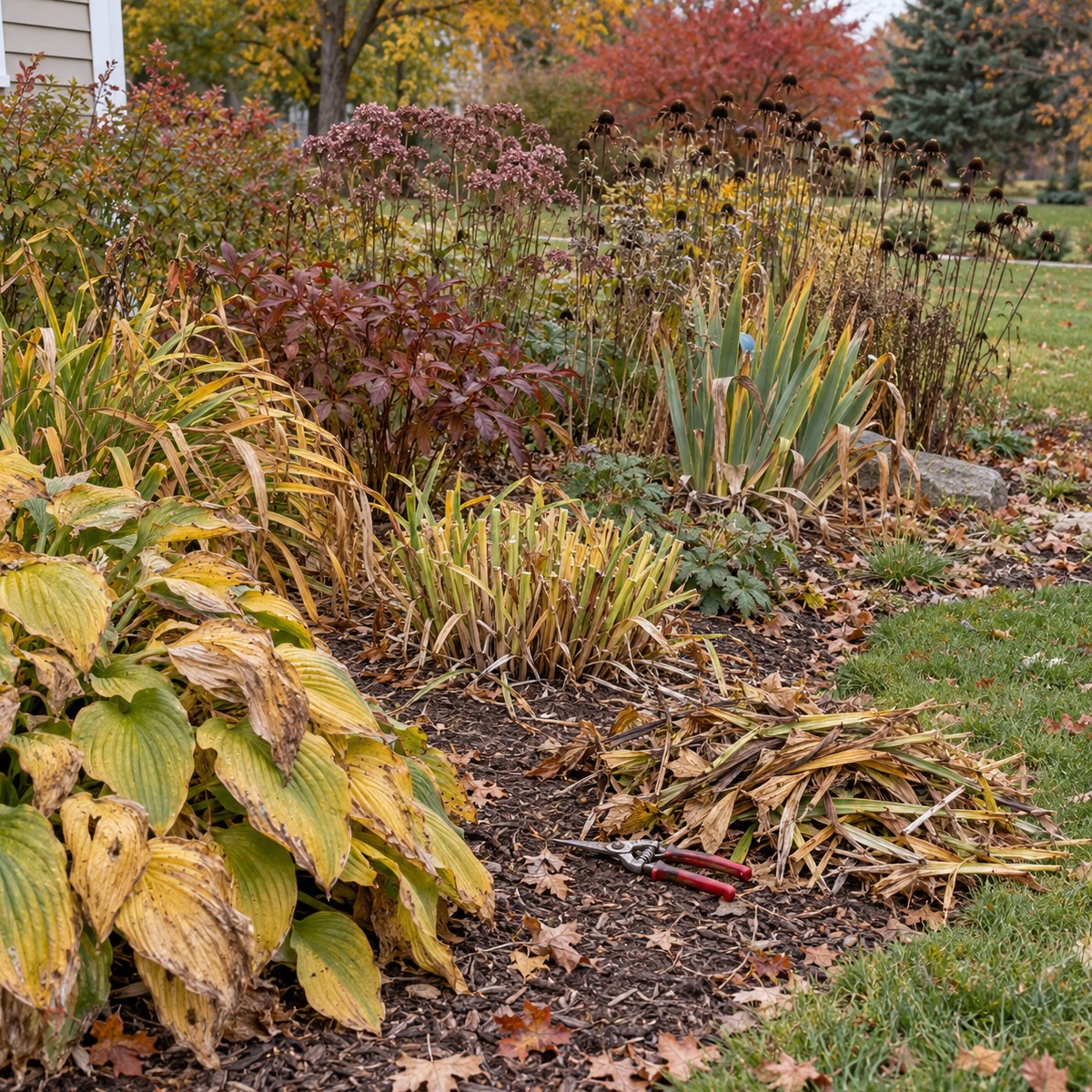
The secret is knowing which plants to cut back – and when. Healthy green foliage is still helping plants store energy for next year. And some perennials, including coneflowers and black-eyed Susans, have seed heads that provide valuable winter food for birds.
With that in mind, here are seven perennials to check this October, why cutting them back can help, and how to handle each without taking away what it still needs!
7 Perennials You Should Cut Back In October
Cutting Back Hostas
Hostas can look downright worn out by October. Between slug damage, summer heat and the arrival of cooler weather, their once lush leaves often turn into a collection of yellow, brown and tattered foliage.
Once those leaves have yellowed or collapsed after frost, it is a good time to cut them back. Leaving a thick layer of dead hosta leaves around the crown creates damp shelter for slugs and can leave slug eggs tucked into debris through winter.
Use sharp pruners or garden shears to trim the leaf stalks about an inch or two above the ground. Remove old flower stalks as well, taking care not to cut into the crown where next spring’s shoots will emerge.
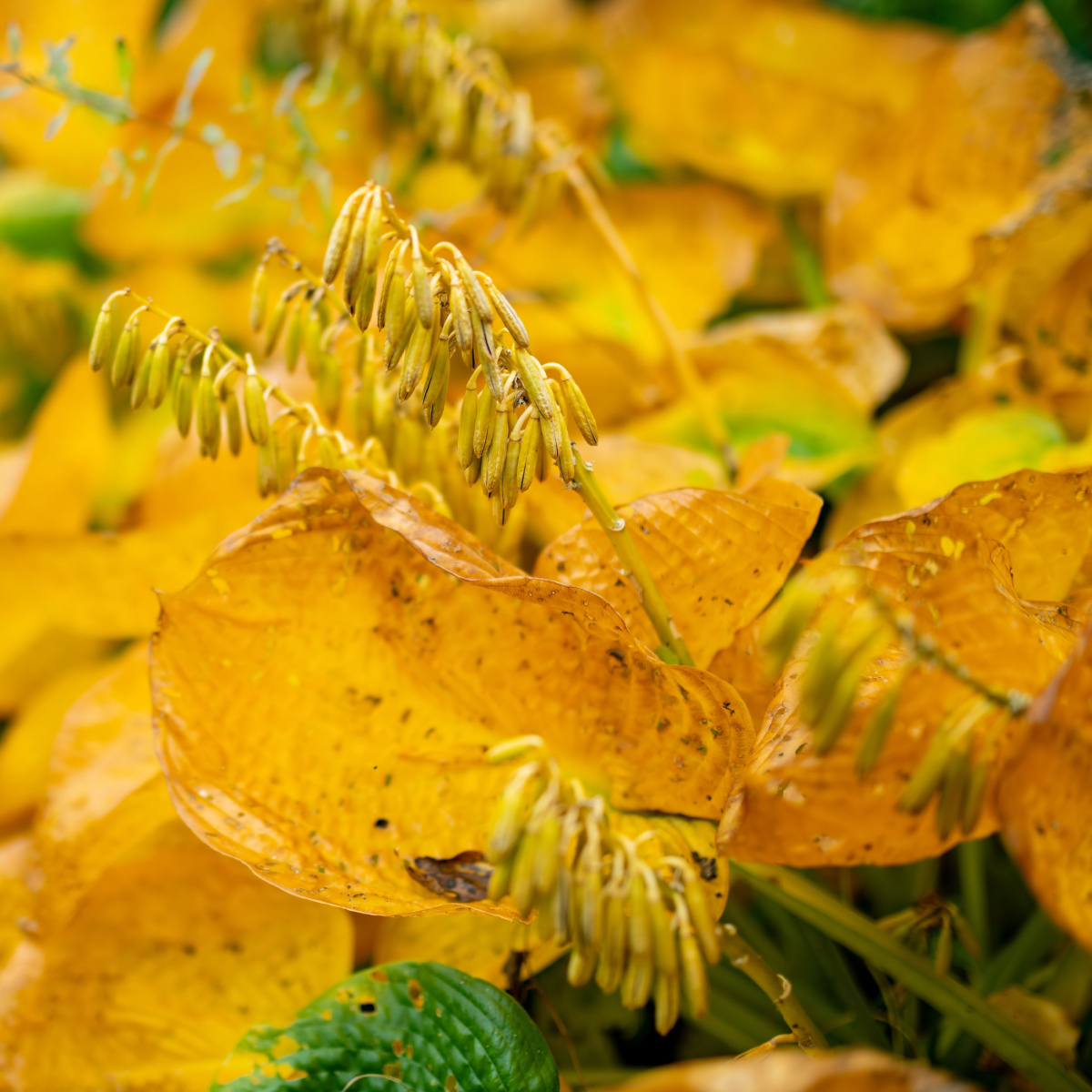
Gather the loose leaves surrounding the plant instead of leaving them in a soggy pile. Healthy foliage can go into the compost pile, but discard leaves showing signs of disease. If your hostas are still green and growing, give them more time before doing a complete cutback.
Daylily Care In October
Daylilies are tough plants, but their foliage rarely looks its best by late fall. Long leaves bend over, brown tips spread, and old flower stalks stand above the clumps long after blooming has ended.
October cleanup helps remove that tangled growth before it becomes a wet mat over winter. It also gives you a better view of the plant’s base, making it easier to remove weeds hiding between the leaves.
Once the foliage has mostly yellowed or browned, cut it back to about three to four inches above the soil. Clip off the spent flower stalks near their base and collect loose dead leaves around the clump.
Avoid pulling hard on foliage that is still attached. Cutting is safer than tugging and potentially disturbing the crown. In warmer areas, some daylilies remain green well beyond October. Leave that healthy foliage in place and remove only the dead portions until the plant naturally slows down.
Black-Eyed Susans
Black-eyed Susans can keep flowerbeds colorful well into fall, but by October, their leaves may be spotted, their stems may be leaning, and their flowers may have turned into dark seed heads.


If the foliage has significant leaf spot or other disease symptoms, fall cleanup is a smart move. Removing affected leaves and stems reduces the amount of infected material left behind around the plants.
Cut declining stems a few inches above the soil and collect fallen leaves underneath. Discard diseased material rather than putting it into a home compost pile that may never get hot enough to destroy the pathogens.
As for the seed heads that birds love – when you cut back your plants, leave the seed heads out somewhere where birds can still get to them. It’s a win – win for you and for the birds!
Coneflowers
By October, coneflowers often have faded flowers, browning leaves and stems that are beginning to lean or fall over. If you prefer a tidy flowerbed, cutting that tired growth back is a better option than leaving it sprawled across neighboring plants and pathways. Removing diseased foliage also helps reduce infected debris around the plants, although healthy coneflowers can safely remain standing through winter.
Wait until the foliage has died back, then use sharp pruners to cut the old flower stalks a few inches above the soil. Be careful to leave any healthy green leaves growing near the base. Gather fallen leaves and stems as you work, and discard diseased material rather than adding it to your home compost pile.
But as with Black-eyed Susans, before you clean everything up, save the healthy, dried seed heads! Coneflower seeds provide food for goldfinches and other seed-eating birds during fall and winter. Cutting back the plants does not have to mean throwing away that valuable food source.
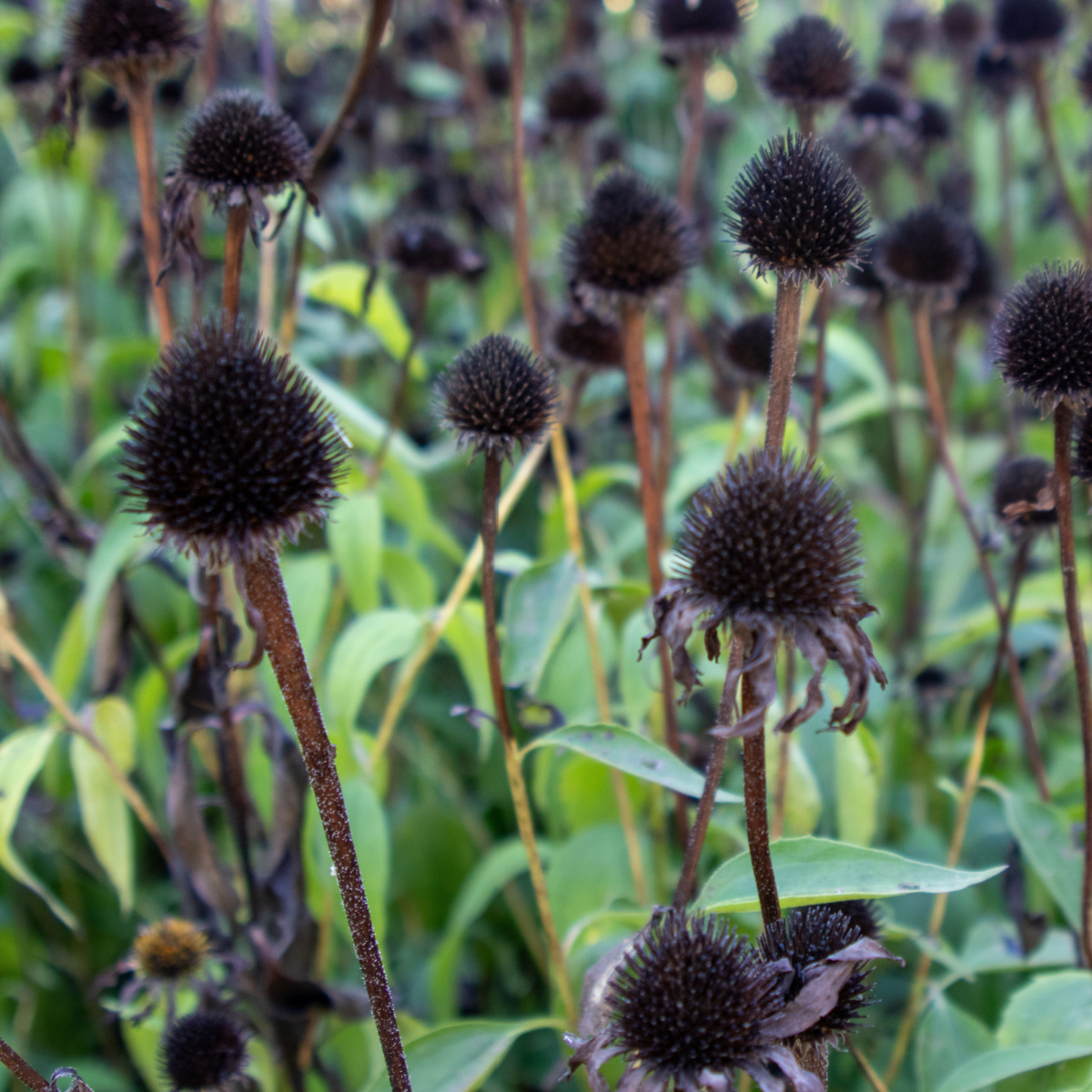
Keep a length of stem attached to each seed head and loosely secure the stems upright to a fence or trellis near the flowerbed. Choose an open spot where birds can easily perch and reach the seeds, keeping the heads above damp ground. It is a simple way to tidy your beds while still letting birds enjoy what your coneflowers have left to offer!
Peonies
Peony bushes may finish blooming early in the growing season, but their foliage continues working for months afterward. Those leaves help the plant build the reserves it needs for next spring’s growth and flowers.
By October, however, the foliage often begins yellowing or browning. Peonies can also develop blotchy leaves and powdery mildew, making them a good candidate for cleanup once their growing season ends. See our article: What To Do With Peonies In The Fall – How To Cut Back, Divide & Transplant Peony Bushes!
Cut herbaceous peony stems about one to two inches above the ground after the foliage dies back, usually following frost. Collect the leaves and broken stems around the plant, since infected debris can carry disease problems into the following season.
Use care around the crown and avoid slicing into the buds, or “eyes,” near the soil surface. Also, make sure you know which type of peony you have. This ground-level cleanup applies to herbaceous peonies. Tree peonies have permanent woody stems that should remain in place through winter.

Tall Garden Phlox – Perennials You Should Cut Back In October
Tall garden phlox produces beautiful summer flowers, but its foliage can become less attractive as the season progresses. Powdery mildew is a common problem, leaving leaves covered with a dusty white coating.
When affected foliage remains in the bed, it leaves infected plant material behind. Cutting back phlox after it finishes growing is a useful part of managing recurring disease problems.
Once the stems and leaves have died back, trim them to about two to three inches above the soil. Gather fallen leaves beneath the plants as well. Removing only the upright stalks while leaving diseased foliage scattered around the crown misses much of the benefit.
Bearded Irises
Bearded irises are another perennial where removing dead foliage can be especially helpful. Their sword-shaped leaves often develop brown tips or spots by fall, and old leaves can accumulate around the exposed rhizomes.
That debris matters because iris borers can overwinter as eggs on old iris leaves and nearby plant material. Cleaning up dead foliage in fall helps reduce those overwintering sites.
Remove brown and dead leaves in October, along with spent flower stalks. Once the remaining foliage has died back or been killed by frost, trim it to roughly four to six inches above the ground and collect the cuttings.
A Few Final Tips For October Cutbacks
Let the condition of your plants guide your timing. October is a good cleanup month in many gardens, but plants in warmer climates may still be actively growing. Wait for natural dieback or frost before removing healthy foliage.
Use sharp tools, keep cuts above the crown, and remove diseased debris. If autumn has been dry, water when needed until the ground freezes. There is no need to fertilize simply because you have cut a plant back. Happy Gardening – Jim & Mary.
The Farm @ Old World Garden
Jim and Mary Competti have been writing gardening, DIY and recipe articles and books for over 16 years from their 46 acre Ohio farm. The two are frequent speakers on all things gardening and love to travel in their spare time.
As always, feel free to email us at thefarm@owgarden.com with comments, questions, or to simply say hello! You can sign up for our free email list in the subscribe now box in the middle of this article. Follow us on Facebook here : OWG Facebook. This article may contain affiliate links.