
Did you know that late summer is the perfect time to replant your worn out hanging baskets – and have them full of color just in time for the entire fall season!
By the time the middle of August rolls around, even the most beautiful hanging baskets can start to look a little worse for wear. After months of blooming, growing and battling the heat of summer, many annuals simply reach the end of their productive life.
Although you can sometimes revive a tired hanging basket with pruning and fertilizing, there comes a point when starting over makes a lot more sense. And the good news is that you don’t have to throw away the basket or even all of the soil inside!
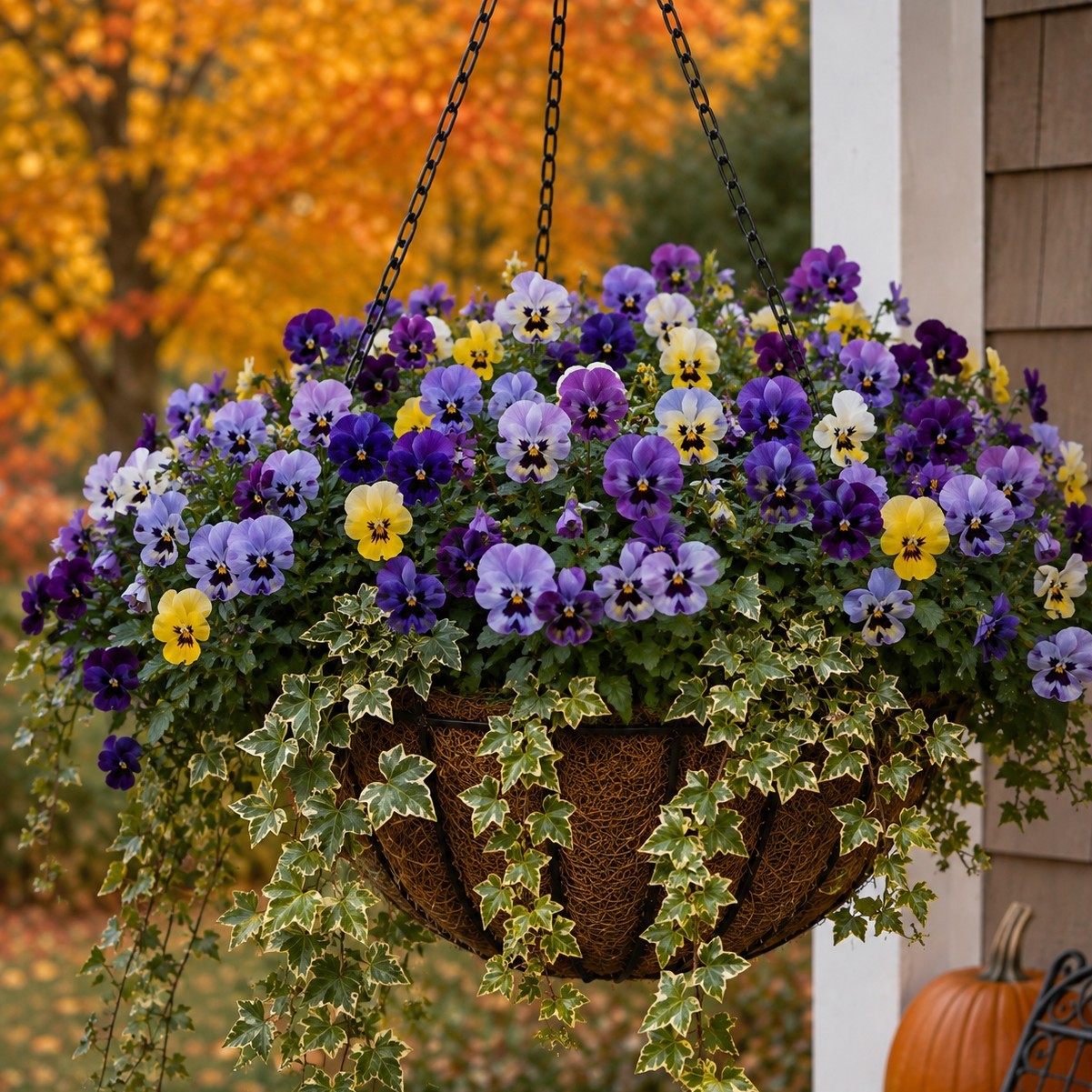
As it turns out, mid to late August is the perfect time to pull out those tired summer plants, recharge the existing soil and replant your baskets with colorful plants that thrive in the cooler temperatures of late summer and fall.
Not only is it easy to do, it can give you gorgeous hanging baskets that stay full of color right up until the first hard freeze!
How To Replant Worn-Out Hanging Baskets In Late Summer
Why Hanging Baskets Start To Fail In August
Hanging baskets have a tough life. Unlike annuals growing in flowerbeds, their roots are confined to a relatively small amount of soil. By late summer, those roots have usually filled nearly every available inch of the container. Even more importantly, months of watering have washed away much of the soil’s available nutrients.
Add in the stress of intense summer heat, strong sunlight and repeated blooming, and plants simply begin to run out of energy.
You can certainly cut plants back and give them a dose of liquid fertilizer to try to rejuvenate them. For baskets that still have healthy foliage and good root systems, this can work quite well. But when plants are mostly brown, woody, severely root bound or simply no longer producing much new growth, replacing them is often the better option.
Especially when there are so many beautiful plants available for creating an entirely new fall hanging basket!
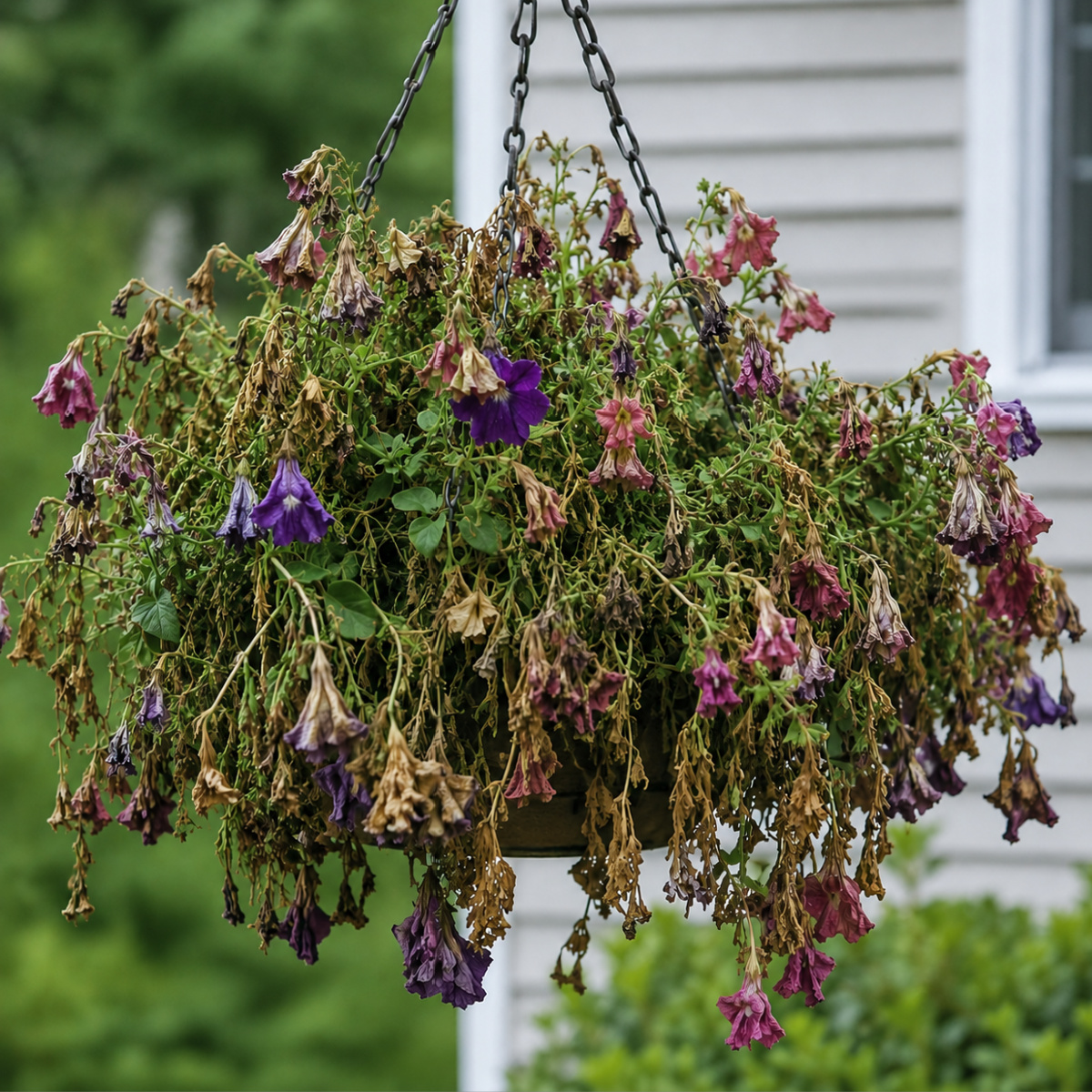
Start By Pulling Out The Old Plants
The first step to replanting a hanging basket is removing the old plants and their roots. Instead of simply cutting the plants off at soil level, pull out as much of the root system as possible. Old roots take up valuable space that your new plants will need to establish and grow.
For severely root-bound baskets, you may find that the entire root ball comes out in one large mass. If this happens, gently shake and work the old potting soil away from the roots.
You don’t have to save every bit of soil, but there is usually plenty that can be reused. Once the plants are removed, use your hands or a small garden trowel to loosen the remaining soil. Break apart any compacted areas and remove large roots, stems or other plant debris.
This is also a great time to inspect the basket. Make sure the drainage holes are open and working properly. Good drainage becomes especially important as temperatures cool and the soil begins to dry out more slowly.
How To Recharge Worn Out Hanging Basket Soil Before You Replant
Although you can reuse much of the existing soil, you don’t want to simply plant directly back into it without first giving it a boost.
After supporting plants all spring and summer, old potting soil is usually low on nutrients. It can also become compacted and less capable of holding the right balance of air and moisture around roots. Two of the best ingredients for bringing it back to life are compost and worm castings.
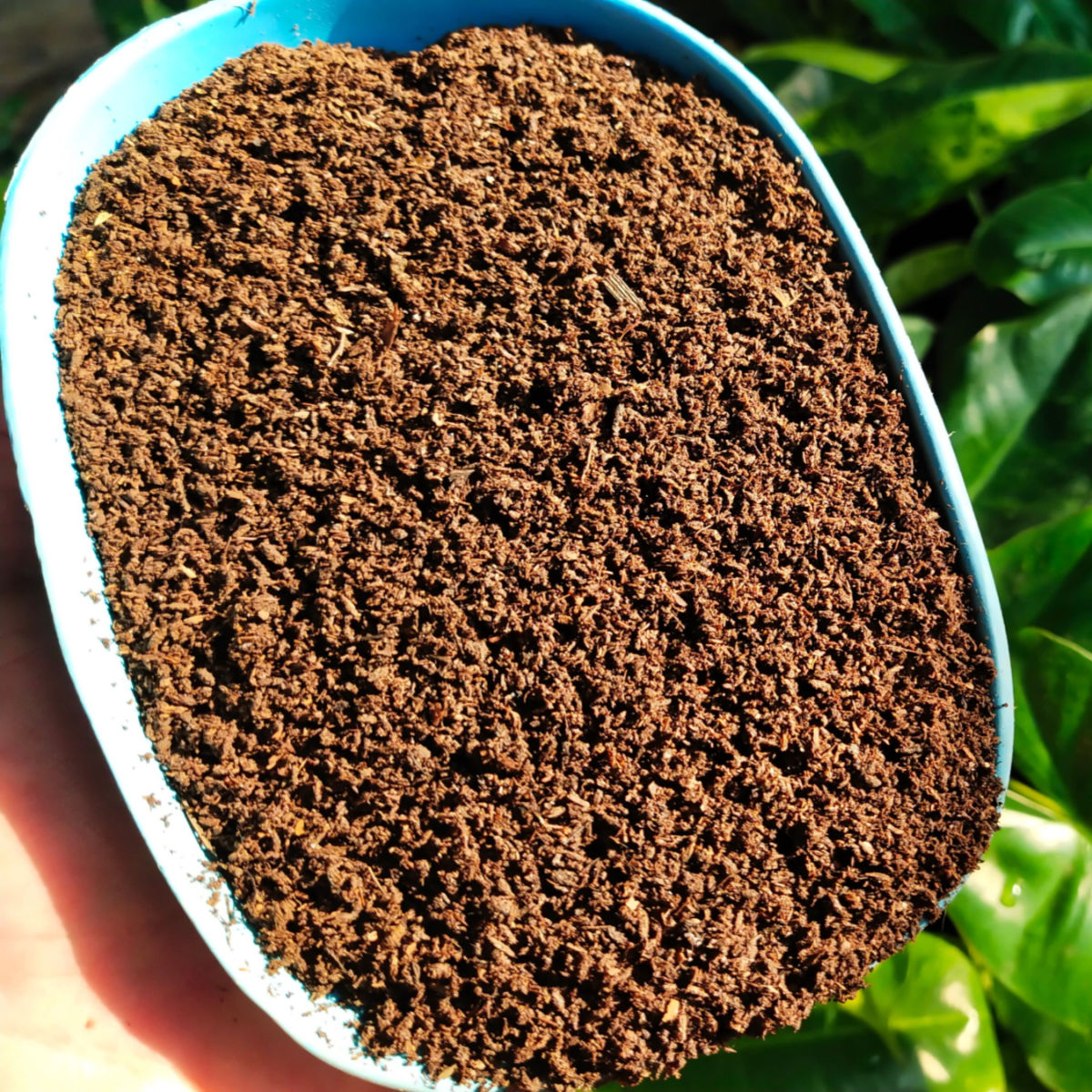
Begin by removing roughly one-third of the old soil from the basket. Next, add fresh compost to replace much of what you removed. Compost helps loosen tired soil while adding organic matter and a fresh supply of nutrients. It also improves the soil’s ability to retain moisture without becoming overly soggy.
Next, add worm castings. For an average hanging basket, a half cup to one cup of worm castings is usually plenty. Affiliate link: Worm Bliss (8 Qts) – Organic Worm Castings
Worm castings contain a gentle supply of nutrients that are easy for plants to absorb. Even better, they won’t overpower or burn tender new roots. Mix the compost, castings and existing potting soil together thoroughly before planting.
If the mixture still feels heavy or compacted, adding some fresh potting soil can help lighten it even more. With that, your old hanging basket soil is ready to grow again!
The Best Plants For Fall Hanging Baskets
The real fun begins when it’s time to choose your new plants. For fall baskets, look for plants that perform well as daytime and nighttime temperatures begin to cool. You also want plants with interesting foliage, flowers or both.
Mums are certainly one of the most obvious choices. Their dense growth and huge display of blooms make them perfect for creating instant fall color.
Listen In Below To Our Latest Podcast


Smaller mums work particularly well in hanging baskets. You can plant a single mum in the center and surround it with contrasting foliage plants, or combine several smaller mums together for a massive display of flowers.
Asters are another wonderful choice. Their daisy-like flowers come in beautiful shades of purple, blue, pink and white. Better yet, asters are a favorite of bees and other late-season pollinators. Coleus is excellent for adding foliage color. Its leaves come in incredible combinations of burgundy, red, pink, green, yellow and orange.
Even More Great Fall Plants
Pansies and violas are excellent choices for hanging baskets, especially as temperatures begin to drop. Unlike many summer annuals, they actually prefer cool weather. In fact, established pansies and violas can often handle light frosts and continue blooming well into autumn.
Ornamental kale and cabbage can also create a stunning fall basket. Their colorful foliage becomes even more vibrant as temperatures cool. They work particularly well as a centerpiece surrounded by trailing plants.

Plant Heavily For Instant Fall Color
When planting spring hanging baskets, you usually need to leave plenty of room for plants to grow throughout the entire summer. Fall baskets are different.
Because the growing season is shorter, you can plant more heavily. Your plants don’t have four or five months to fill out the container, so tighter planting gives the basket a full, finished appearance immediately.
With just a little work in mid to late August, those tired and fading hanging baskets don’t have to head to the compost pile. Instead, pull out the old plants, recharge the soil the worn out soil and replant your hanging baskets with beautiful cool-weather plants. Before you know it, your old summer baskets will be bursting with fresh fall color – and looking better than ever! Happy Gardening – Jim & Mary.
The Farm @ Old World Garden
Jim and Mary Competti have been writing gardening, DIY and recipe articles and books for over 16 years from their 46 acre Ohio farm. The two are frequent speakers on all things gardening and love to travel in their spare time.
As always, feel free to email us at thefarm@owgarden.com with comments, questions, or to simply say hello! You can sign up for our free email list in the subscribe now box in the middle of this article. Follow us on Facebook here : OWG Facebook. This article may contain affiliate links.