The 2 Most Important Things To Do To Your Flowerbeds In November – Before Winter Arrives!
If you want fewer weeds and healthier flowerbeds next spring - there are two important things you need to be doing to your flowerbeds in November: remove the weeds and unwanted seed heads already in your beds and make sure your soil has a good protective layer of mulch before winter arrives!
By November, most flowerbeds are beginning to look a little tired. Annual flowers have faded, perennials are turning brown, and falling leaves seem to find their way into every open space.
But even though your flowers are slowing down, your flowerbeds still need attention. Especially when it comes to stopping weeds and protecting the plants that will return next year.
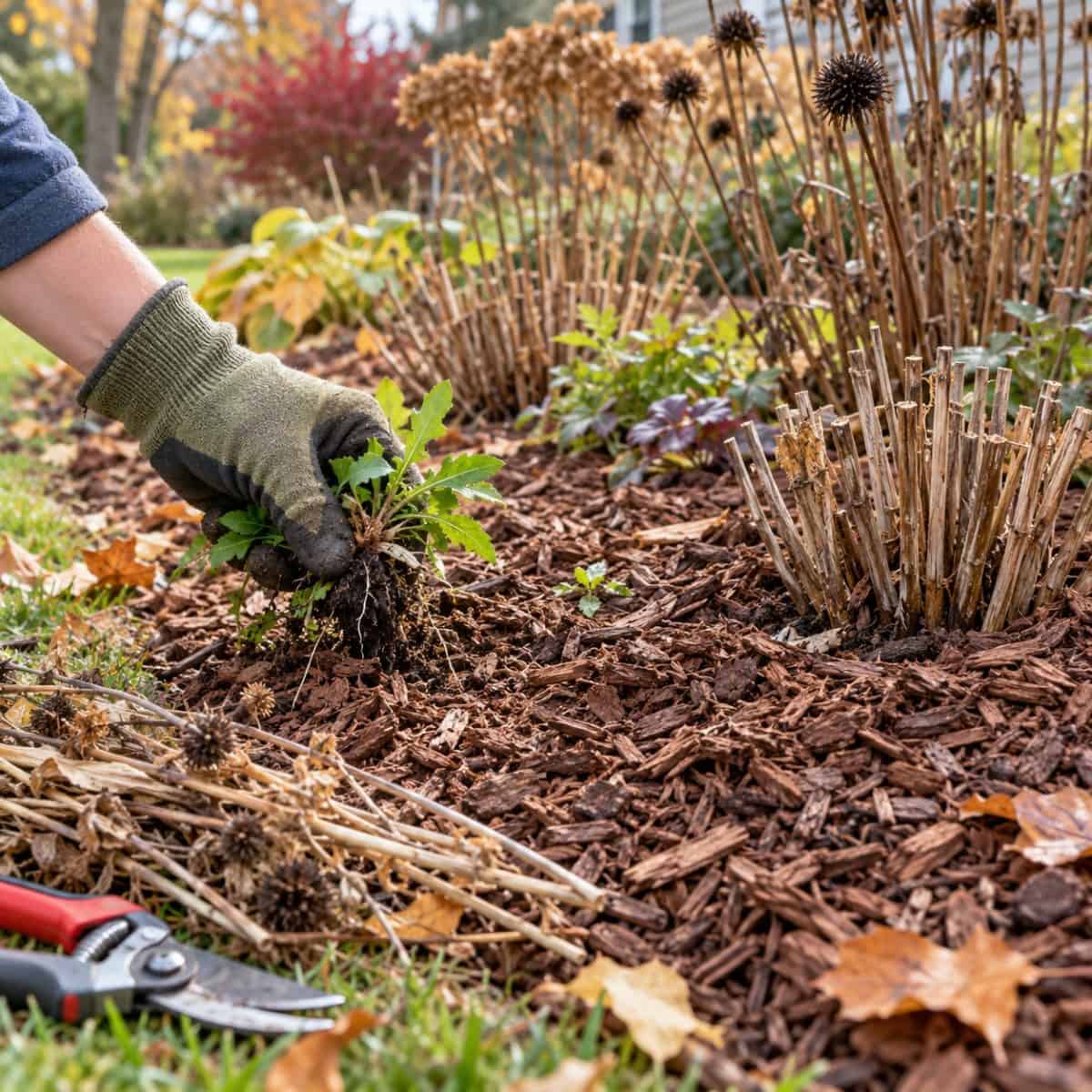
In fact, leaving beds untouched can give existing weeds more time to establish. It can also allow seed heads to scatter seeds throughout your mulch and soil, setting the stage for more work when warm weather returns.
The good news? Preparing your flowerbeds does not have to mean cutting every plant to the ground or spending an entire weekend digging and cleaning. A little careful work now can make a big difference next spring!
2 Must Do November Chores In Flowerbeds
1. Remove Existing Weeds And Cut Off Unwanted Seed Heads
The first job is getting rid of weeds that are already growing in your flowerbeds. That includes the large weeds you can easily spot, along with the small seedlings hiding beneath fading plants.
It is easy to overlook weeds in November. After all, with freezing weather on the way, it might seem as though winter will take care of them for you. Unfortunately, that is not always what happens.
Some weeds sprout in fall and survive winter as small plants. When temperatures begin to rise, they are ready to grow, flower, and produce seeds. Other perennial weeds survive below ground and return from established roots.

Removing them now takes away that head start. It also keeps you from having to work around fresh perennial growth when you clean your beds next spring.
Pull The Roots – Not Just The Tops
For small weeds, hand pulling is often the easiest option. Work when the soil is slightly moist so roots release more easily. That is usually easy to do in flowerbeds in November!
Grasp each weed near the soil line and pull slowly. Simply snapping off the leaves can leave the crown or roots behind, allowing some weeds to grow again.
For weeds with deep roots, use a narrow weeding tool to loosen the soil immediately around the plant. This is where a stand up weeding pole can be a huge help! Affiliate Link: Grampa's Weeder Original Stand Up Weed Puller Tool with Bamboo Long Handle
Some spreading weeds can regrow from root pieces left behind. Remove what you can, then watch that spot for new growth rather than assuming one pull has finished the job. Pay particular attention to bed edges, the bases of established plants, and spaces beneath overhanging foliage. Those are easy places for weeds to hide during the growing season.
Listen To Our Garden Podcast Below!

Remove Seed Heads In Your Flowerbeds In November - Before They Scatter!
While you are weeding, look for seed heads on both weeds and flowering plants. A bed can appear fairly clean while still holding plenty of seeds above the soil. Wind, rain, birds, and passing animals can move those seeds into open spaces where they may sprout later.
For a cleanup aimed at preventing reseeding, cut off the remaining seed heads before they release their seeds. This is especially helpful with plants that have spread too freely in previous years.
Use hand pruners or scissors to clip the heads directly into a bucket or bag. Avoid shaking dry stalks over the flowerbed as you work. If a seed head has already opened, some seeds may already be on the ground. Removing what remains still helps limit further spreading, but you may need to pull seedlings next season.
Removing seed heads does not mean every perennial needs to be cut to the ground. For plants you are leaving standing through winter, clip off the seed-bearing tops while keeping the remaining stems and foliage in place.
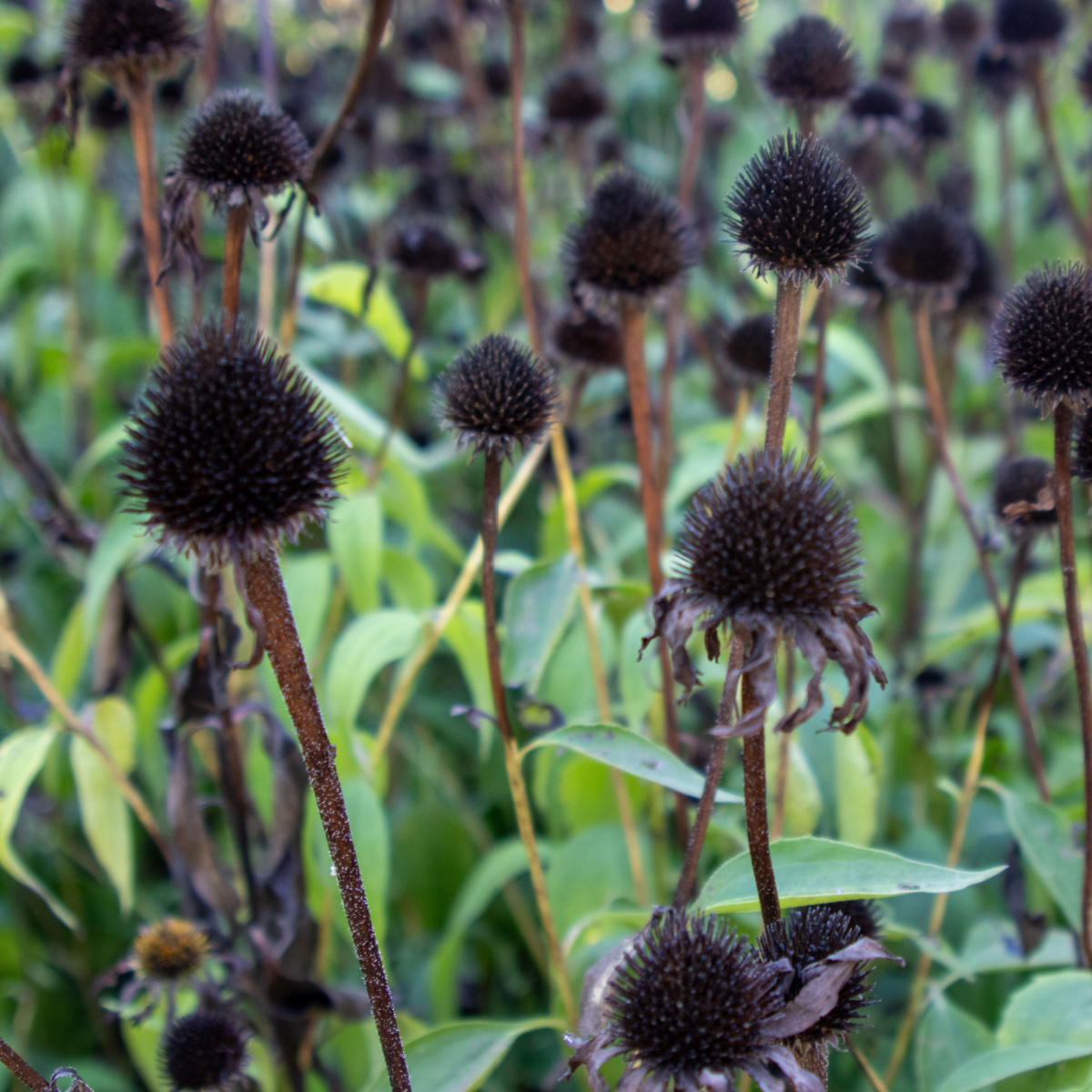
That allows you to limit unwanted seedlings while keeping the winter cover you want around the plant. If you save for wildlife - simply set out somewhere else or near bird feeders.
2. Build A Protective Layer Of Mulch Before Winter
Once weeds and unwanted seed heads are gone, the next job in November in your flowerbeds is checking your mulch level. A good layer of mulch helps protect the soil, reduces moisture loss, and limits the amount of light reaching weed seeds near the surface. See our article: Why Late Fall Is The Most Important Time To Mulch Flowerbeds - And How To Do It!
It also helps moderate changes in soil temperature. Repeated freezing and thawing can push shallow-rooted plants upward, exposing roots and leaving plants more vulnerable to winter damage.
Mulch helps reduce those swings. It will not make a tender plant winter hardy, but it can provide valuable protection for established plants suited to your climate. For open areas between plants, make sure to have four to six inches of loose organic mulch in total. The key word is total – not four to six new inches added on top of whatever is already there!
Do Not Stir Up Your Existing Mulch
One of the easiest ways to undo the benefits of mulch is to rake, turn, or cultivate the entire layer before adding more.
That disturbance can bring buried weed seeds closer to the surface. It can also mix soil into the mulch, giving incoming seeds a better place to sprout.
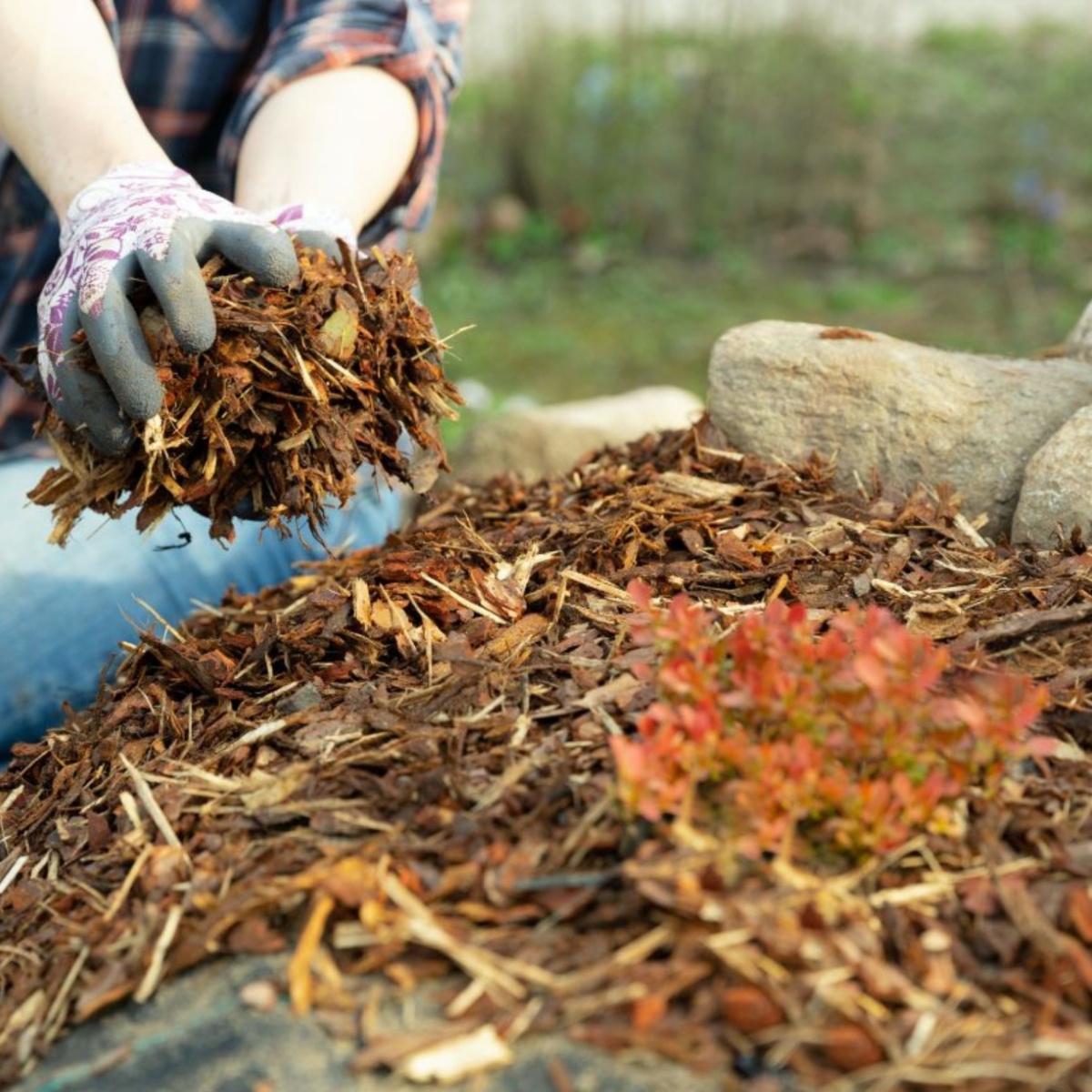
Leave the existing layer in place whenever possible. After removing weeds, add fresh mulch gently over thin areas without mixing everything together.
If you disturb a small spot while pulling a weed, smooth it back into place and cover any exposed soil. There is no need to turn over the rest of the bed.
Mulch will not stop every weed. Seeds can still land and sprout in its upper layer. But keeping the soil covered and limiting disturbance makes it easier to spot and remove those seedlings while they are small.
Keep Mulch Away From Plant Crowns
The deepest coverage belongs in the open spaces between plants. Do not bury the crowns of perennials beneath four inches of dense bark mulch. Keep mulch pulled back from the point where stems meet the soil, and leave space around shrub trunks and woody stems.
Plants that dislike wet crowns need particular care. Piling mulch over their centers can create problems instead of providing protection.
For plants that benefit from a separate winter covering, use the material and timing suited to that plant. That is different from maintaining the regular mulch layer throughout the bed.
In November, the goal in flowerbeds is to cover exposed soil while keeping the plants themselves properly positioned above it. Here is to getting your beds ready for success next year late this fall! Happy Gardening - Jim & Mary.
The Farm @ Old World Garden
Jim and Mary Competti have been writing gardening, DIY and recipe articles and books for over 16 years from their 46 acre Ohio farm. The two are frequent speakers on all things gardening and love to travel in their spare time.
As always, feel free to email us at thefarm@owgarden.com with comments, questions, or to simply say hello! You can sign up for our free email list in the subscribe now box in the middle of this article. Follow us on Facebook here : OWG Facebook. This article may contain affiliate links.