
Want to reseed all of those bare spots in your lawn this fall and have them looking perfect by next spring and summer?
Fall truly is the perfect time to repair the bare and thinning areas in your lawn. The soil is still warm, the air is cooler, and there is usually far less competition from weeds than there is in spring. Those conditions give new grass seed an ideal opportunity to sprout, establish roots and fill in before winter arrives.
But simply scattering grass seed over bare ground rarely produces good results. Seed left sitting on top of hard, exposed soil can quickly dry out, wash away during a heavy rain or become an easy meal for birds. Even when some of it germinates, the tender seedlings can struggle to survive long enough to become established.
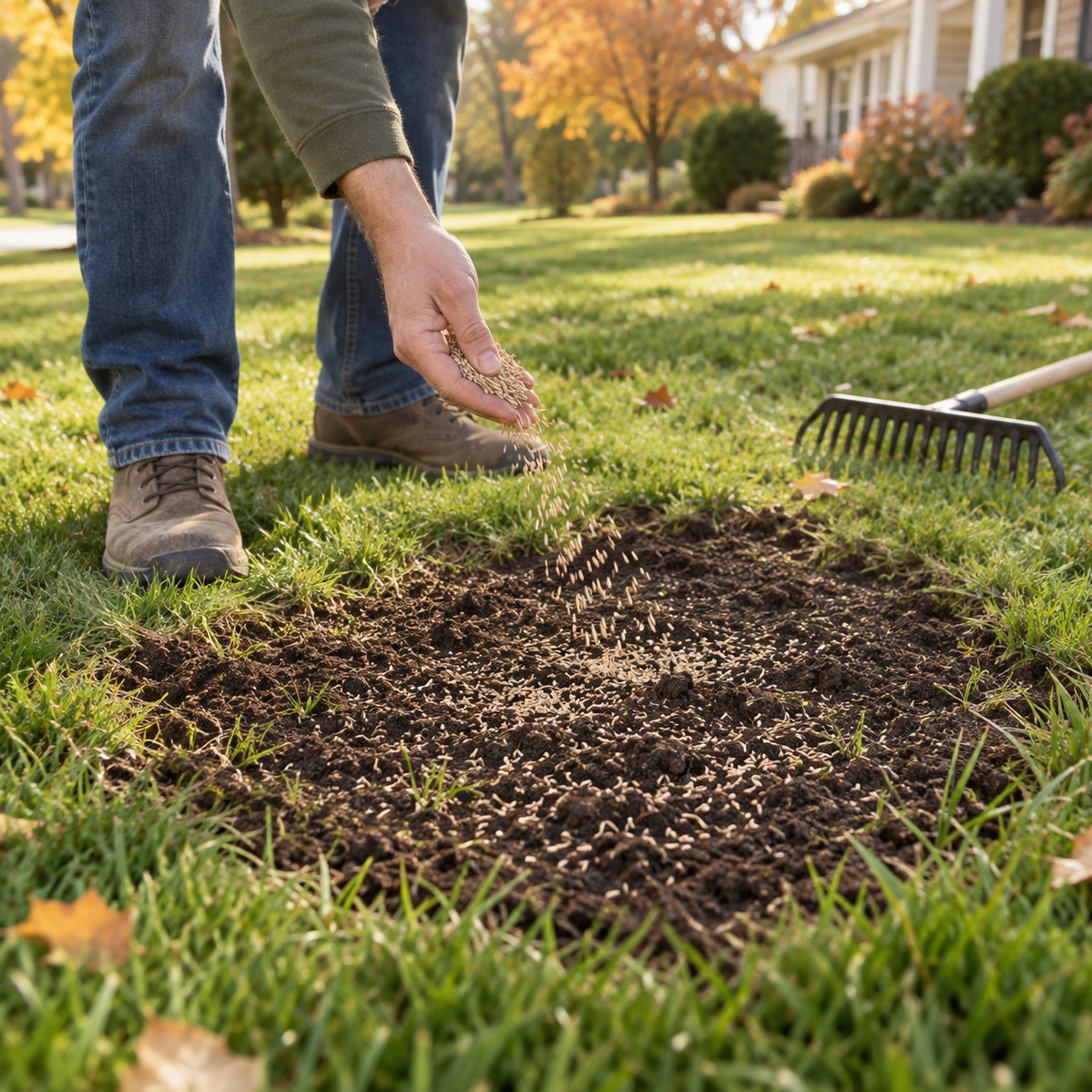
Fortunately, there is a simple way to help protect newly planted grass seed and get bare spots growing faster. The secret is to mix in a small amount of annual (cereal) rye grass seed. Annual rye grass germinates quickly, helping cover and stabilize the soil while the permanent lawn grass begins to grow.
The Best Way To Reseed Bare Spots In Your Lawn
Why Fall Is The Best Time To Reseed Bare Spots
For cool-season lawns made up of grasses such as Kentucky bluegrass, perennial ryegrass and fescue, late summer through early fall is the best time for reseeding. The combination of warm soil and cooler daytime temperatures allows seed to germinate quickly without the stress of summer heat.
Even better, many annual weeds begin to slow down as fall approaches. That means the new grass seedlings face less competition for moisture, nutrients and growing space. In spring, weed seeds often sprout right alongside lawn seed and can quickly crowd it out.
Timing is still important. Ideally, new grass should have several weeks to germinate and begin developing roots before the ground freezes. In most areas, planting four to six weeks before the first expected hard frost provides plenty of time for new growth to establish.
The goal is not to grow a perfectly thick lawn before winter. Instead, it is to give the seedlings enough time to take root. Once spring arrives, those established roots will allow the grass to green up and thicken much faster.
Preparing Bare Soil For Grass Seed
Good seed-to-soil contact is the key to successful germination. Grass seed cannot establish roots when it is lying on top of dead grass, thatch or hard-packed ground.

Begin by raking the bare area firmly to remove dead grass, loose debris, rocks and weeds. If the soil is severely compacted, loosen the top two to three inches with a garden rake or hand cultivator. There is no need to dig deeply or completely turn over the soil.
Next, spread a thin layer of compost or quality screened topsoil over the area. About one-quarter to one-half inch is usually enough. Compost is especially helpful because it improves the soil’s structure while supplying a small amount of slow-release nutrition.
Avoid piling several inches of new soil over the existing lawn. A heavy layer can smother healthy grass around the edges and create an uneven surface. The objective is simply to create a loose, fertile planting bed where the grass seed can make direct contact with the soil.
The Big Secret To Reseed Bare Spots In Your Lawn This Fall
Once the soil is prepared, it is time for the secret ingredient – a light planting of annual rye grass along with your permanent grass seed.
Annual rye grass is often used as a cover crop because it sprouts rapidly and develops a dense network of roots. Under good conditions, it can begin germinating in just a few days. That quick growth helps hold loose soil in place and reduces the chance of permanent lawn seed washing away during fall rains. Affiliate Link: Cereal Rye Seed 5lbs Cover Crop Seeds Annual
It also creates a living cover over the bare ground. This helps shade the soil and reduces moisture loss, providing a more protected environment for slower-germinating lawn grasses. Instead of remaining exposed to wind, sun and pounding rain, the permanent seed has a better opportunity to stay moist and take root.
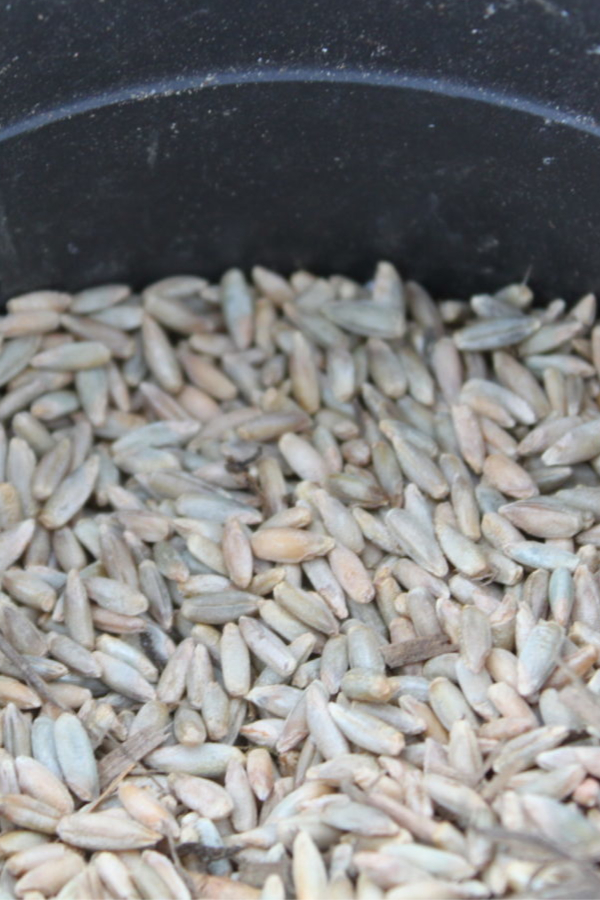
The key is to use annual rye grass sparingly. It should act as a temporary nurse crop, not become the main grass in the repaired area. Too much can compete with the permanent grass for water, nutrients and sunlight.
Choosing And Planting The Permanent Grass Seed
Always select a permanent grass seed that matches your existing lawn and the conditions in the bare area. Use a sun mix for open areas, a shade-tolerant blend beneath trees and a high-traffic variety where people or pets regularly cross the lawn.
Follow the package directions for the proper seeding rate. Applying more seed than recommended will not create a thicker lawn faster. In fact, overcrowded seedlings compete for water, light and nutrients, often resulting in weak growth.
After spreading the permanent seed and a light amount of annual ryegrass, gently rake the surface. The seed should be worked into the uppermost layer of soil but should not be buried deeply. Most grass seed performs best when covered by no more than about one-eighth to one-quarter inch of soil.
Finish by pressing the area lightly with the back of a rake, a lawn roller or your feet. This final step improves seed-to-soil contact and helps prevent the seed from moving when watering begins.
Watering New Grass Seed Correctly
Keeping the soil consistently moist is the most important task after planting. Grass seed that begins to germinate and then dries out can quickly die. Water the area gently immediately after planting. A strong spray can wash the seed into piles or carry it away from the bare spot. A sprinkler with a soft pattern works best.
For the first few weeks, water lightly once or twice a day as needed to keep the upper layer of soil damp. During cool or cloudy weather, the soil may stay moist longer. Warm, sunny or windy days may require more frequent watering.


Caring For The New Grass
Wait to mow until the new grass reaches about three to four inches tall. Make sure the mower blade is sharp and avoid removing more than one-third of the grass height at one time.
The annual rye grass may grow faster than the permanent lawn grass, but regular mowing will keep it under control. Because it’s temporary in many colder climates, winter weather will often weaken or eliminate it. Meanwhile, the permanent grass remains behind and continues filling the area.
Avoid applying standard weed killers to newly seeded spots until the grass has been mowed several times and the product label says it is safe. Many herbicides that kill young weeds can also damage tender grass seedlings.
Here is to reseeding and fixing all of the bare spots in your lawn this fall – and to a great lawn next spring and summer! For more on fall lawn care, check out our article: How To Bring Your Lawn Back To Life This Fall – 4 Big Fall Lawn Secrets! Happy Gardening – Jim & Mary.
The Farm @ Old World Garden
Jim and Mary Competti have been writing gardening, DIY and recipe articles and books for over 16 years from their 46 acre Ohio farm. The two are frequent speakers on all things gardening and love to travel in their spare time.
As always, feel free to email us at thefarm@owgarden.com with comments, questions, or to simply say hello! You can sign up for our free email list in the subscribe now box in the middle of this article. Follow us on Facebook here : OWG Facebook. This article may contain affiliate links.