
One of the easiest and best ways to keep annual flowers blooming strong all summer long is by deadheading old and fading blooms on a regular basis.
Although watering and fertilizing are both important for keeping annuals healthy, removing spent flowers is just as critical when it comes to producing steady color and new blooms. In fact, many flowering annuals will slow down quickly if old blossoms are left on the plant too long.
Petunias, marigolds, geraniums, impatiens and many other annual flowers all benefit greatly from routine deadheading. Not only can it help plants bloom bigger and brighter, it can also help them stay healthier and fuller throughout the entire growing season.
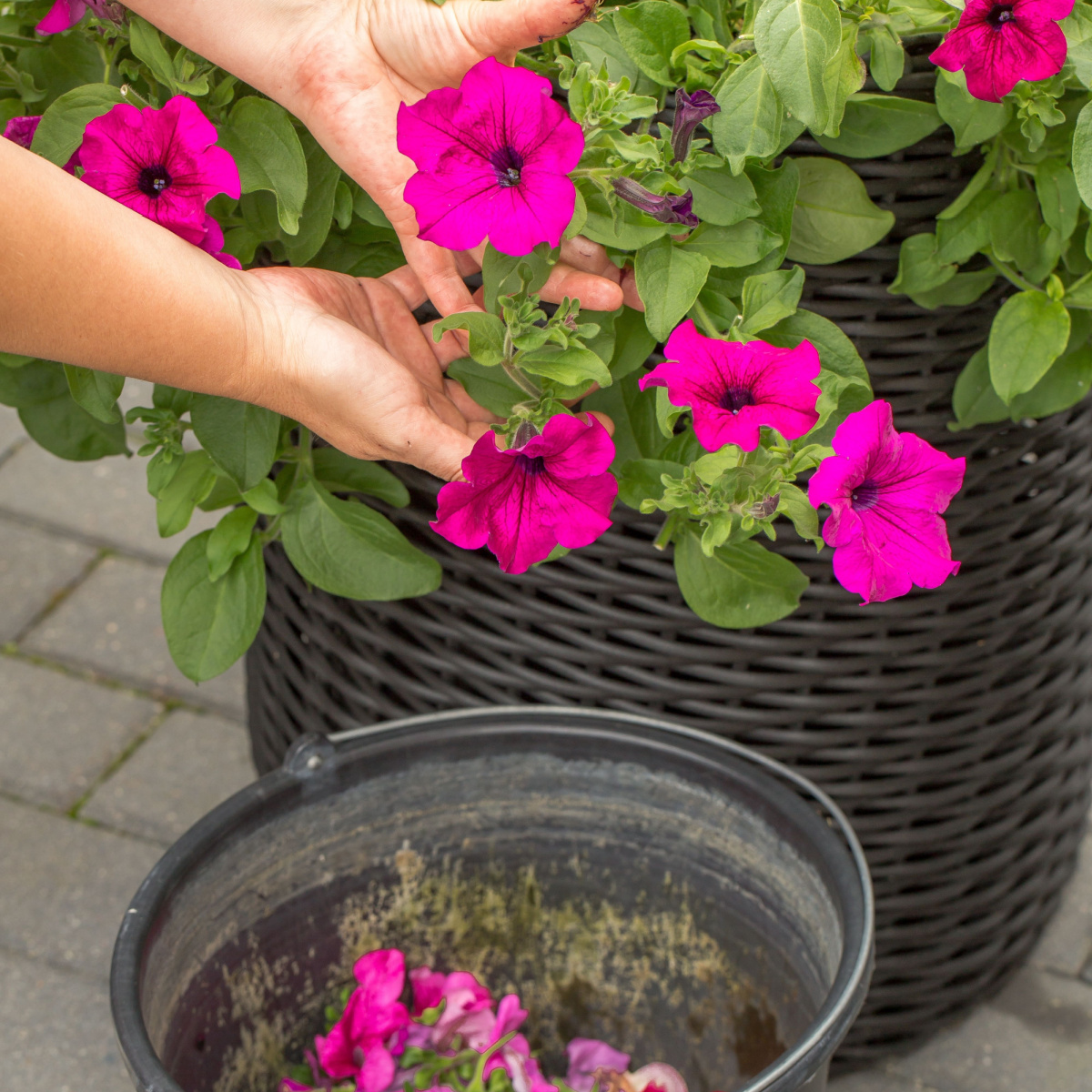
The Best Way To Deadhead Annual Flowers!
Why Deadheading Matters
Deadheading simply means removing flowers that are beginning to fade or die. And while the task may seem small, it can make a huge difference in how often a plant blooms and how much energy it has left to produce new growth.
The longer a fading flower stays attached to the plant, the more energy the plant wastes trying to keep it alive. By removing old blooms quickly, the plant can shift all of that power into creating fresh flowers instead.
Annual flowers grow incredibly fast. Unlike perennials that slowly return year after year, annuals must grow to full size and produce nonstop blooms all within a single season. That takes a tremendous amount of energy.
Every flower a plant produces requires nutrients and resources. From forming the bud to opening the bloom, the plant continually sends power and moisture to the flower to help it thrive. Unfortunately, even after a bloom starts to fade, the plant continues trying to keep it alive. Instead of moving on to new growth, it keeps feeding the old bloom in an attempt to repair it.
In many cases, a plant can waste more energy trying to save an old flower than it did originally producing it. And until that bloom finally dries up or falls away, the plant will continue sending energy to it. This is exactly why deadheading is so effective.
Helping Plants Produce More Blooms
By removing old blooms early, the plant no longer wastes resources on fading flowers. Instead, it redirects that energy into producing new buds and fresh blooms. For annuals that bloom heavily all summer long, this can make an enormous difference in performance.
Healthy annual flowers can hold dozens or even hundreds of blooms at one time. But if all of those flowers remain on the plant after fading, the plant eventually becomes overwhelmed trying to maintain them. When this happens, blooming slows down dramatically.
Even if you continue fertilizing regularly, the plant simply cannot use the nutrients efficiently because so much energy is tied up in old blossoms. Removing spent flowers allows the plant to focus entirely on producing fresh growth and new blooms. The best part is how quickly annuals respond.
A tired looking petunia or marigold plant full of fading flowers can often begin pushing out new buds within only a few days after deadheading. It is one of the fastest and easiest ways to revive annual flowers during the heat of summer. And thankfully, deadheading takes very little effort.
For many flowers, the blooms can simply be pinched off with your fingers in seconds. Others may require a quick snip with scissors or hand pruners, but the entire process still only takes a few minutes.
Listen To Our Podcast On Deadheading Below!
How To Deadhead Annual Flowers
Consistency is the real key to successful deadheading. Instead of waiting until plants are covered with old blooms, it is best to remove flowers regularly throughout the season. A few minutes every couple of days is usually enough to keep plants looking fresh and blooming steadily.
By keeping ahead of fading blooms, annuals stay cleaner, healthier and far more productive.
Deadheading Soft Stem Flowers
Many annual flowers produce delicate blooms with soft stems that are easy to remove by hand.
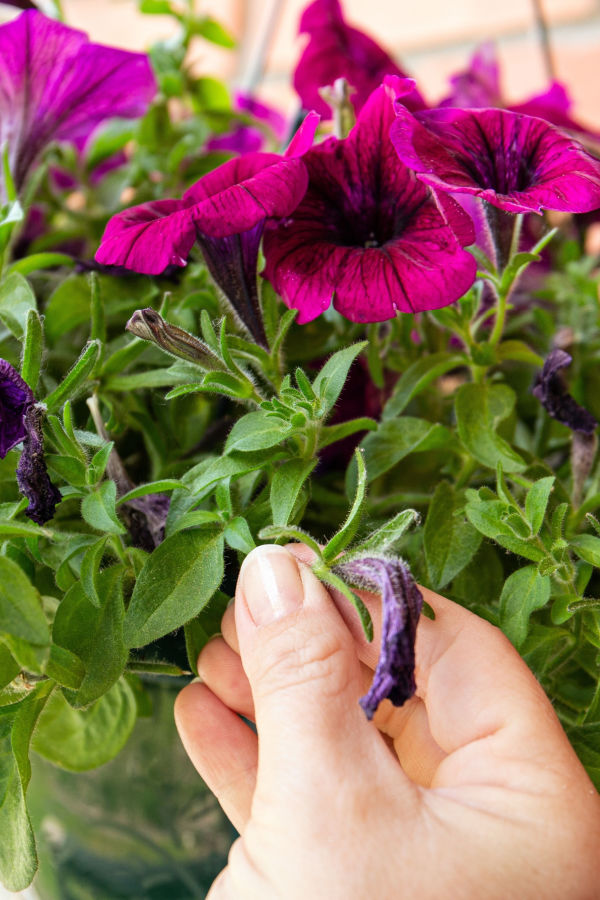
Petunias, impatiens and pansies are all good examples. Their flowers can usually be pinched or lightly pulled away from the plant without damaging any surrounding foliage.
When removing blooms from these plants, make sure to pinch off the small seed pod located directly behind the flower. If the seed pod remains attached, the plant may still continue wasting energy trying to form seeds. This extra step only takes a second, but it helps plants continue blooming much more effectively.
Deadheading Thick Bloom Flowers
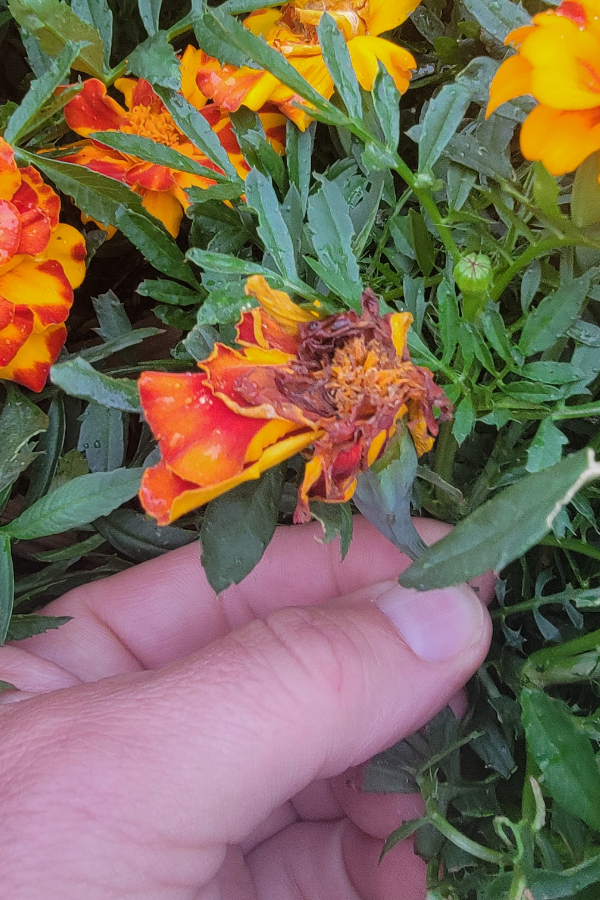
Flowers such as marigolds have thicker bloom heads and stronger stems. For these plants, it is often easiest to pinch the stem directly below the flower head. Most old marigold blooms will snap right off with a quick pinch between your fingers.
Removing these blooms regularly helps the plant stay tidy and prevents it from becoming overcrowded with dried flowers. It also encourages the plant to keep producing fresh buds instead of slowing down in mid-summer.
Deadheading Long Stem Flowers
Some annual flowers produce blooms on longer stems. Geraniums, cosmos and zinnias are all examples of plants that benefit from cutting the entire bloom stem back farther into the plant. For these flowers, scissors or hand pruners are usually the best option.
Instead of only removing the flower itself, cut the stem back close to the base of the plant or down to a healthy leaf set. This not only keeps the plant looking cleaner, but also immediately stops any energy loss to the fading bloom. See our article: The Best Way To Deadhead Geraniums.
Long bare stems can make plants look thin and leggy over time. Cutting them back farther encourages fuller growth and more compact plants.
Keep Old Blooms Out Of The Compost Pile
Although it may seem natural to toss spent blooms into the compost pile, it is often better to leave them out. Most annual flowers contain large amounts of seeds inside the fading blooms. Marigolds in particular can hold hundreds of tiny seeds within a single dried flower head.
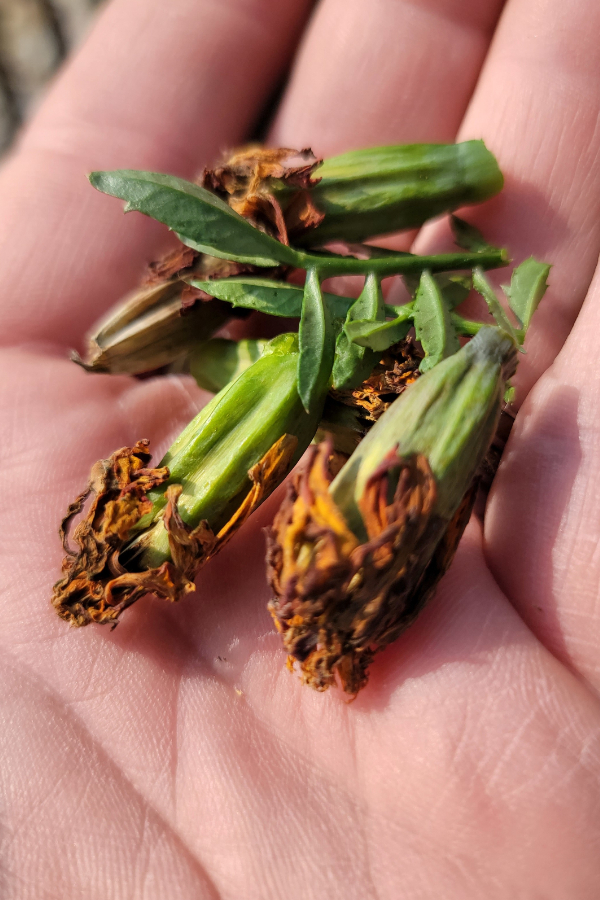
Unfortunately, many home compost piles do not heat up enough to destroy those seeds. As a result, the compost can become filled with volunteer flower seedlings later when used in flowerbeds or gardens. While a few volunteers may not seem like a problem, large numbers can quickly become difficult to manage.
Pruning Back Annuals In Mid Summer
Even with regular deadheading, many annual flowers eventually become overgrown or tired looking by the middle of summer. When this happens, a light trimming can completely rejuvenate the plant.
Using hedge shears or sharp scissors, trim the top inch or two from the plant. This removes old blooms, weak stems and scraggly foliage all at once. There is no need to cut the plant all the way back to the ground. A light shaping is usually enough to trigger fresh growth and a new flush of blooms.
After trimming, it also helps to give plants a dose of liquid fertilizer to encourage quick recovery. But not just any fertilizer. Always use a liquid fertilizer that has a higher ratio of phosphorous and potassium than nitrogen. This will encourage far more blooms than just growth! Affiliate Link: Jack’s Classic 10-30-20 Blossom Booster Water-Soluble Fertilizer
The combination of pruning and feeding can bring tired annuals back to life in a surprisingly short amount of time. Many plants will begin filling back in with fresh foliage and blooms within only a week or two. This simple mid-season refresh can keep annual flowers blooming beautifully well into fall.
Here is to deadheading your annual flowers this year – and to enjoying bigger, brighter blooms all summer long! Happy Gardening – Jim & Mary.
Old World Garden
Jim and Mary Competti have been writing gardening, DIY and recipe articles and books for over 16 years from their 46 acre Ohio farm. The two are frequent speakers on all things gardening and love to travel in their spare time.
As always, feel free to email us at thefarm@owgarden.com with comments, questions, or to simply say hello! You can sign up for our free email list in the subscribe now box in the middle of this article. Follow us on Facebook here : OWG Facebook. This article may contain affiliate links.